
Use the Sunbelt Rentals App
Find, rent, and return equipment, right at your fingertips

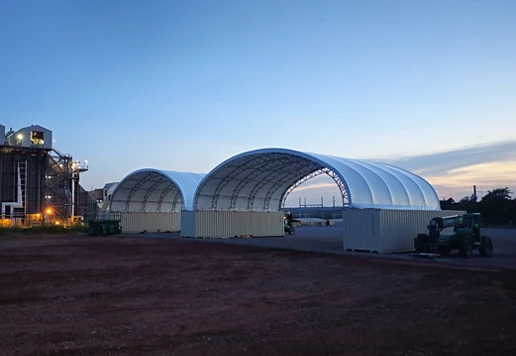
Industrial Structure Types
Click any of the links below to learn more:
In industrial construction and site logistics, temporary is a loaded term. It implies fragility to the uninitiated, but to a senior project manager, it represents a calculated strategy to manage capital exposure and schedule risk.
You’re often staring at a site plan that requires 20,000 square feet of conditioned warehousing, a Level 3 environmental containment enclosure, or a secured fabrication shop, and you have two competing constraints: the ground can't be disturbed, and the facility must be operational in ten days.
Misaligning the structure type with the project lifecycle results in stranded capital—spending six figures on a foundation for a building you only need for two years, or operational failure, such as using a lightweight tent that can't handle the snow load in a harsh winter.
This guide dissects the technical distinctions between temporary structures, permanent facilities, and semi-permanent hybrids. We’ll analyze the materiality, anchoring mechanics, and thermal performance of each to help you procure the exact asset your scope demands.
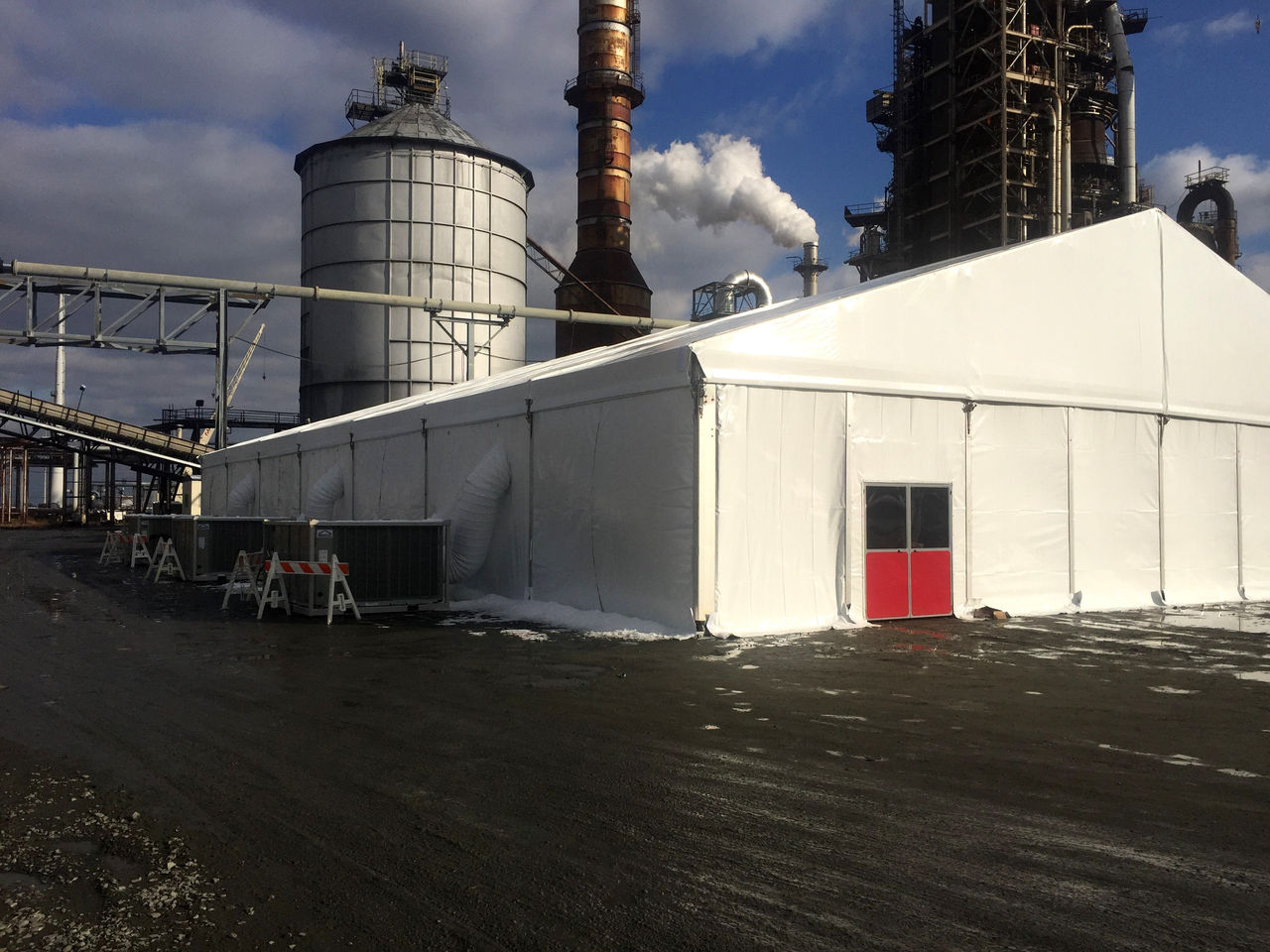
Understanding Temporary Structures
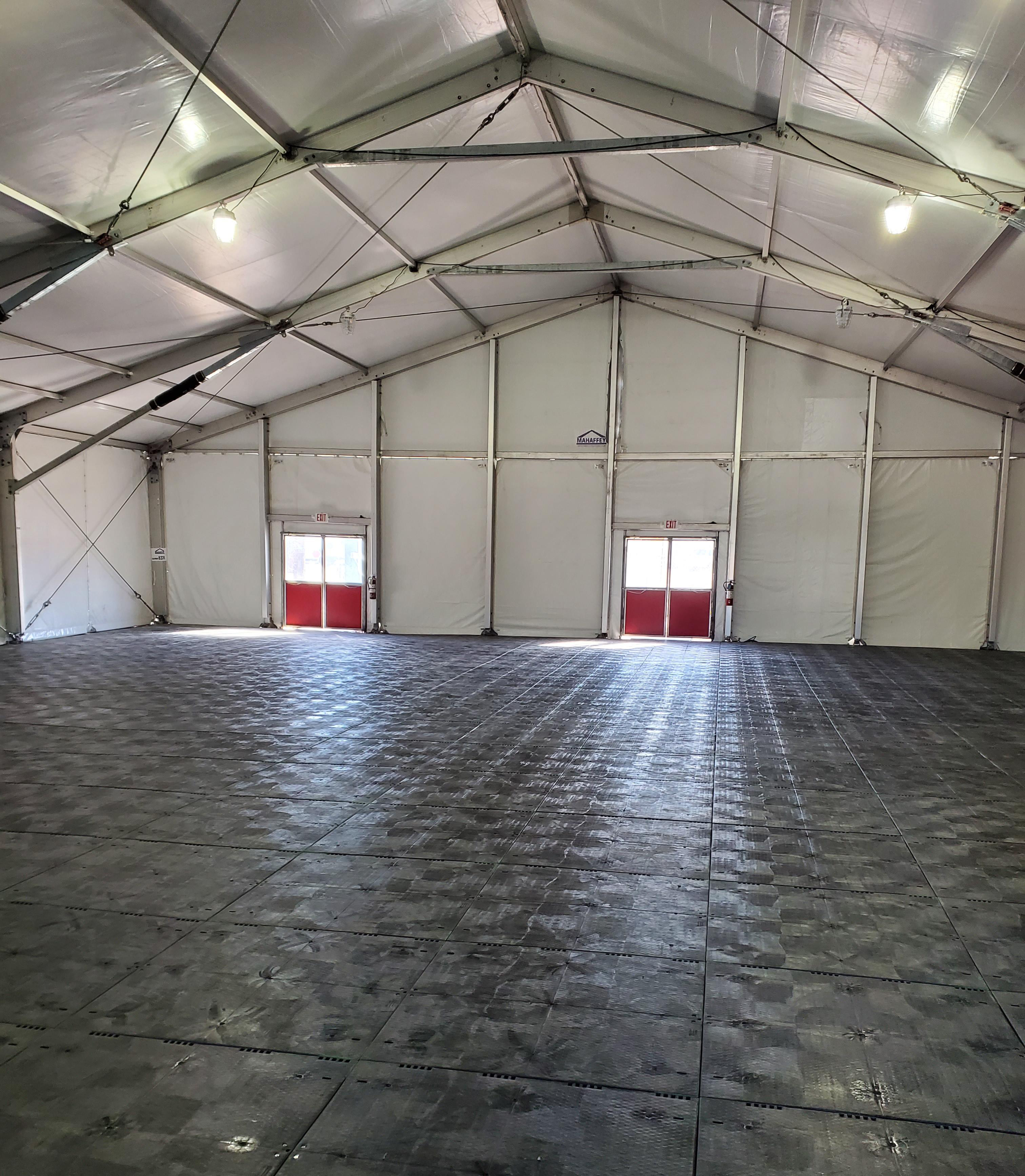
When we talk about temporary structures in an industrial context, we mean a clear-span, engineered system, not a pole tent. These structures utilize a modular anodized aluminum box beam frame engineered from a specialized high-yield alloy. This material is optimized specifically for the industrial structure industry, combining massive load-bearing strength with the flexibility required to absorb wind energy—all without the need for interior columns.
The roof system is generally comprised of heavy-duty, industrial-grade PVC fabric (standard 25 oz vinyl) that is tensioned horizontally. This mechanical tensioning eliminates fabric flutter and ensures the structure serves as a true weather-tight envelope capable of handling wind loads up to 115 mph.
The most significant operational advantage of our temporary warehouse structures is the ability to bypass traditional foundations. We adapt our anchoring method to your ground conditions. On standard industrial surfaces like asphalt or compacted soil, we drive 42-inch steel earth anchors through the base plates. This provides immense uplift resistance with a rapid install time and minimal site remediation upon removal. However, for projects requiring true zero ground disturbance—such as on protected concrete slabs or sensitive runways—we utilize a specialized ballasting system. By securing the frame with high-capacity concrete weights, we achieve full structural code compliance without ever penetrating the ground.
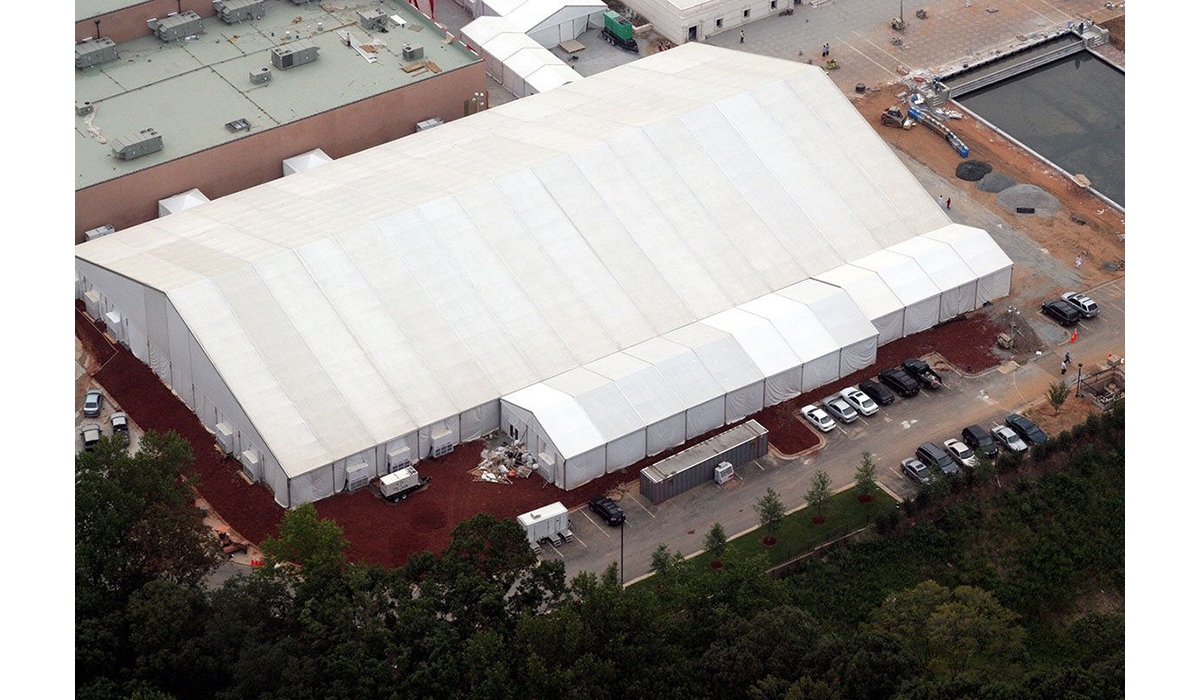
Advantages of Industrial Temporary Structures
Velocity is the primary asset. Traditional steel fabrication has a lead time of 12 to 20 weeks. A temporary building crew can mobilize and install 5,000 square feet per shift. For disaster relief, emergency warehousing, seasonal overflow, or short-term refinery turnarounds, this speed allows operations to commence immediately.
Adaptability also drives this choice. The modular bay spacing (typically 5 meters) allows for customization of the footprint in real time. If your inventory swells, we can add three bays to the length in a single day. If the project downsizes, we remove them:
- Speed of deployment: A functional, weather-tight building can be erected in days, bypassing the months-long permitting and fabrication cycles of steel buildings, which can take upwards of 6 to 12 months.
- Superior thermal efficiency: Unlike standard pole tents that bleed energy, our structures accommodate hard-sided sandwich panels and thermo-inflated roof systems. This creates a sealed, insulated envelope that drastically reduces the fuel and power required to heat or cool the space—protecting your budget along with your assets.
- 100% Recoverability: When the project ends, the anchors are pulled, the holes are patched, and the site returns to its original state with no sunk costs in buried concrete.
Limitations of Industrial Temporary Structures
The trade-off is thermal inertia. A single layer of PVC fabric has a negligible R-value. While these structures are excellent for keeping rain and wind out, maintaining a precise 70°F internal temperature in extreme ambient heat or cold requires significant HVAC energy. Double-layer air-inflated roof panels can improve this, but they don't match the insulation of rigid foam panels.
Security is also a consideration. While industrial PVC is incredibly tough, it isn't a steel wall. For facilities housing sensitive IT equipment, narcotics, high-value controlled inventory, or classified materials, a fabric wall may not meet insurance requirements for intrusion prevention.
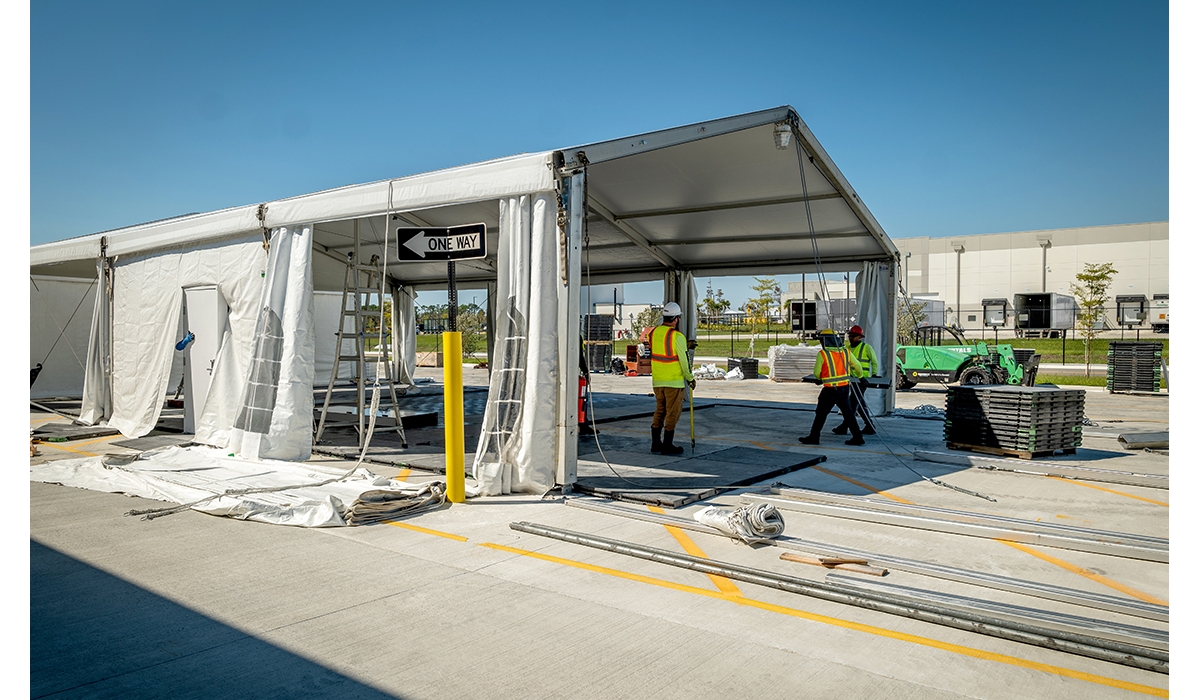
Understanding Permanent Structures
A permanent structure serves as the baseline for durability. This category includes pre-engineered metal buildings (PEMB), tilt-up concrete, traditional masonry, and steel-frame modular blocks. The defining feature is the foundation: deep concrete footings, grade beams, and a poured slab designed to transfer heavy structural loads into the earth.
The permanent path requires a full architectural and engineering cycle. You aren't just renting a building; you’re developing real estate. That process triggers municipal zoning variances, soil compaction testing, fire marshal suppression reviews, and long-term utility grid integration.
Advantages of Permanent Commercial Structures
The value of permanent commercial structures lies in their capacity for complexity and load bearing. If your manufacturing process requires overhead cranes with 20-ton lift capacities, the building’s steel columns must be engineered to support that dynamic load.
If you’re storing volatile chemicals requiring blast-proof concrete walls, traditional construction is the only compliant path:
- Asset appreciation: For owner-operators, a permanent building adds long-term equity to the real estate portfolio and depreciates over 39 years.
- Thermal mass: Thick concrete and insulated steel panels provide high thermal mass, making it efficient to condition the space year-round with lower energy consumption.
- Specialized integration: Permanent buildings allow for the embedding of heavy infrastructure, such as recessed loading docks, pit-mounted scales, automated conveyor trenches, and complex fire suppression piping.
Limitations of Permanent Commercial Structures
The greatest risk with permanent construction is rigidity. Once the concrete cures, your logistical footprint is frozen. You can't pick up a tilt-up warehouse and move it to a new job site. If your contract is for three years, but the building is amortized over thirty, you face a significant CapEx risk if the project scope changes.
Time is the other enemy. The dirt work alone—grading, excavation, pouring, curing—can consume the entire duration of a short-term contract. For dynamic projects like data center projects, industrial capital construction projects and turnarounds, and emergency response, the 6-to-12-month lead time for permanent construction is operationally disqualifying.
Understanding Semi-Permanent Structures
Semi-permanent structure solutions are the high-performance hybrid designed for projects lasting six months to ten years. These systems utilize the same rapid-deploy aluminum structural frame as temporary units, eliminating the need for deep footings. However, they replace the fabric walls with rigid, architectural-grade materials.
A semi-permanent structure installation features hard-sided insulated steel sandwich panels (often with R-values ranging from R-13 to R-30), glass storefront facades, and heavy-duty cassette flooring systems that elevate the facility off the ground.
These buildings look, feel, and perform like permanent real estate but remain legally classified as equipment in many jurisdictions, offering tax advantages through accelerated depreciation.
Advantages of Industrial Semi-Permanent Structures
A semi-permanent structure offers superior security and climate control compared to fabric tents. The insulated hard walls provide a thermal break, making these units suitable for retail environments, long-term staff dining, secure equipment housing, or temperature-sensitive storage.
- Enhanced security: Hard steel walls prevent intrusion, securing valuable tools and inventory.
- Thermal efficiency: Insulated panels significantly reduce the heating and cooling load compared to fabric walls.
- Aesthetics: Glass walls and clean lines offer a professional appearance suitable for public-facing retail, ticket terminals, corporate events, or office applications.
- Relocatability: Like temporary units, these can be dismantled and moved, preserving your investment if you change job sites.
Limitations of Industrial Semi-Permanent Structures
The primary trade-off is cost relative to a basic non-permanent structure. The upgraded materials—glass, steel panels, heavy flooring—increase the rental rate and installation time. While still faster than permanent construction, a semi-permanent installation requires more logistical planning than a standard fabric tent.
Scenario 1: The Environmental Remediation Project
You need a negative-pressure containment enclosure over a dig site for six months.
- Verdict: Temporary Structure. The priority is speed and recoverability. Once the soil is remediated, the structure must leave. A fabric clear span on ballast weights prevents ground penetration in a sensitive zone.
Scenario 2: The Hospital Renovation
You need a temporary cafeteria and intake center for 18 months while the main wing is rebuilt.
- Verdict: Semi-Permanent Structure. Staff and patients require a conditioned, professional environment. Hard sides and glass doors provide the necessary thermal comfort, sound dampening, and hygiene, while the structure remains removable once renovation is complete.
Scenario 3: The Regional Distribution Hub
You’re building a central logistics node on company-owned land for a 30-year operational plan.
- Verdict: Permanent Structure. The long timeline justifies the CapEx. You need loading docks, heavy racking support, integrated automation, and long-term asset appreciation.
Rent Temporary and Semi-Permanent Structures with Sunbelt Rentals
You need a partner who understands the engineering nuances of wind loads, ground anchoring, HVAC integration, and thermal efficiency. Sunbelt Rentals provides the expertise to guide you through these critical decisions.
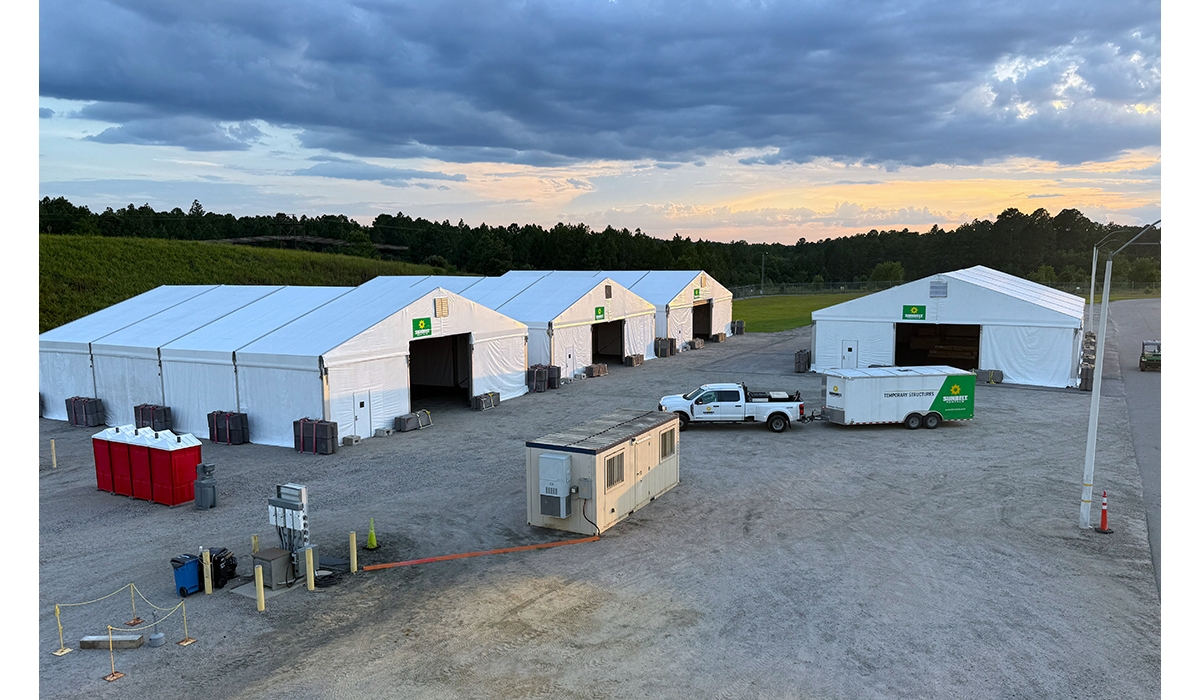
We mobilize rapid-response teams to install Sunbelt Rentals' temporary structure solutions that keep your project moving. From temporary warehouse structures to insulated semi-permanent retail spaces, our fleet allows you to scale your footprint instantly.
Make sure your site is covered by the right assets.


