
Use the Sunbelt Rentals App
Find, rent, and return equipment, right at your fingertips

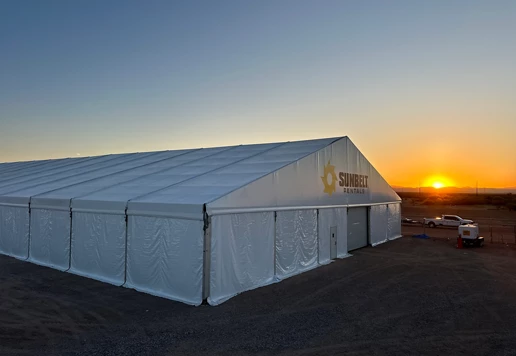
Tensile vs. Tension Fabric Structures
When you need a temporary building, you need a solution that’s fast, reliable, and built for the job. You’ve likely heard the terms tensile and tension used to describe fabric structures, but they aren’t interchangeable. One is an architectural statement, the other is an industrial powerhouse.
Choosing between tensile or tension fabric structures comes down to understanding how they’re built and what they’re built for. In this article, we’ll cover the core concepts of each, outline their key differences, and explain why one is the clear choice for most commercial, industrial, and construction applications. Click any of the links below to learn more:
What Are Tensile Fabric Structures?
A tensile fabric structure is a building system that gets its stability from the tensile fabric itself. The fabric is pulled in opposite directions under extreme tension, creating a distinct, double-curved shape that's strong and self-supporting.
These structures often use a minimal frame of steel cables or masts, but the fabric membrane does the real work. The result is a dramatic, free-flowing architectural form that is visually striking.
What Are Tensile Fabric Structures Used For?
Because of their unique, sculptural appearance, tensile structures are often used for high-visibility architectural projects. You’ll typically see them used as:
- Stadium roofs and event canopies
- Airport terminals and transportation hubs
- Amphitheater covers and outdoor stages
- Atriums and decorative shade structures
- Architectural landmarks and showpieces
Advantages of Tensile Fabric Structures
The primary benefit of a tensile fabric design is its aesthetic appeal. The sweeping, free-form shapes can create iconic and beautiful spaces. They’re aesthetically pleasing, offer unique designs, are lightweight, and are excellent for allowing natural light.
Disadvantages of Tensile Fabric Structures
The biggest disadvantage of tensile fabric structures for practical applications is their complexity. The custom engineering required is significant, and they are not designed to handle heavy snow loads or provide the same level of secure, weatherproof protection as a fully framed building. Their lifespan can be limited, and they are less suited for industrial environments where durability is paramount.
What Are Tension Fabric Structures?
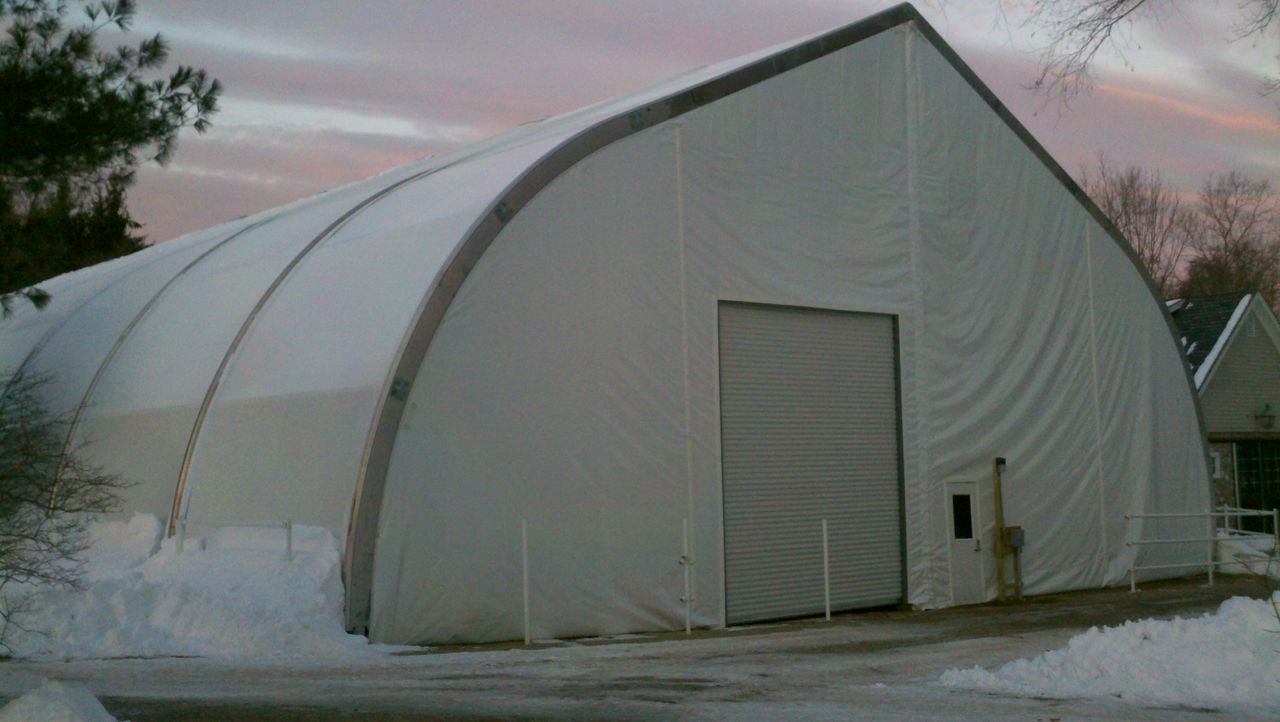
A tension fabric structure is a different animal entirely. It’s a building system that uses a rigid, engineered steel or aluminum frame to provide 100% of the structural support. A heavy-duty, tensioned fabric membrane is then stretched tightly over this frame to create a durable, weatherproof enclosure. In this system, the frame does the heavy lifting, and the fabric acts as a resilient skin.
What Are Tension Fabric Structures Used For?
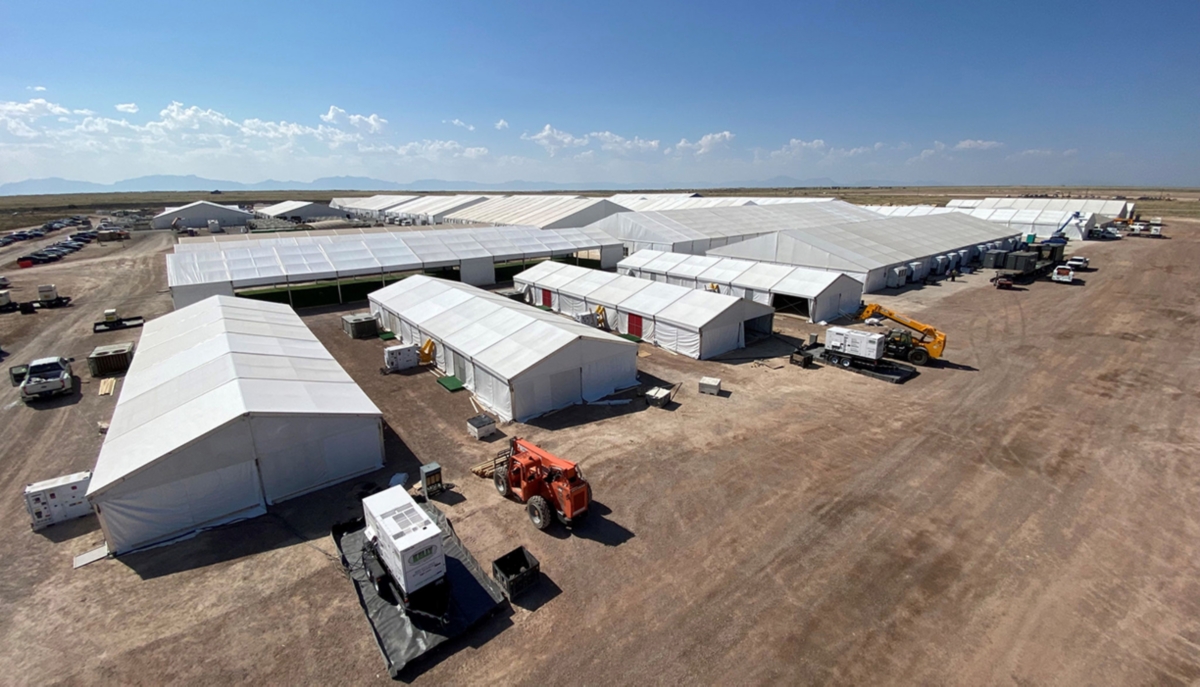
Tension fabric structures are the go-to solution for practical applications across construction, industrial, and commercial sectors. Their versatility makes them ideal for:
- Temporary Warehousing: For inventory, equipment, and operational space.
- Construction Covers: Protecting a job site from rain, snow, wind, and heat to keep work on schedule.
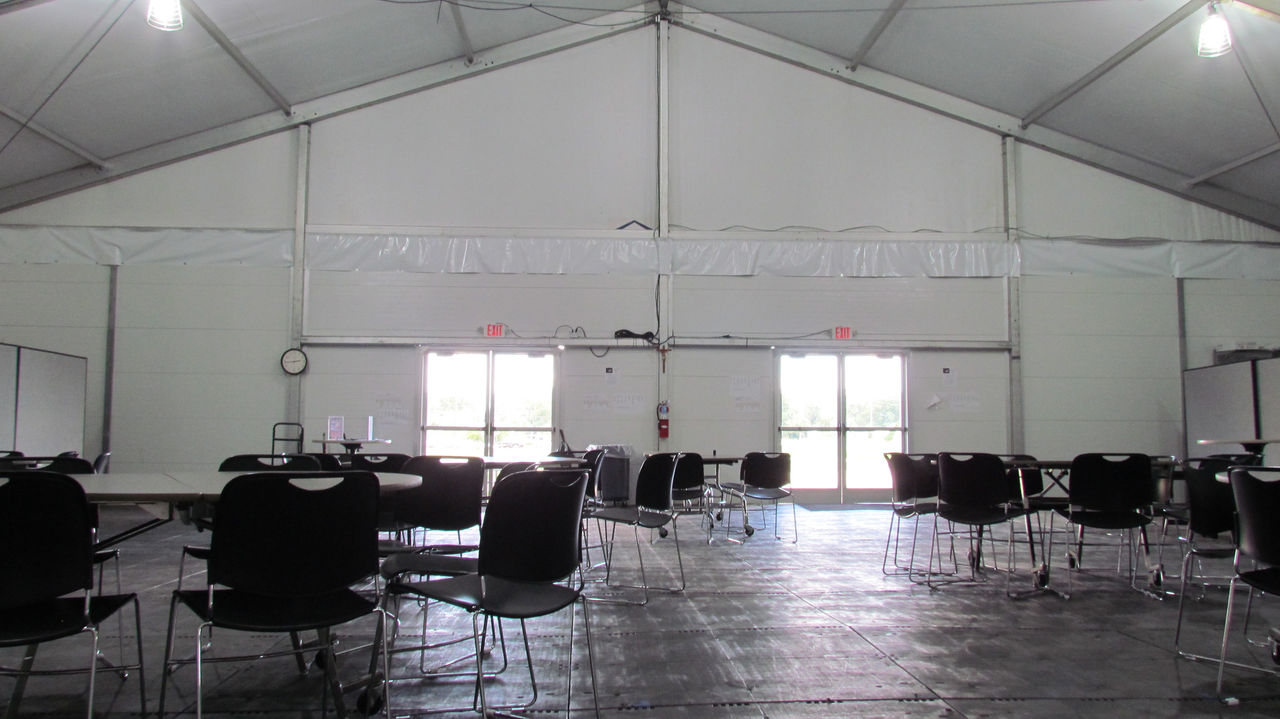
- On-Site Facilities: Lunch structures, break areas, and safety meeting locations.
- Aviation Facilities: Temporary hangars for aircraft maintenance and storage.
- Emergency Services: Temporary firehouses, medical facilities, and GSA-approved basecamps.
- Business Continuity: Keeping operations running during renovations or repairs.
Advantages of Tension Fabric Structures
The primary advantage of a tension fabric structure is its engineered strength and durability. Supported by a rigid steel or aluminum frame, these buildings meet local building codes and provide reliable protection from the elements. They’re designed to withstand high winds and shed heavy snow loads, so your operations and assets are protected.
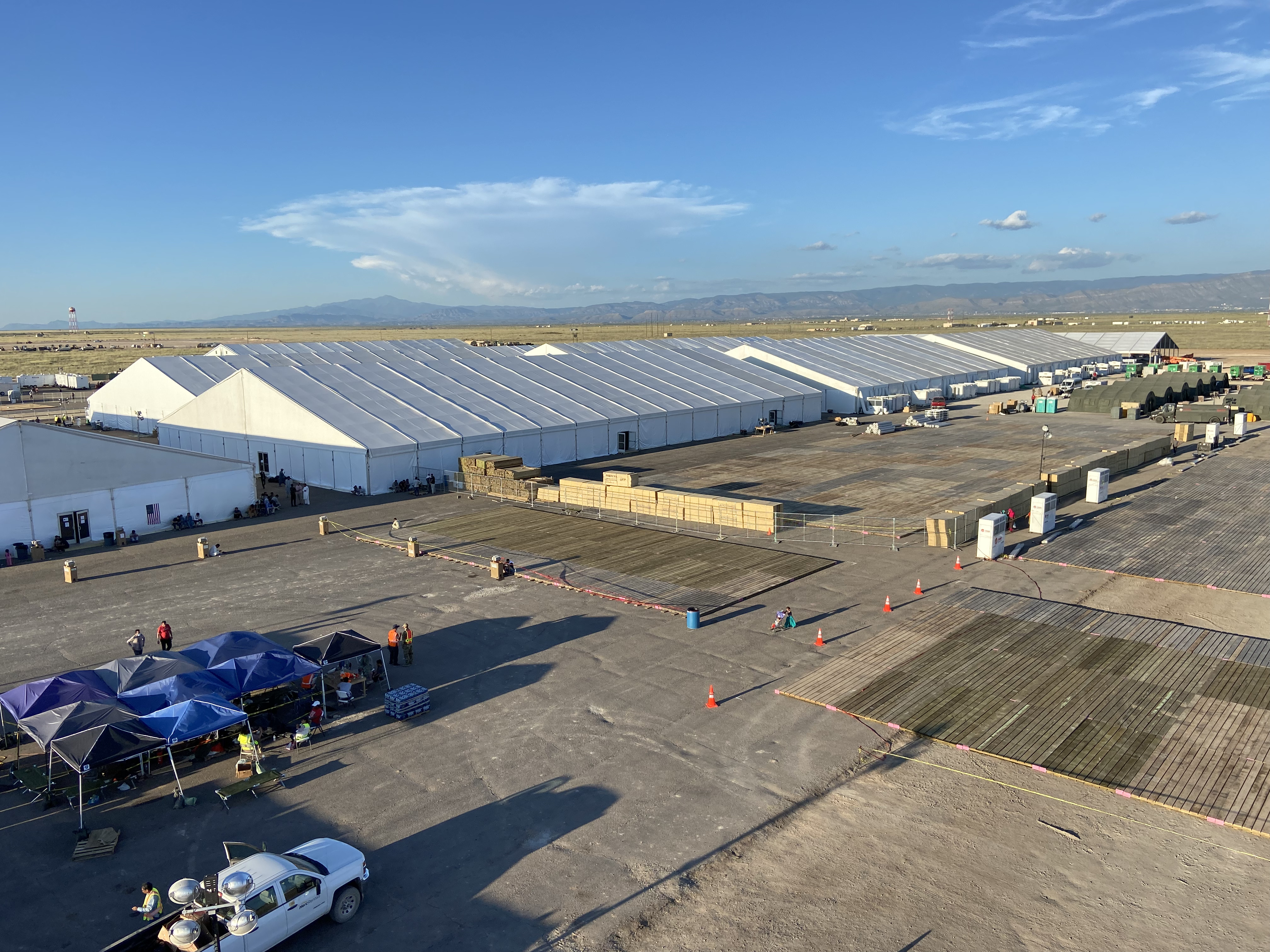
You can securely erect these structures on nearly any surface, including asphalt, soil, or concrete, without the need for a permanent foundation, which reduces site preparation time and costs. The interior offers a clear span design with no internal support columns.
The result is completely unobstructed floor space, maximizing room for large equipment, high-stacking inventory, and efficient operational workflows.
Disadvantages of Tension Fabric Structures
The design of a tension fabric structure is focused on utility and function rather than the unique architectural aesthetics found in tensile designs. Their appearance is more aligned with a conventional building, which may not be suitable for projects where a sculptural or artistic form is the primary objective.
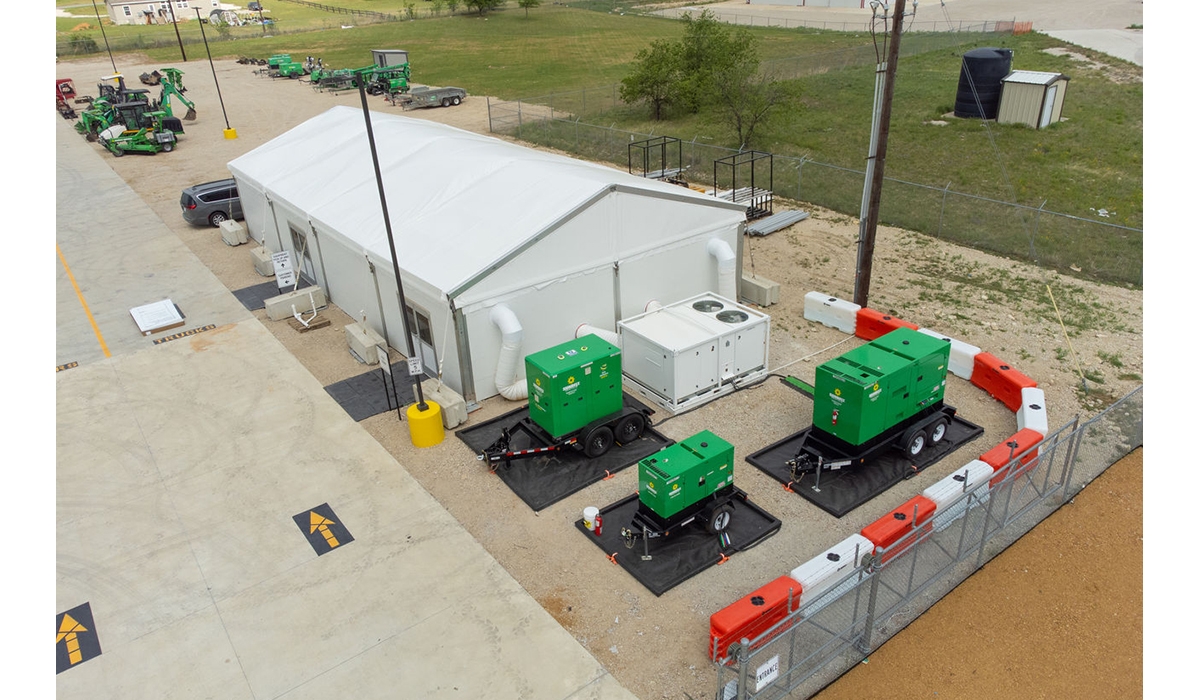
However, this practical design is a significant advantage for most commercial and industrial applications. The curved wall and non-traditional roof line with a higher pitch simplifies the integration of essential components, including personnel doors, large roll-up bay doors, HVAC systems, and lighting.
A focus on function ensures the space is easy to customize for specific needs, from temporary warehousing to on-site break rooms or maintenance facilities. For projects where operational efficiency, durability, and speed of deployment are the main goals, the functional design is not a limitation but a key feature.
How Do Tensile and Tension Fabric Structures Differ?
The debate of tensile vs. tension fabric structures, which extends to tensile vs. tension fabric buildings, comes down to one key question: What's holding the building up? In a tensile structure, it’s the fabric. In a tension structure, it’s the frame. This fundamental difference dictates their strength, use cases, and limitations.
- Structural Support: Tensile relies on the fabric’s tension. Tension relies on a rigid, engineered frame.
- Design: Tensile is architectural and free form. Tension is utilitarian and functional, shaped like a conventional building.
- Durability: Tension structures are engineered to handle heavy snow loads, high winds, harsh cold, and extreme heat. Tensile structures are generally not designed for these conditions.
- Application: Tensile is for showpieces and canopies. Tension is for working spaces like warehouses, job site covers, and operational facilities.
Choosing Between Tensile and Tension Fabric Structures
Making the right choice is simple when you define your mission.
If your primary goal is to create an architectural landmark or a lightweight shade canopy where form is more important than function, a tensile fabric structure might be the answer.
However, if your goal is to quickly and cost-effectively add a durable, weatherproof, and functional space for work, storage, or operations, a tension fabric structure is the clear and superior choice. For any job that demands reliability in the face of tough weather, you need the engineered strength of a rigid frame.
Rent Tension Fabric Structures from Sunbelt Rentals
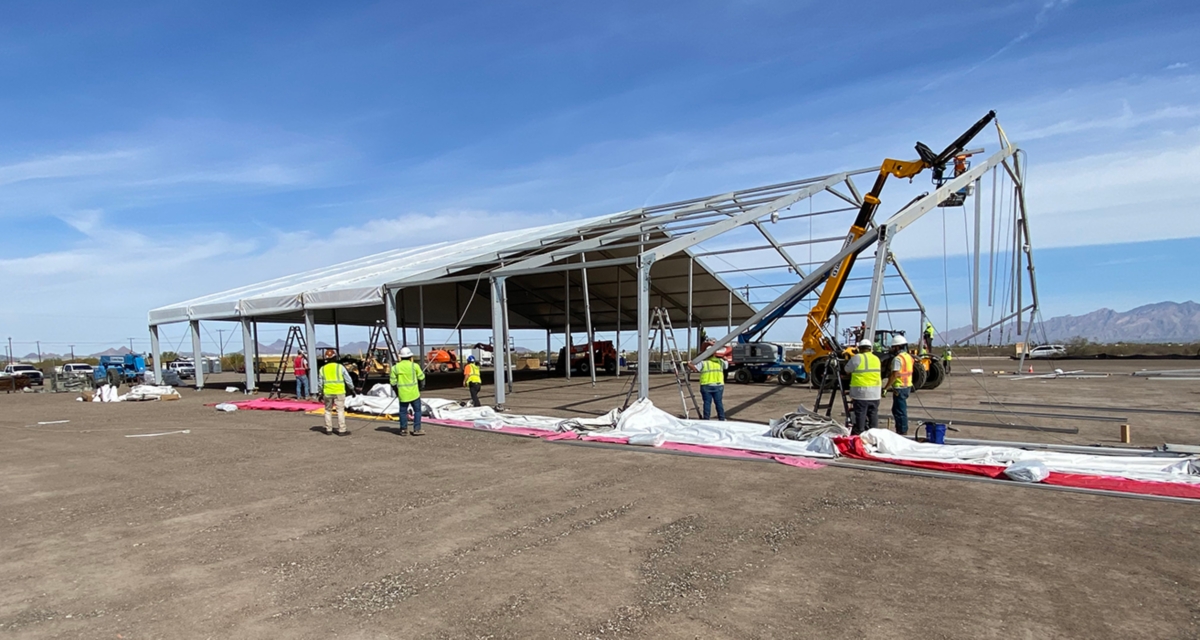
When your project demands a reliable, on-demand space solution, Sunbelt Rentals has you covered. We provide custom-engineered tension fabric structures for short- and long-term rental, designed to protect your crew, equipment, and materials from the toughest conditions. Our structures are built to handle heavy wind, rain, and harsh cold, and can be engineered to shed heavy snow loads, allowing your project to move forward no matter what.
Don’t get enticed by complex engineering or a solution that can’t handle the realities of a job site. Our experienced team handles everything from delivery and installation to maintenance and removal. We provide turnkey Temporary Structures that are ready for work from day one, giving you the flexible, functional space you need, right when you need it.


