
Use the Sunbelt Rentals App
Find, rent, and return equipment, right at your fingertips

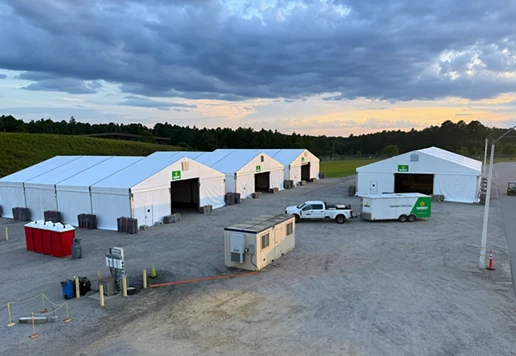
Addressing Common Space Challenges Businesses Face Today
Project scopes creep, seasonal inventory peaks, rapid turnarounds, and sudden regulatory changes often leave facility managers scrambling for covered square footage. You need facility capacity to fulfill a seasonal distribution contract or support a scheduled plant outage, but you can’t justify the 10-year ROI of a permanent building for a 12-month need.
The challenge is finding a solution that matches the durability of your permanent site without locking up capital, delaying operations, or compromising safety.

Buying
Buying a permanent facility or a lower-grade tent ties up heavy CapEx and saddles you with ownership liabilities such as maintenance, storage, asset depreciation, and insurance costs. Once the project’s done, you’re stuck with a building you might not need.

Leasing
Leasing an existing warehouse often forces you into a location that isn't optimal. You pay for square footage that might be miles away from your active job site, driving up logistics costs and transit times.

Renting
Renting a temporary structure brings the facility to you. It transforms your existing real estate into a usable workspace instantly. You pay for capacity only while you need it, keeping your balance sheet flexible.
Why Renting Temporary Structures Delivers the Most Value
Deploying a weather-tight, industrial-grade facility in days rather than months is a major advantage. Additionally, renting shifts costs from CapEx to OpEx.
You can bill the structure directly to the project it supports—like a specific construction phase or a holiday retail rush—rather than amortizing a purchase over decades. And rental agreements include maintenance.
If a door jams, a panel gets damaged, or a seal wears out, it’s our problem, not yours. This turnkey approach lets your team focus on production, not facility management.
For a closer look at how these units can transform your site, check out our temporary structure benefits.
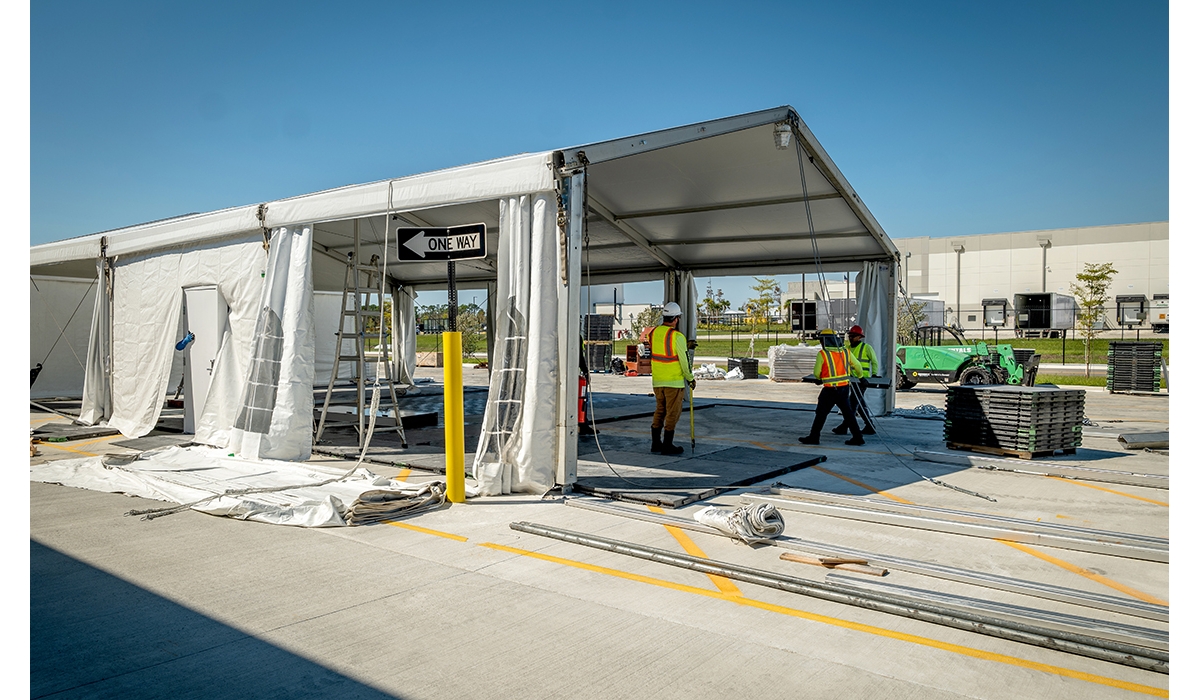
Cost & Time Savings You Gain by Renting
Large-scale infrastructure jobs and industrial plant expansions are notorious for delays, but industrial temporary structures bypass traditional permitting, zoning headaches, and ground-breaking bottlenecks.
Since they’re modular and engineered for rapid assembly, they can often go up on existing concrete or asphalt pads without extensive foundation work. This speed saves money. Every day you wait for a building is a day of lost productivity. Renting ensures you’re operational weeks faster than building would allow.
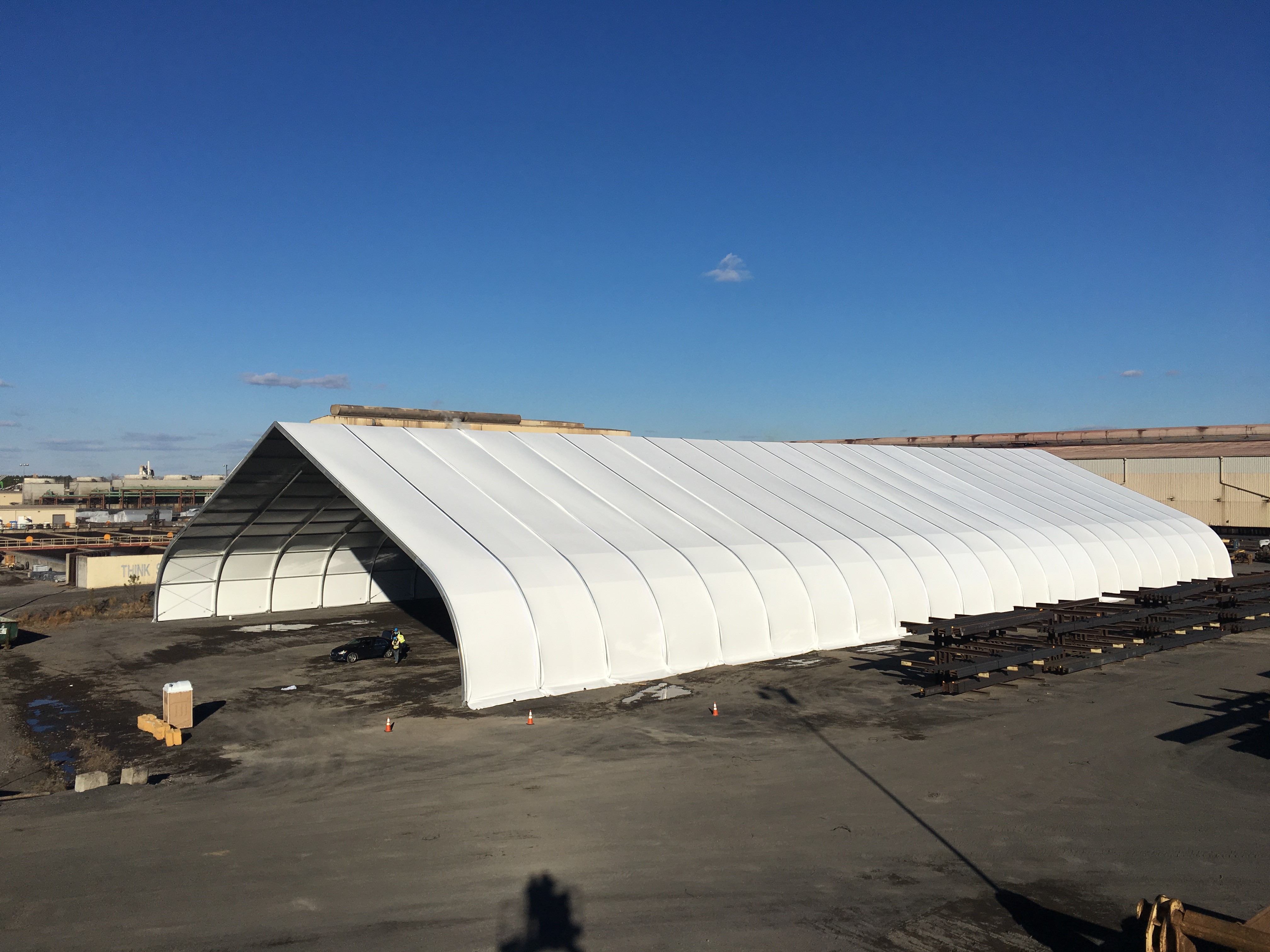
Flexibility & Scalability When Plans Change
A profitable benefit of temporary structures lies in their scalability. If your manufacturing contract doubles in volume, a rental structure can expand by adding bays. If the job ends early, the structure’s gone. You can't do that with permanent buildings. You’re never stuck with too much space, and you’re never caught with too little.
Quality Matters: Rental Structures vs. Lower-Grade Fabric Tents for Commercial Projects
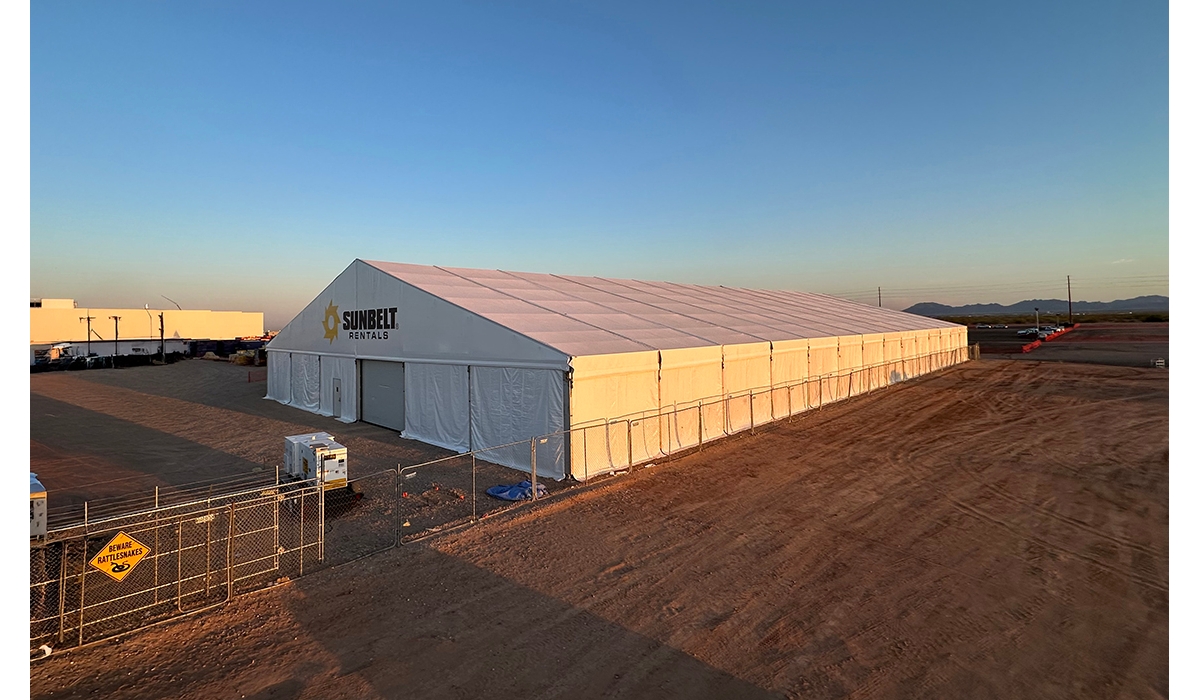
There’s a common misconception that temporary means flimsy. That might be true for event-grade marquees, but not for engineered industrial solutions. When you rent temporary structures from Sunbelt Rentals, you’re getting industrial-grade aluminum box beam frames, heavy-duty PVC fabric, and tensioning systems that meet strict wind and snow load ratings.
Buying cheaper alternatives usually leads to regret down the line. Rental structures are maintained to a high standard and engineered to perform like permanent buildings, so your people and assets stay safe.
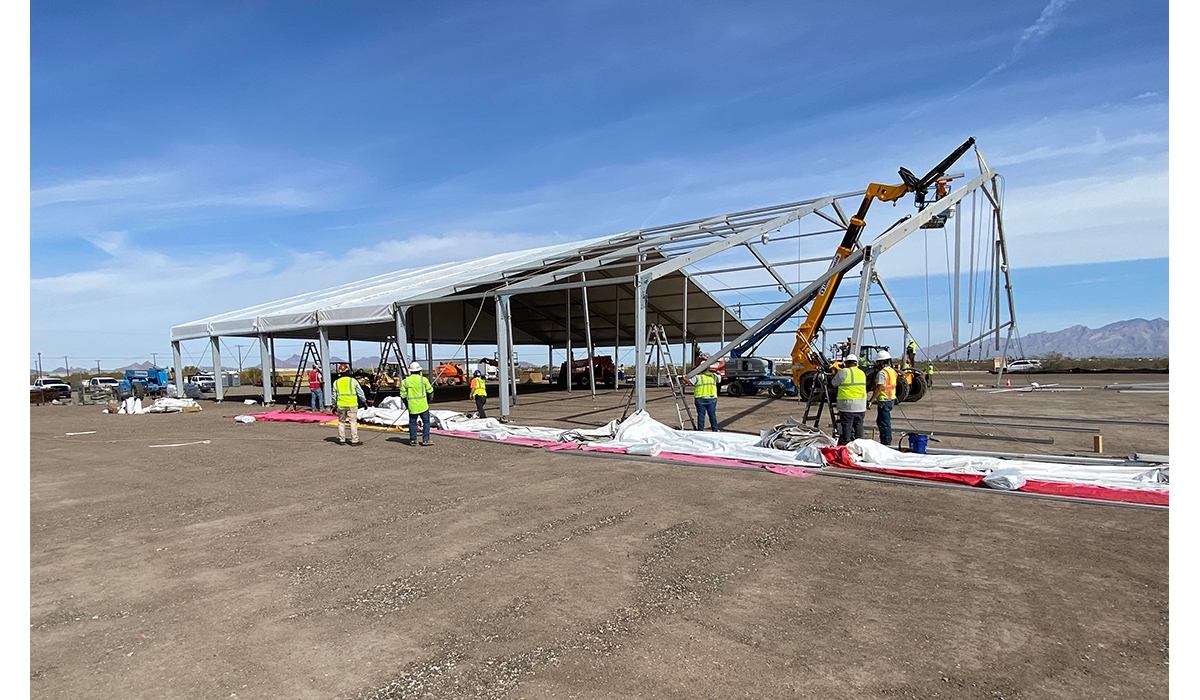
Customization Options Available with Commercial Temporary Structure Rentals
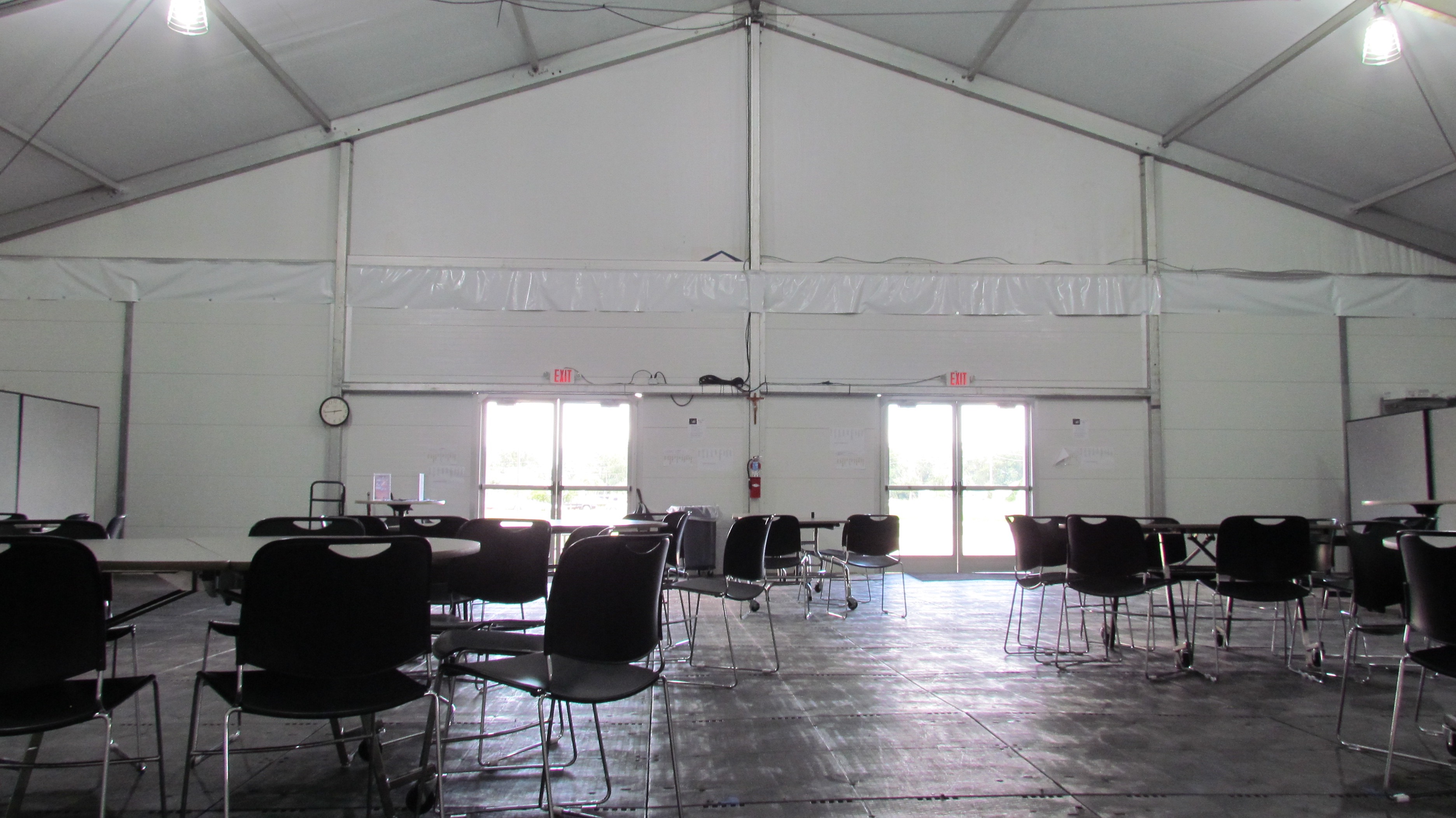
Modern temporary structures aren't one-size-fits-all. They can be configured as bespoke temporary structures tailored to your workflow, whether you need a bulk storage warehouse, a climate-controlled breakroom for 500 turnaround crew members, a fabrication shop for on-site welding, or a secure aviation hangar.
Climate Control & Insulation
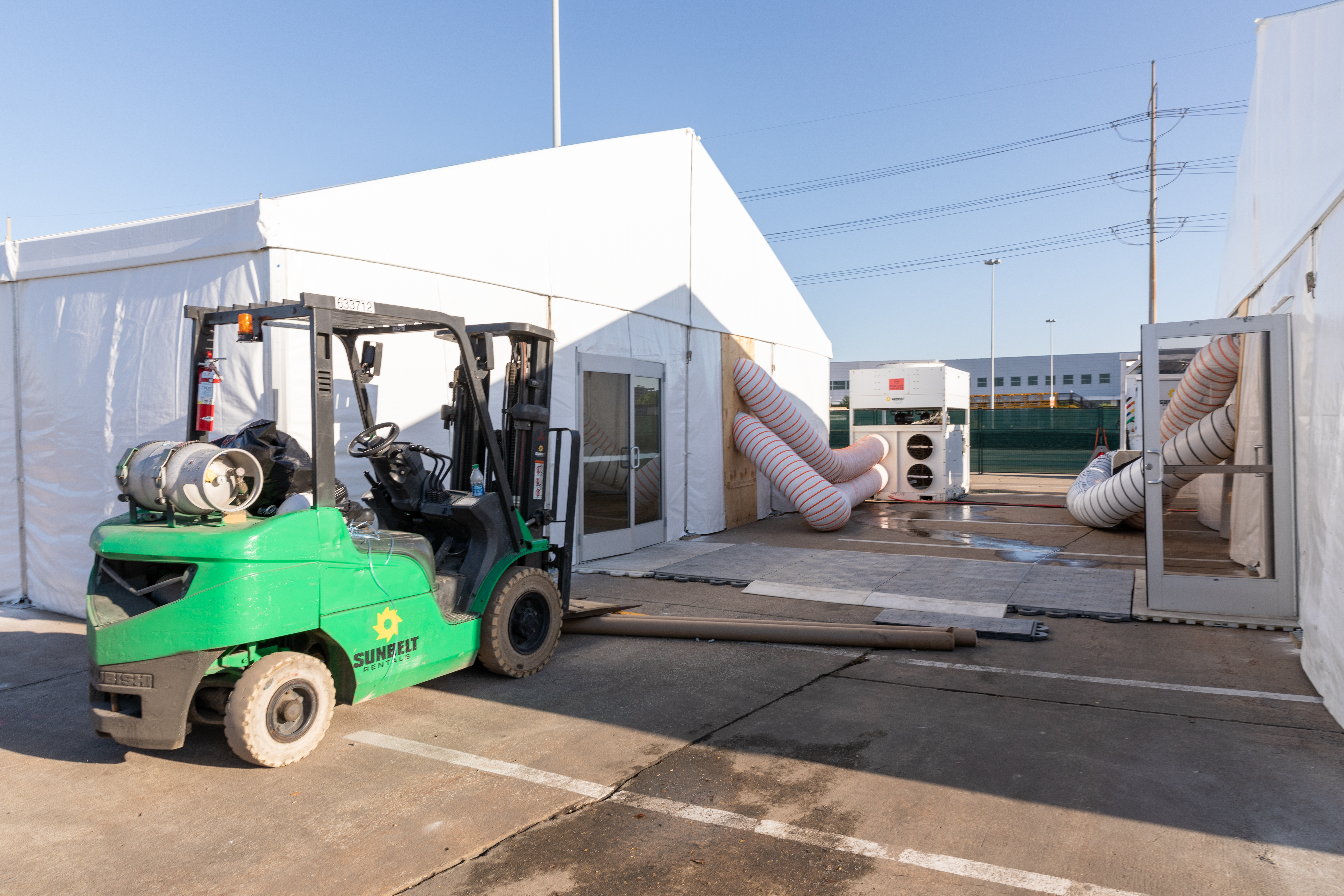
Temperature regulation is vital for keeping your crew safe and protecting sensitive inventory. Insulated temporary structures feature thermal roof systems and hard-sided sandwich panels that retain heat or cool air. As such, your team can maintain a comfortable working environment year-round, even in extreme climates.
Learn about how energy-efficient insulation can help you keep operating costs low.
Lighting, Flooring, and Access Solutions
A bare tent isn't a workspace. A fully outfitted custom temporary structure includes high-bay LED lighting, heavy-duty flooring that supports forklifts, rolling cargo doors, and personnel access points. These additions turn a shell into a fully functional facility that integrates seamlessly with your existing plant or site.
A temporary structure can stay up as long as you need it. Although built for speed, they’re also engineered for endurance. Many businesses have used them for years as semi-permanent warehouses or manufacturing halls.
Yes. When equipped with industrial-grade insulation and HVAC packages, these structures create a managed, stable environment essential for crew safety and protecting sensitive materials from the elements. A common follow-up is, "Can you put water and electricity in a temporary structure?" Absolutely. They are engineered to accommodate the necessary lighting, power distribution, and utility connections to keep your operation running efficiently.
See our climate control options for more details.
Yes. Unlike pop-up tents, these are anchored securely and engineered for site-specific wind, snow, and rain loads, ensuring business continuity even during storms.
Final Thoughts: Stay Agile Without Long-Term Commitments with Temporary Structures
In fast-moving sectors such as general contracting, industrial facility management, and emergency response, adaptability is your greatest asset. Renting lets you secure high-quality space immediately without anchoring capital in depreciating assets.
Whether you need a quick storage fix or a long-term production facility, temporary structure solutions give you the reliability of a permanent building with the flexibility you actually need.


