
Use the Sunbelt Rentals App
Find, rent, and return equipment, right at your fingertips

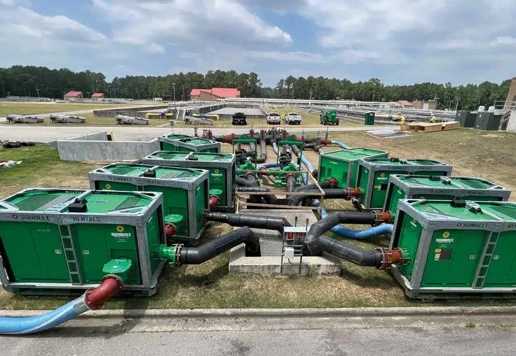
Industrial Pumps and Their Applications
In this guide, we analyze the mechanics of different types of pumps and identify which models handle high-viscosity fluids or large volumes of water most effectively. Click below to jump to a specific section:
What Are Industrial Pumps?
Industrial pumps are heavy-duty machines engineered to handle aggressive media, high head pressures, and substantial flow volumes that standard commercial units can't manage. They serve as critical infrastructure for applications ranging from emergency flood control to planned turnaround maintenance.
Industrial environments present variables that demand specialized engineering. You’ll encounter fluids with high specific gravity, abrasive solids that destroy standard impellers, or corrosive chemicals requiring specific metallurgy.
Facility operators use these specialized machines to control groundwater levels, transfer viscous sludge, or bypass sewer lines during critical repairs.
Using a pump ill-suited for the fluid's viscosity leads to cavitation—where vapor bubbles collapse with enough force to destroy internal components. Furthermore, inadequate pump selection in sensitive areas often results in environmental breaches, leading to significant EPA fines and project shutdowns.
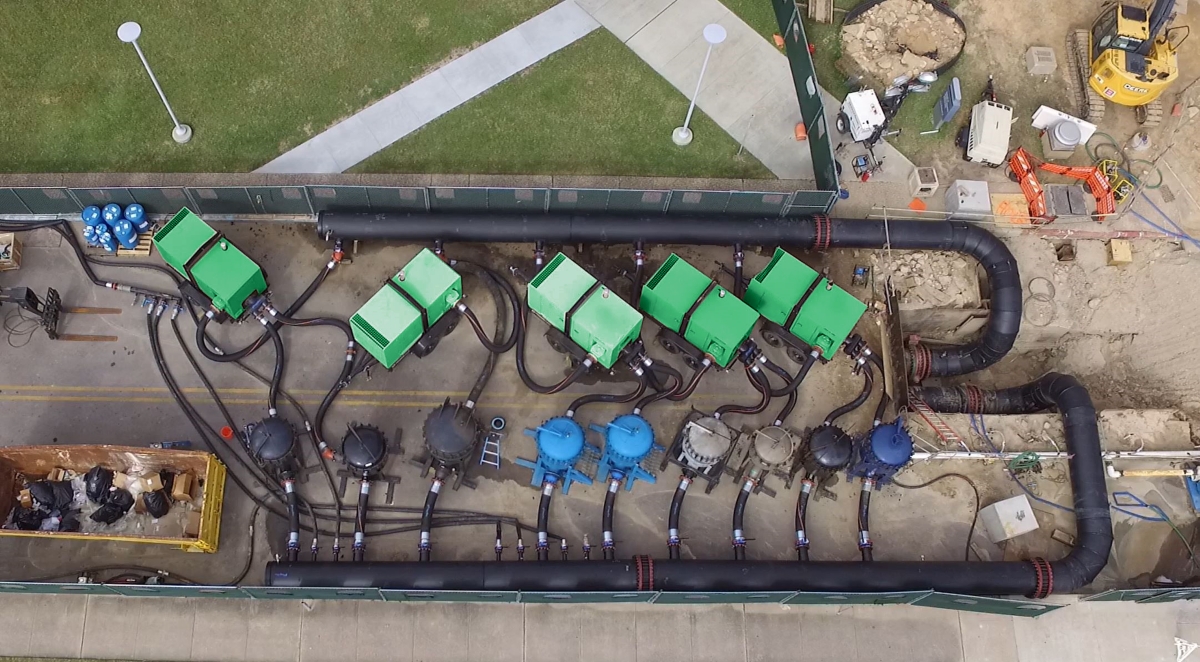
Types of Industrial Pumps
Most equipment falls into two primary classifications based on mechanical action: centrifugal and positive displacement.
Centrifugal Pumps vs Positive Displacement Pumps
Positive displacement pump vs. centrifugal comparisons come down to viscosity and flow. Centrifugal pumps rely on rotational energy to create velocity, making them ideal for high flow rates with low viscosity fluids like water. They operate most efficiently when the fluid moves freely, but performance drops significantly if viscosity increases.
Centrifugal pump vs. positive displacement pump scenarios differ when handling thicker materials. Positive displacement pumps capture specific amounts of fluid in a cavity and displace it mechanically. This provides a constant flow regardless of pressure.
Where a centrifugal pump might spin helplessly against thick sludge, a positive displacement pump effectively pushes material through the line.
Quick Comparison Table: Centrifugal vs Positive Displacement
Feature | Centrifugal pumps | Positive displacement pumps |
Primary mechanism | Rotational energy (impeller) | Trapping and forcing fluid (cavity) |
Flow rate | High volume, variable flow | Constant flow, lower volume |
Viscosity handling | Best for low viscosity (water, thin oils) | Excellent for high viscosity (sludge, thick oils) |
Pressure sensitivity | Flow decreases as pressure increases | Flow remains constant despite pressure changes |
Shear sensitivity | High shear (can damage sensitive fluids) | Low shear (gentle handling) |
Priming | Often requires initial liquid charge | Often self-priming |
Centrifugal Pumps
Types of centrifugal pump technology are favored for general water transfer due to simplicity and high volume capabilities. They’re the workhorses of the water industry, capable of moving massive amounts of liquid quickly.
How They Work
A rotating impeller accelerates the fluid, increasing its velocity. As fluid moves outward from the center, it converts kinetic energy into pressure, forcing liquid through the discharge point. Efficiency depends heavily on head (vertical lift) and friction loss.
Common Types
Understanding centrifugal pump types helps in selecting the right tool for specific water pump types:


Typical Applications
Centrifugal pumps dominate scenarios requiring high flow rates involving thin liquids, such as municipal water supply, fire protection, and flood dewatering. High Head pumps are frequently deployed in mining to lift water out of deep pits.
Positive Displacement Pumps
When dealing with viscous fluids or applications requiring precise dosing, positive displacement pump types offer superior performance. They’re less affected by pressure changes, making them reliable where system conditions vary.
How They Work
These pumps draw fluid into a cavity during suction and force it out during discharge. Cyclic action delivers a consistent volume with every stroke, maintaining efficiency even as pressure changes. Because they physically trap liquid, slip is minimal, allowing them to pump heavy crude, polymer, or sludge.
Common Types
Diaphragm
A flexible membrane oscillates to pump fluid. Since the fluid is separated from the drive mechanism, there are no internal seals to leak, making diaphragm pumps excellent for abrasive slurries. A key advantage is their ability to run dry without damage. We offer both diesel and air-operated double diaphragm (AODD) models ideal for hazardous locations.
Gear
Rotating gears trap fluid between teeth and the casing wall. This is a common method for transferring oils, fuels, and hydraulic fluids. Tight tolerances allow for high pressure but make them unsuitable for solids.
Sludge/Piston
Constructed with cast iron and steel, sludge pumps utilize a vertical piston design. This allows material to settle evenly over the piston for a more even stroke. Operating at lower speeds (55 strokes per minute max), these units extract heavy materials like tank bottom sludges and filter cakes that other pumps can't.
Wellpoint
Specialized for lowering groundwater tables, these pumps handle large volumes of air and water simultaneously. Sunbelt Rentals offers rotary wellpoint pumps that run dry indefinitely, making them vital for underground dewatering during foundation work.
Typical Applications
Positive displacement pumps excel in transferring heavy sludge, metering chemical additives, and moving food products like syrups. In wastewater treatment, they often pump thickened sludge to filter presses.
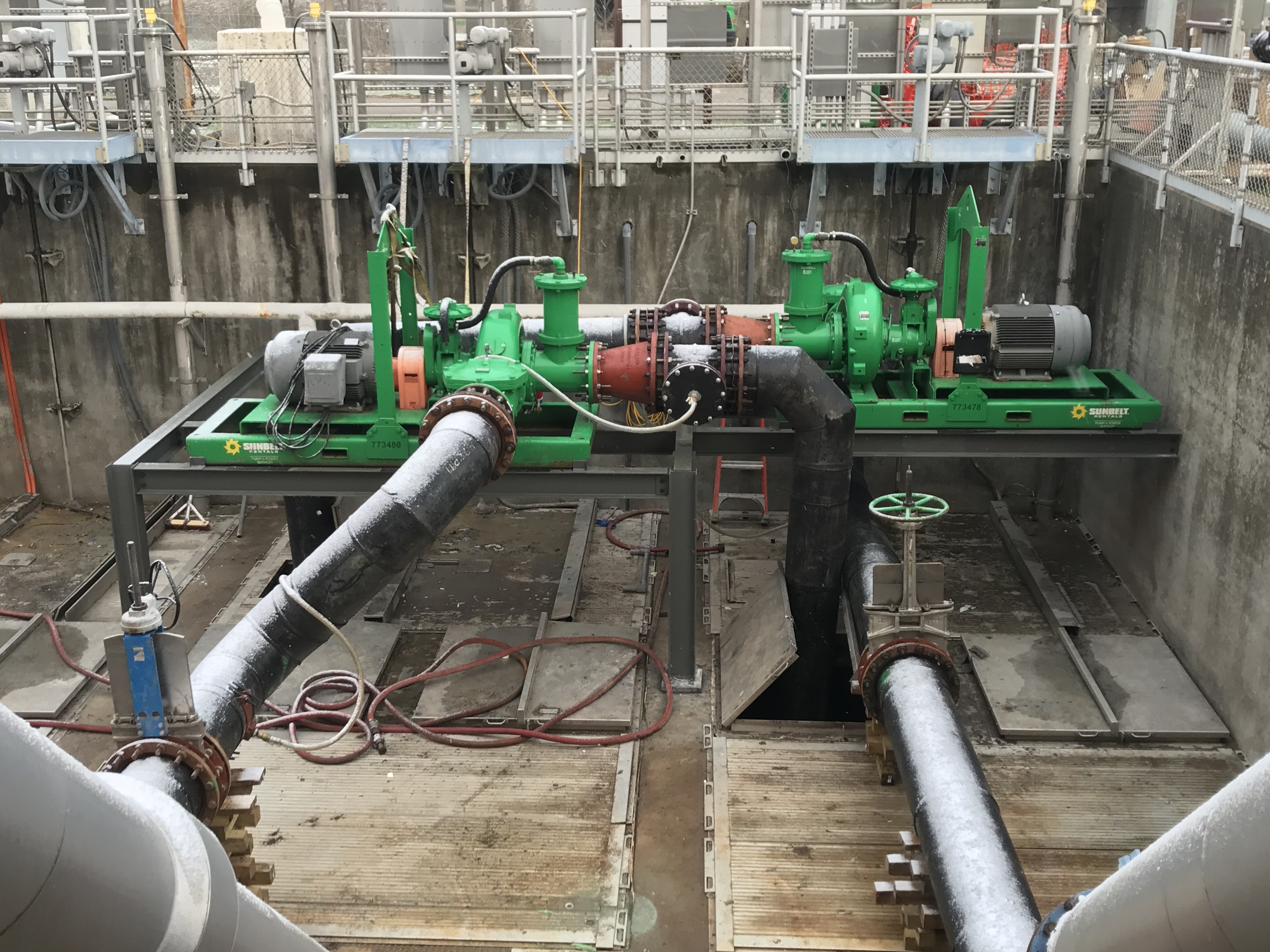
The Complete System: Accessories and Turnkey Support
Operational success requires a fully engineered system that addresses containment, flow, filtration, and monitoring.
- HDPE pipe and fusion. High-density polyethylene (HDPE) pipe offers a zero-leak rate and flexibility for rough terrain. Our teams provide fusion machines to fabricate long, leak-free pipelines on-site.
- Filtration. Basket strainers and filter vessels remove particulates from discharge water, protecting downstream equipment and meeting strict water quality standards.
- Road crossings. Flow-through road crossings allow fluid transfer across active roadways without blocking traffic. Designed for 20,000 lb. single-axle traffic, they maintain site accessibility.
- Digital monitoring. The Sunbelt Rentals Command Center allows you to track equipment in real-time, receive alerts, and manage orders from any web-enabled device.
Construction & Dewatering
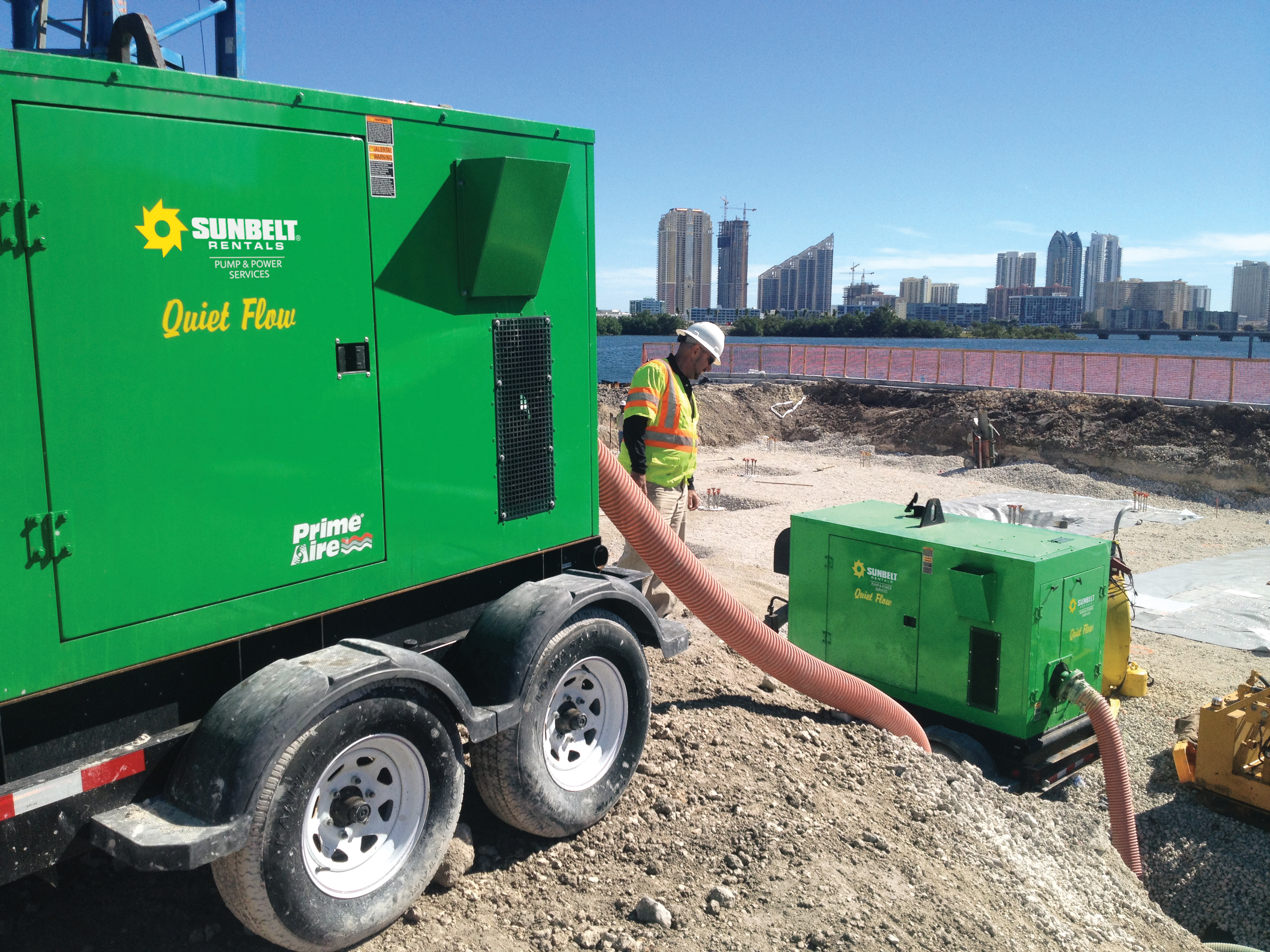
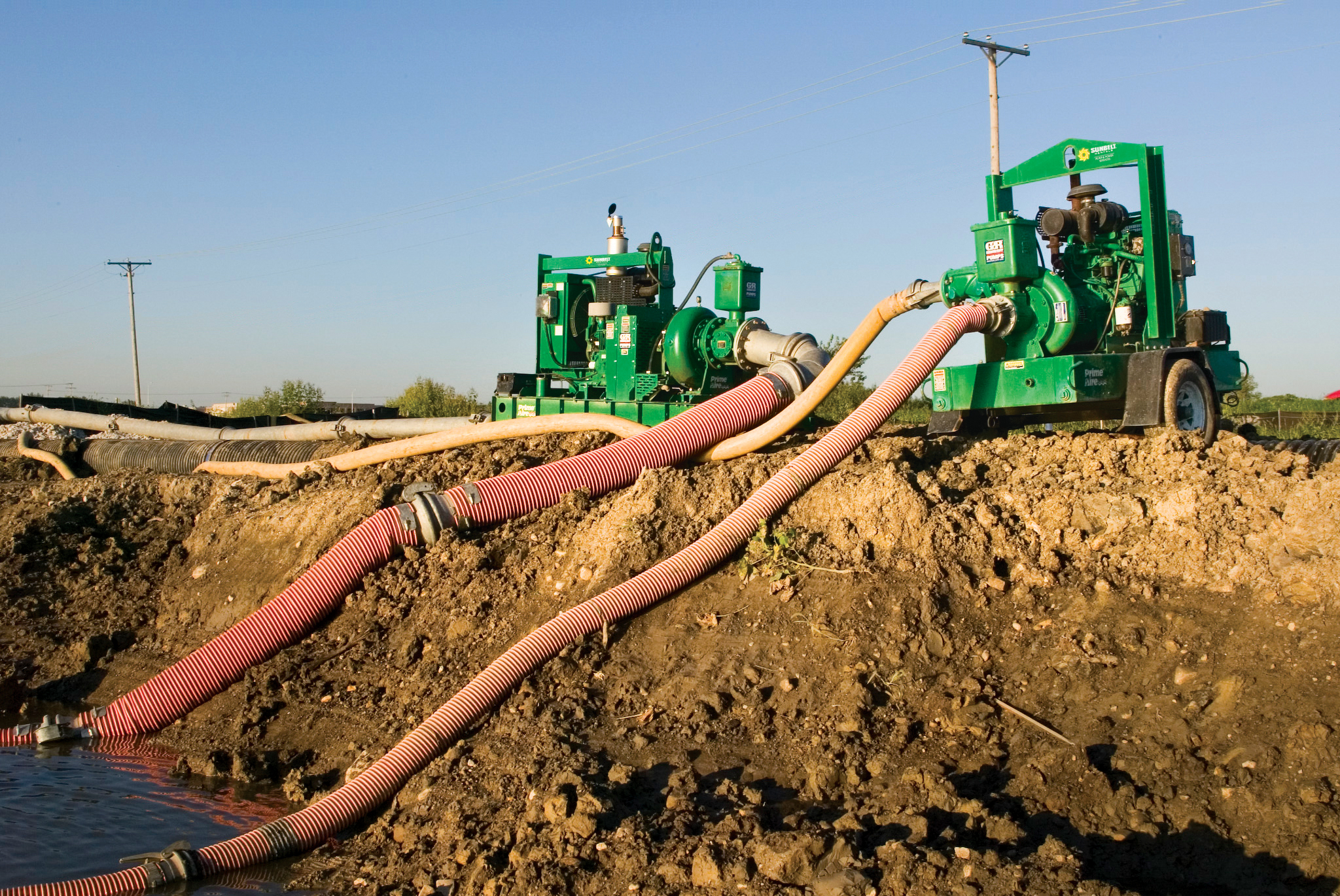
Types of pumps used in construction focus on durability and mobility. Dewatering pump types such as submersible and trash pumps must handle site water containing mud, sand, silt, and stones. Site managers rely on these types of dewatering pumps to keep excavations dry and maintain structural stability.
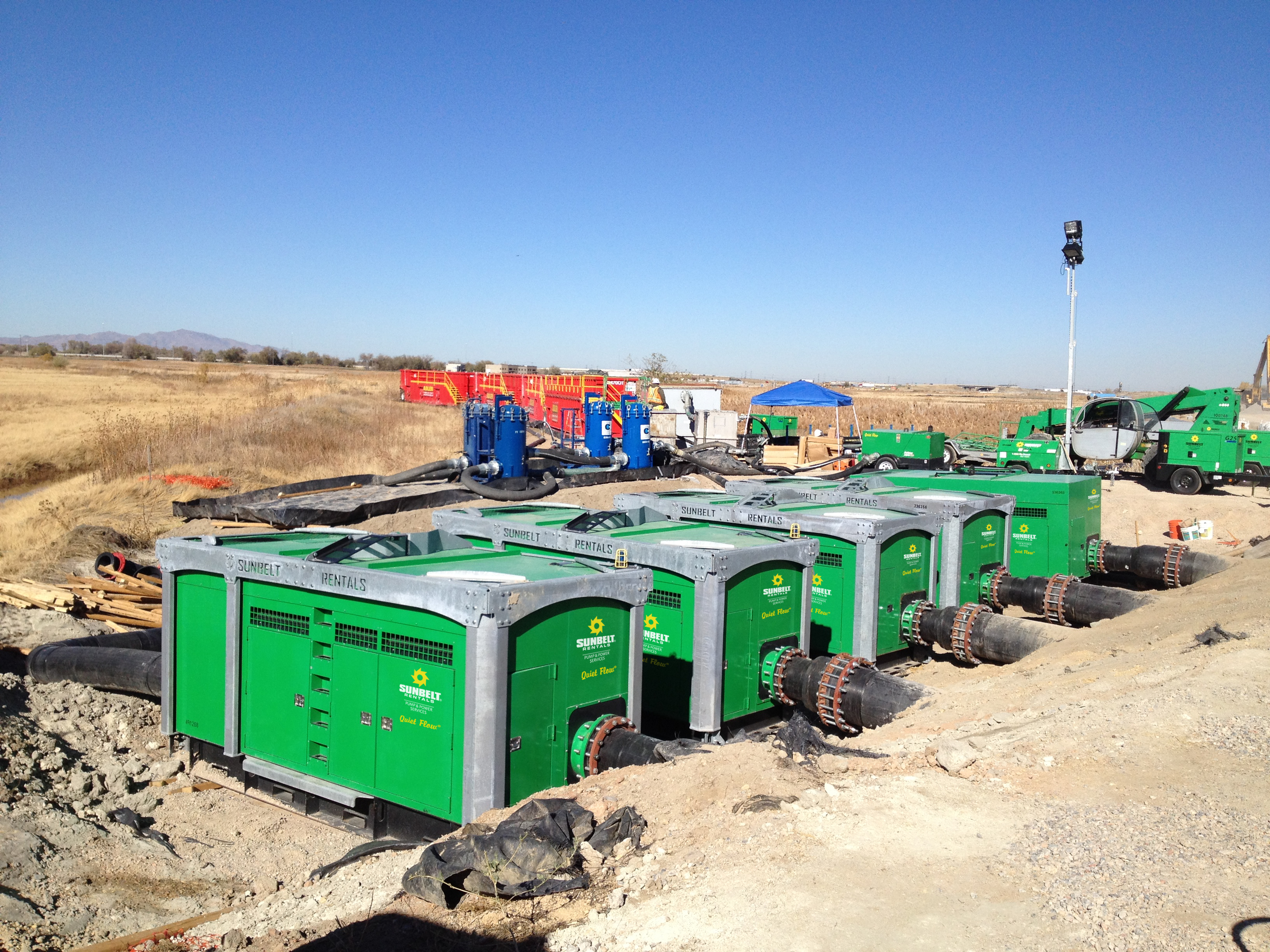
Failure to control groundwater leads to trench collapse or concrete delays. For noise-sensitive urban environments, Sunbelt’s Quiet Flow pumps provide necessary power without violating local ordinances.
Additionally, "Contractor Series" pumps offer rugged handling capabilities for flows up to 2,250 gpm and solids up to 3 inches.
Oil & Gas
Midstream and downstream operations utilize specialized equipment for transfer and processing. Oil & Gas applications require pumps meeting API standards to handle hydrocarbons and drilling muds under high pressure.
During refinery turnarounds, large volumes of hazardous fluids must be moved quickly to empty tanks for inspection. Pumps must often be explosion-proof and grounded to prevent static discharge. Sludge pumps are particularly valuable here for pit cleaning and tank bottom extraction, moving viscous material that fouls centrifugal units.
Water Treatment
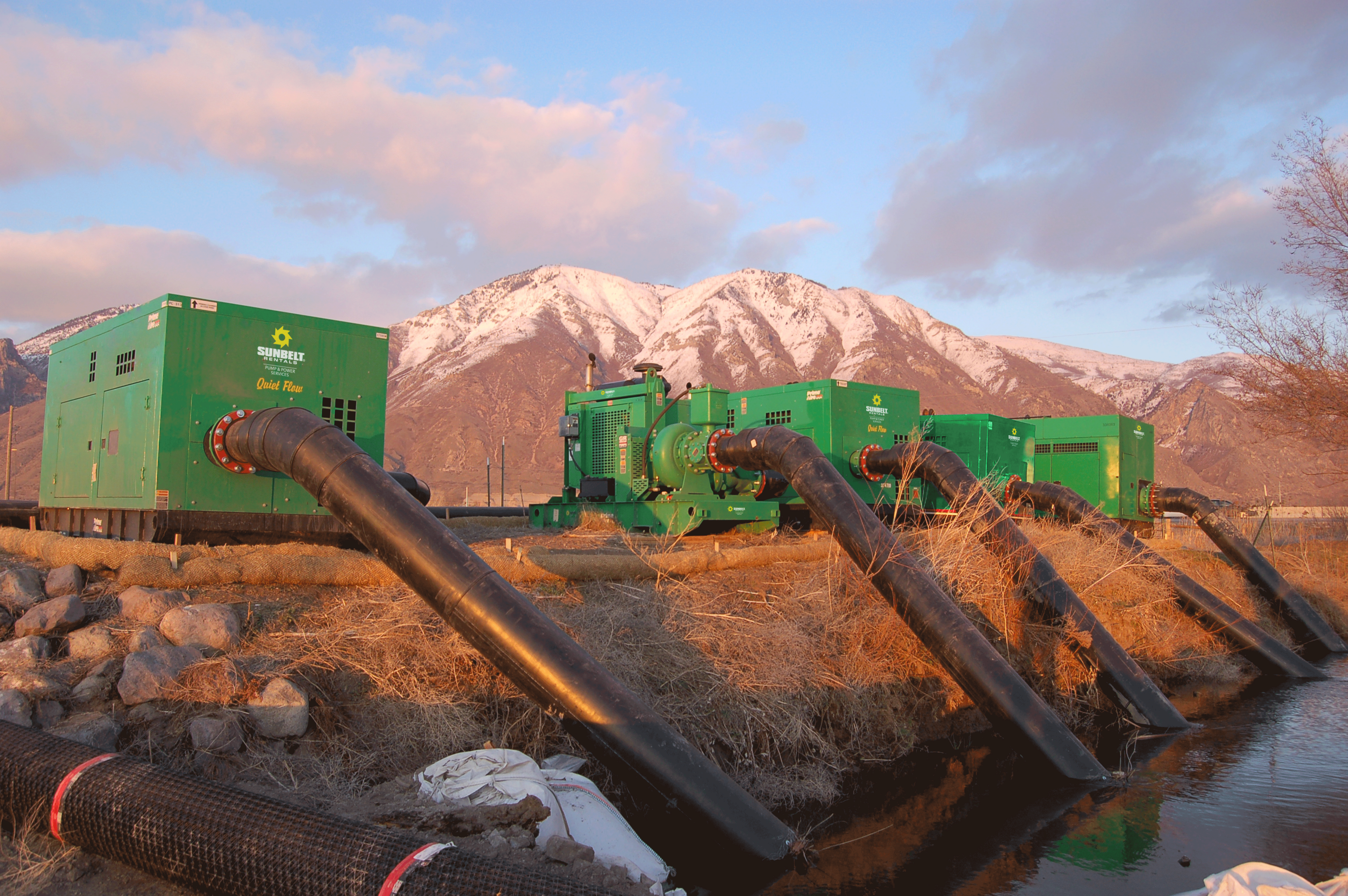
Municipal facilities employ a mix of pumps to manage the water cycle. Large centrifugal pumps handle raw water intake, while positive displacement units accurately dose coagulants.
A specific challenge is ragging, where fibrous wipes clog impellers. Chopper pumps serve as the primary defense against these clogs, protecting against Combined Sewer Overflows (CSO). Unlike standard pumps, these units feature auxiliary cutters and a cartridge-style mechanical seal that slices stringy materials before they enter the intake.
Manufacturing
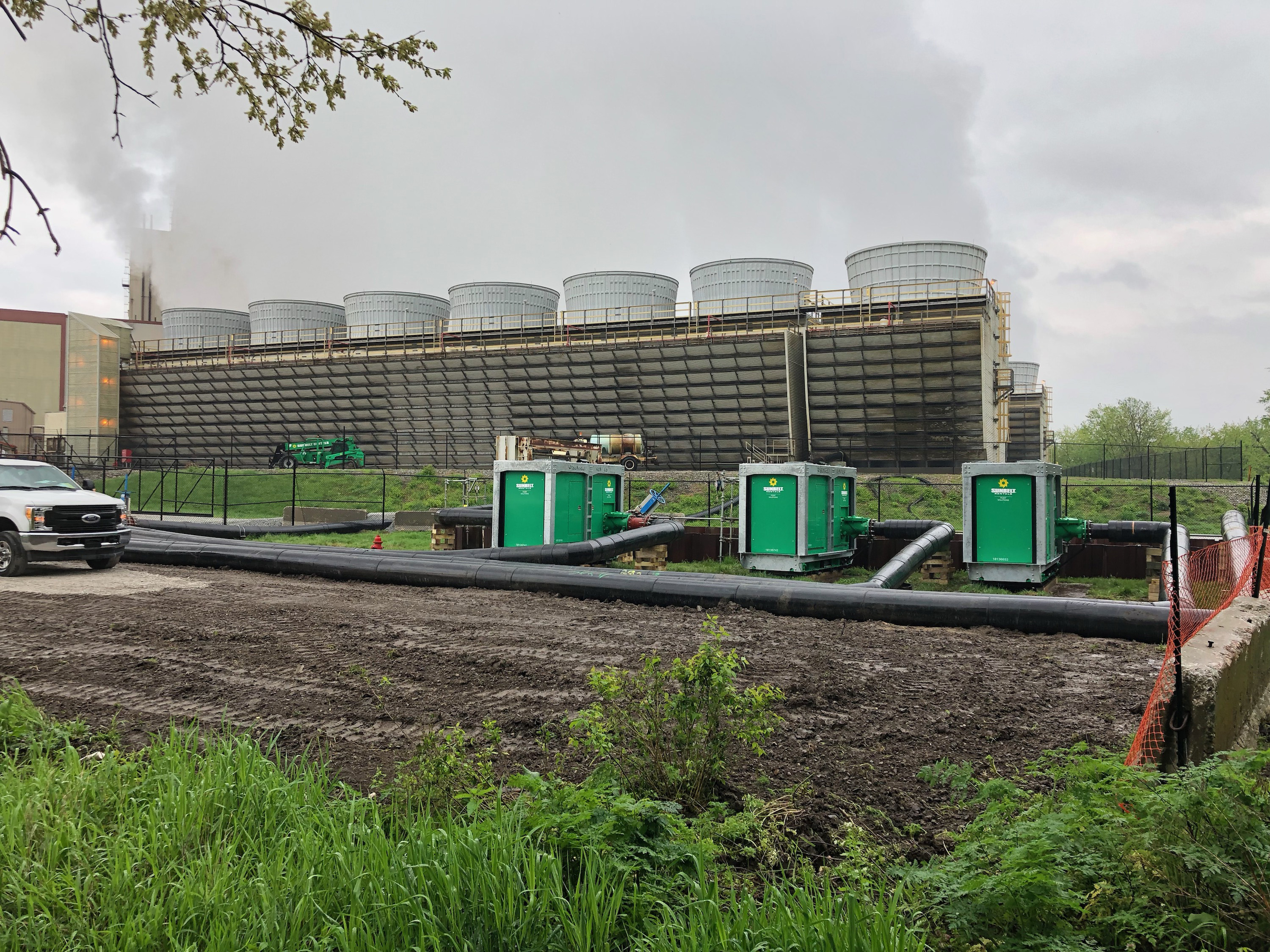
Manufacturing facilities utilize gear pumps for lubrication systems and sanitary pumps for food production.
In these environments, uptime is currency. A failed pump on a cooling loop shuts down production lines. Sunbelt supports these facilities with contingency planning—staging backup pumps on-site to make sure replacements are online in minutes.
Explore Pump Rentals from Sunbelt Rentals
Accessing a diverse fleet of pump rental solutions allows you to adapt quickly to changing project scopes. We do not just drop off equipment; we provide a full turnkey solution.


