
Use the Sunbelt Rentals App
Find, rent, and return equipment, right at your fingertips


But no longer. The Sunbelt Air Monitoring System (SAMS) is the only solution that uses wireless sensors, giving you greater flexibility and even more possibilities for monitoring.
Sensors can send data to the gateway using a high-gain antenna that works at distances of up to 300 yards, depending on the site and application. You can record conditions even when you lose power or your Internet connection. And the applications are endless.
Making sure food processing plants eliminate conditions that create condensation. Protecting delicate materials and instruments at a theme park exhibit in Florida. Mitigating heat-related illness and COVID-19 transmission at fulfillment centers. Measuring energy pulses in wiring at data centers to ensure sufficient capacity. Maintaining stringent specs for military equipment and reusable rockets. And that’s just a few of the current ways organizations use SAMS.
The biggest threats to your operation are usually the ones you can’t see. In industrial plants, commercial warehouses, and on active construction sites, unseen issues with temperature and airborne contaminants can quietly compromise product quality and endanger workers.
Proactive industrial air quality monitoring is a critical strategy for protecting your budget, your timeline, and your people. Modern wireless air monitoring technology gives you the power to see the unseen, providing real-time data to prevent problems before they cost you.
The Essentials of Remote Air Quality Monitoring
This guide will break down the essentials of remote air quality monitoring, from regulatory compliance to the specific equipment that gets the job done. We'll cover the benefits, OSHA regulations, risks you should be tracking, and how a turnkey solution can give you total control over your environment.
Click any of the links below to jump to a section:
What Is Wireless Air Quality Monitoring?
The process of monitoring air quality used to be slow, and only provided a brief snapshot in time, leaving significant gaps in your data where problems could easily develop unnoticed.
Today, wireless air monitoring changes the game. It’s an advanced solution using a network of durable, wireless sensors placed in critical locations throughout your facility or job site. These sensors continuously collect data 24/7 and transmit it to a central gateway. From there, the air monitoring telematics are sent to a secure dashboard.
Our use of air quality remote sensing gives you access to a constant stream of environmental data from any computer or mobile device, providing a powerful, flexible, and uninterrupted view of your site.
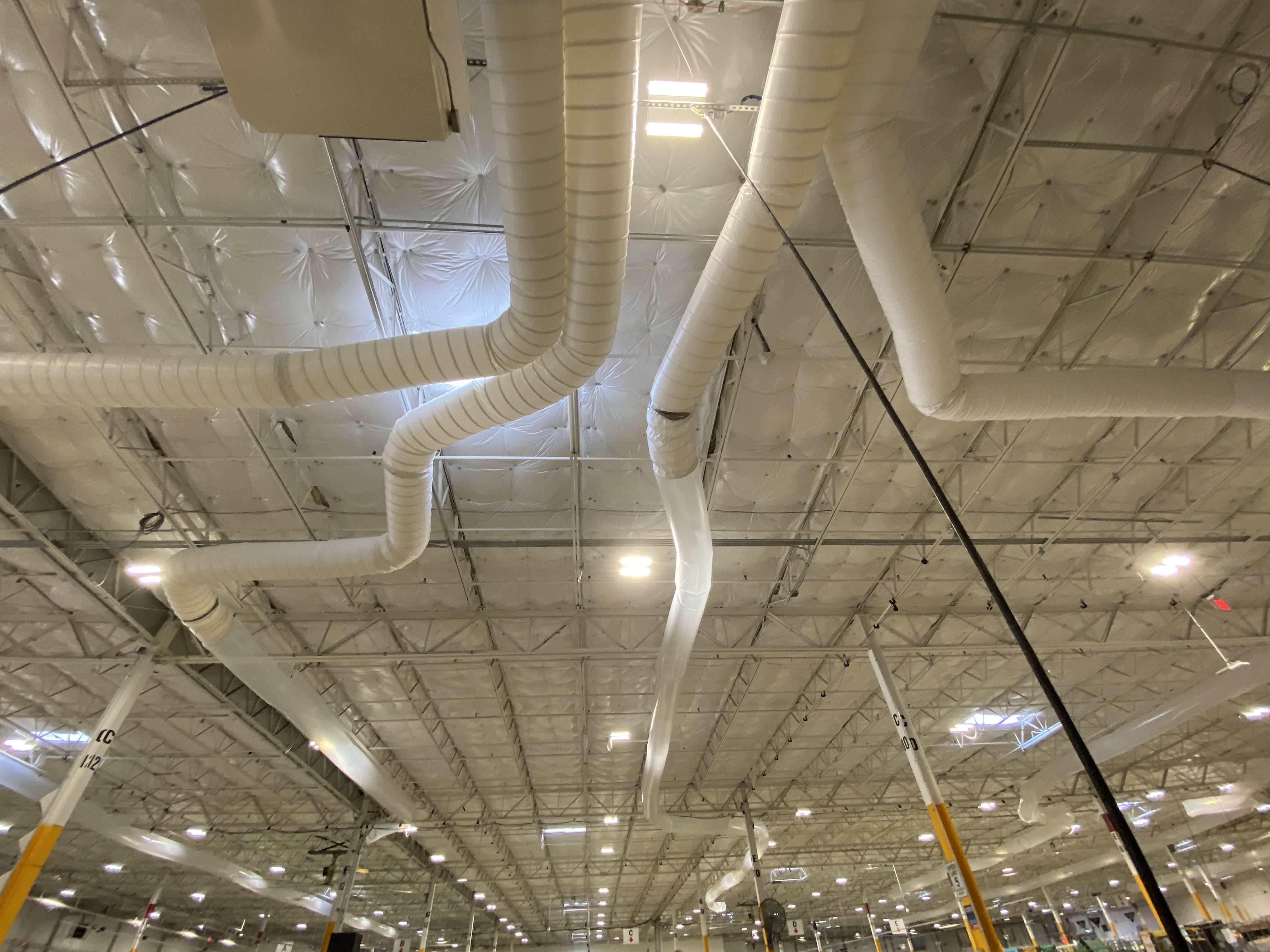
Benefits of Monitoring Air Quality in Industrial and Commercial Spaces
Implementing a commercial air quality monitoring program is one of the smartest investments a manager can make. The benefits have a direct impact on your operational efficiency and bottom line.
With real-time alerts sent via text or email, you can take immediate action to prevent small issues from becoming catastrophic failures. Taking a proactive approach helps you avoid costly shutdowns, protect valuable products and materials, and keep your project on schedule.
For industrial applications, maintaining precise environmental conditions is often critical for process integrity and quality assurance. Continuous data logging also provides an invaluable, permanent record that can be used to prove compliance with industrial air quality standards, counter claims, and demonstrate a firm commitment to worker safety.

OSHA Air Quality Regulations and Monitoring Guidelines
Maintaining a safe work environment is nonnegotiable, and that includes the air your people breathe. While OSHA air quality regulations don't set a single standard for overall indoor air quality, they do enforce strict limits on specific airborne contaminants. Adhering to OSHA workplace air quality standards is a legal requirement, and failure to do so can result in significant fines and, more importantly, put your workers at risk. It's also important to be aware of other guidelines, like those from the EPA. While EPA air quality monitoring often focuses on outdoor ambient air, its findings can inform indoor safety protocols.
An active air quality monitoring system is the most effective way to keep you compliant. By continuously tracking key metrics, you can identify and mitigate potential hazards before they become violations.
Air Quality Issues You Should Be Tracking
A comprehensive monitoring strategy tracks more than just basic temperature. Different conditions can impact your site in various ways, and a versatile system should give you visibility into all of them.
Temperature, Humidity, and Dew Point
These three factors are critical. Uncontrolled humidity wrecks drywall, feeds mold, slows concrete curing, and can lead to condensation that damages sensitive equipment and products.
Carbon Dioxide
Elevated CO2 levels are a clear sign of poor ventilation, which can impact worker alertness, productivity, and health. A reliable CO2 air quality monitor is essential for any enclosed or poorly ventilated space.
Volatile Organic Compounds
VOCs are harmful chemicals emitted by paints, solvents, cleaning agents, and many manufacturing processes. Proactive VOC air monitoring is a critical part of protecting workers from hazardous exposure.
Particulate Matter
Dust from construction, manufacturing, or other industrial processes can pose serious respiratory risks. Diligently monitoring for particulates means you’re providing a safe breathing environment for your crew.
What Is the Sunbelt Air Monitoring System (SAMS)?
SAMS is the purpose-built tool for the challenges of real-world job sites. It’s a turnkey solution designed for rugged industrial, commercial, and construction environments. SAMS uses fully wireless sensors capable of transmitting data up to 300 yards, giving you unmatched flexibility in sensor placement.
A key feature is its ability to continue logging data even if you lose power or an internet connection, ensuring you never have a gap in your records. It’s more than just a piece of air quality monitoring equipment; it’s a complete data management solution that provides total peace of mind.
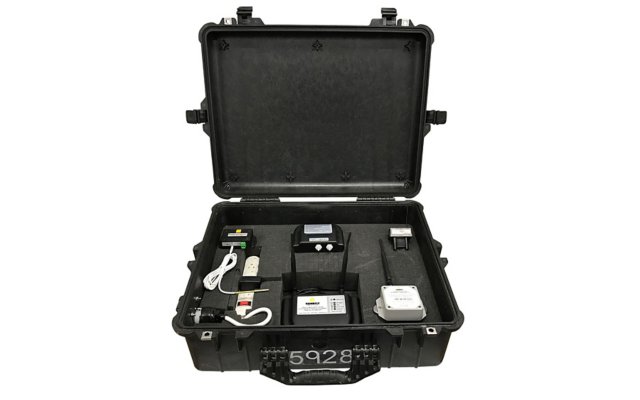
Originally designed to meet stringent military specifications, SAMS successfully monitors nearly any critical project and is the only logging system able to continuously collect data in the event power and/or internet connectivity is lost.
Features
The SAMS unit is a versatile powerhouse. Its sensors can measure everything from ambient temperature and humidity to CO2, VOCs, and particulate matter. The compact, water-resistant sensors can be installed nearly anywhere.
When paired with temporary HVAC systems, SAMS confirms that your climate control equipment is operating correctly and delivering air at the proper temperature. You can set custom thresholds for any measurement, and if a condition ever goes out of range, you and our team receive an instant alert, allowing for an immediate response.
Use Cases
The applications for SAMS include:
- Industrial manufacturing: Maintain precise environmental conditions to protect sensitive processes, prevent condensation on equipment, and maintain product quality
- Commercial warehouses: Monitor for heat stress conditions to protect workers and maintain inventory integrity
- Construction: Protect drying materials like concrete, drywall, and wood from humidity damage, ensuring structural integrity and preventing costly rework
- Data centers: Track temperature and humidity to optimize operating conditions and prevent critical equipment failure

Optimize Your Air Monitoring Today
Putting a real-time monitoring solution on your site is a strategy for operational excellence. The data you collect allows you to optimize processes, provide preventative maintenance, and make smarter decisions about your equipment fleet. If you're ready to move from reactive fixes to proactive control, you need an expert partner.
The Sunbelt Rentals team will work with you to scope your needs and recommend a total environmental conditioning solution. With us, you get access to real-time alerts and a partner who's ready to respond 24/7.


