
Use the Sunbelt Rentals App
Find, rent, and return equipment, right at your fingertips

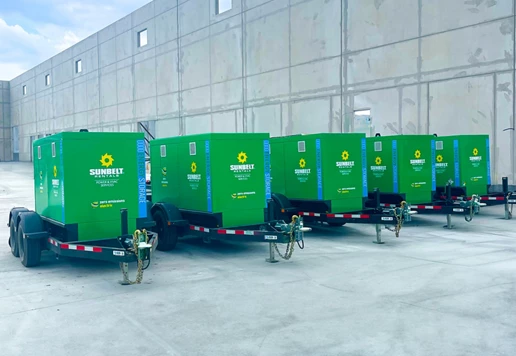
Power Your Future with Battery Energy Storage Systems
Facilities and construction sites are discovering how Battery Energy Storage Systems (BESS) can revolutionize their approach to temporary power — all while dramatically reducing their carbon footprint and improving BESS sustainability.
In this article, we'll show you how BESS units and Energy Management as a Service (EMaaS™) are game-changers for temporary power. You'll discover practical solutions that can dramatically cut your fuel costs, noise, and emissions while keeping your operations running smoothly. Click any of the links below to learn more:
Cut Your Fuel Costs, Noise, and Emissions with BESS
Featuring expert insights from our webinar, "Decarbonization Through Energy Management: Supporting Your Sustainability Goals," Mark Wilton, Director of Sustainable Energy — Power & HVAC, and Jason Thompson, SVP of Power & HVAC Services and Pump Solutions, share their expertise on this transformative technology. Their insights show how a BESS system can provide quiet, emission-free power during low-demand periods, while a smart power management strategy can significantly reduce generator runtime and fuel consumption.
Key Takeaways
- Smart power management can reduce generator runtime, fuel consumption, and emissions.
- BESS equipment provides quiet, emission-free power during low-demand periods.
- EMaaS™ helps optimize your power ecosystem through real-time monitoring and expert support.
- Rental solutions give you access to the latest sustainable technology without capital investment.
What Are Battery Energy Storage Systems (BESS)?
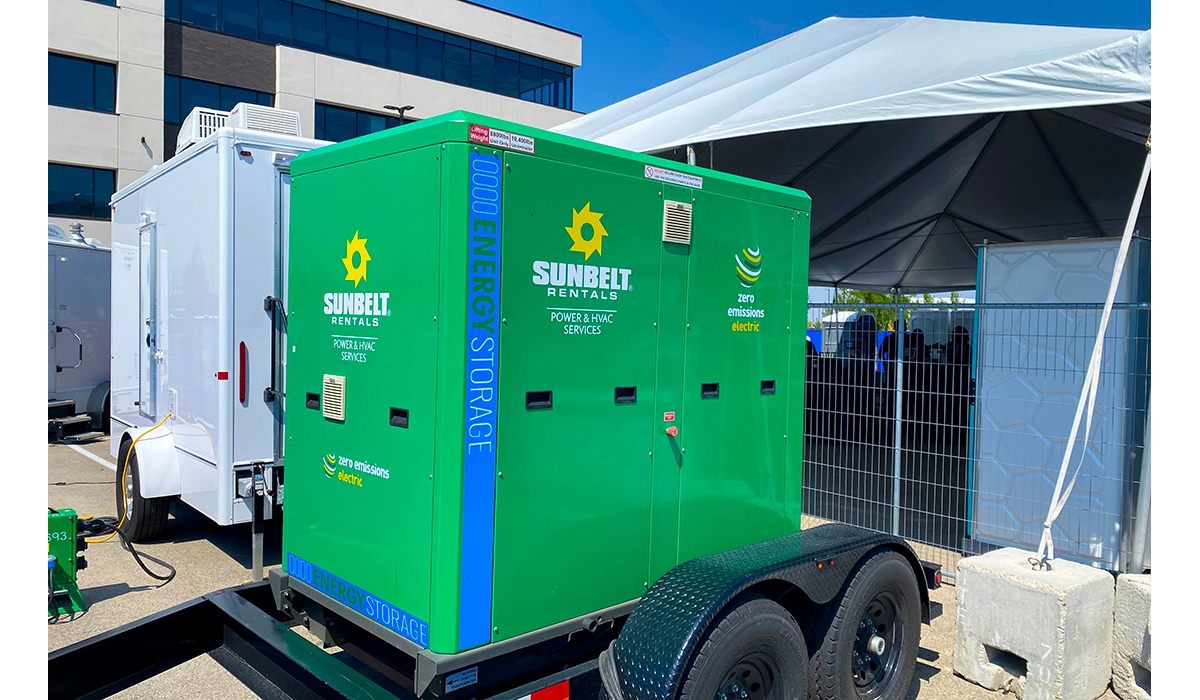
So, what is BESS? A Battery Energy Storage System fundamentally changes how we manage power. Unlike traditional generators that run continuously regardless of demand, BESS technology stores energy during low-demand periods and delivers it precisely when needed. This versatility allows BESS units to operate effectively in standalone, hybrid, and parallel setups to meet specific project needs.
Types of Battery Energy Storage Systems
Battery energy storage systems are typically categorized by capacity. Compact, towable units excel in targeted applications, effectively powering job site trailers or security systems during overnight hours. Containerized systems represent the heavy-duty end of the spectrum, often serving as reliable backups for commercial facilities or primary power sources for large-scale remote camps.
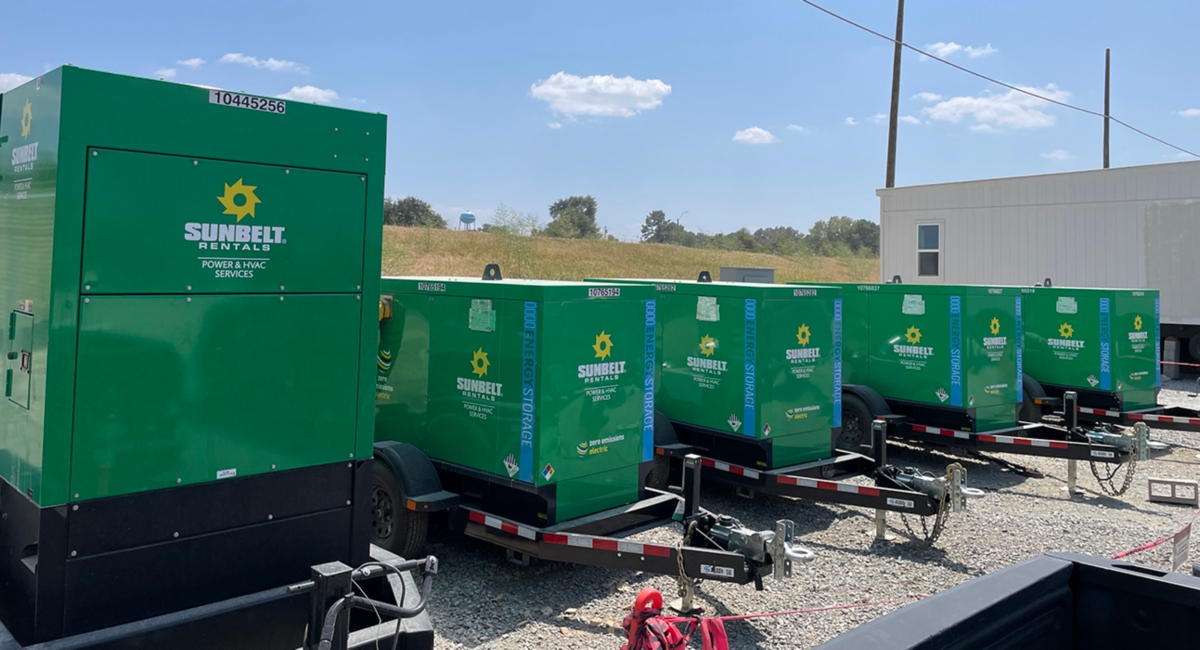
However, connecting multiple smaller batteries in parallel is the preferred strategy for dynamic construction projects. Daisy-chaining several units creates a modular solution that matches the high capacity of a large system while offering greater placement flexibility. These configurations also enable site managers to scale power up or down as project phases change, so the right amount of energy is available without over-committing to a single massive asset.
Hybrid Operation: BESS and Generators
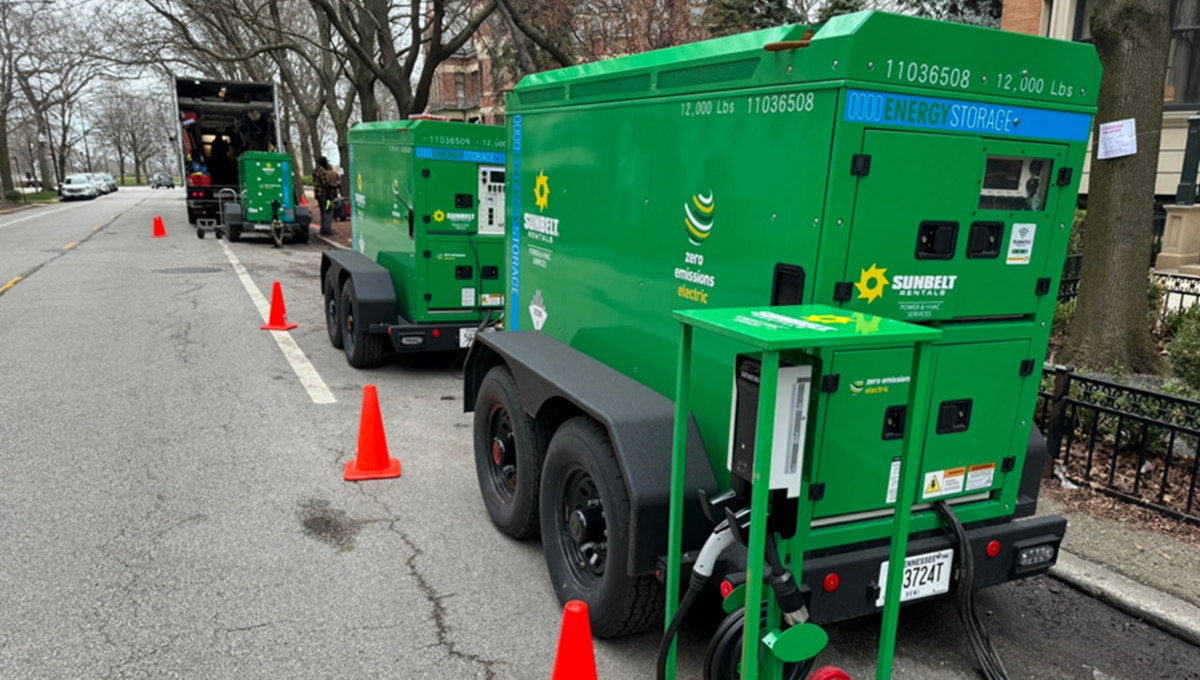
A hybrid configuration utilizing both BESS and diesel generators creates a remarkably efficient system. The most effective operational strategy positions the battery unit as the primary power source, managing the site's complete load profile continuously. In this setup, the generator shifts to a supportive role, engaging strictly to replenish the energy storage system once depletion levels are reached.
Running the engine solely for recharging purposes ensures it operates at optimal load capacity, maximizing fuel economy while eliminating the mechanical wear and emissions associated with long periods of idling or low-load runtimes.
BESS Components
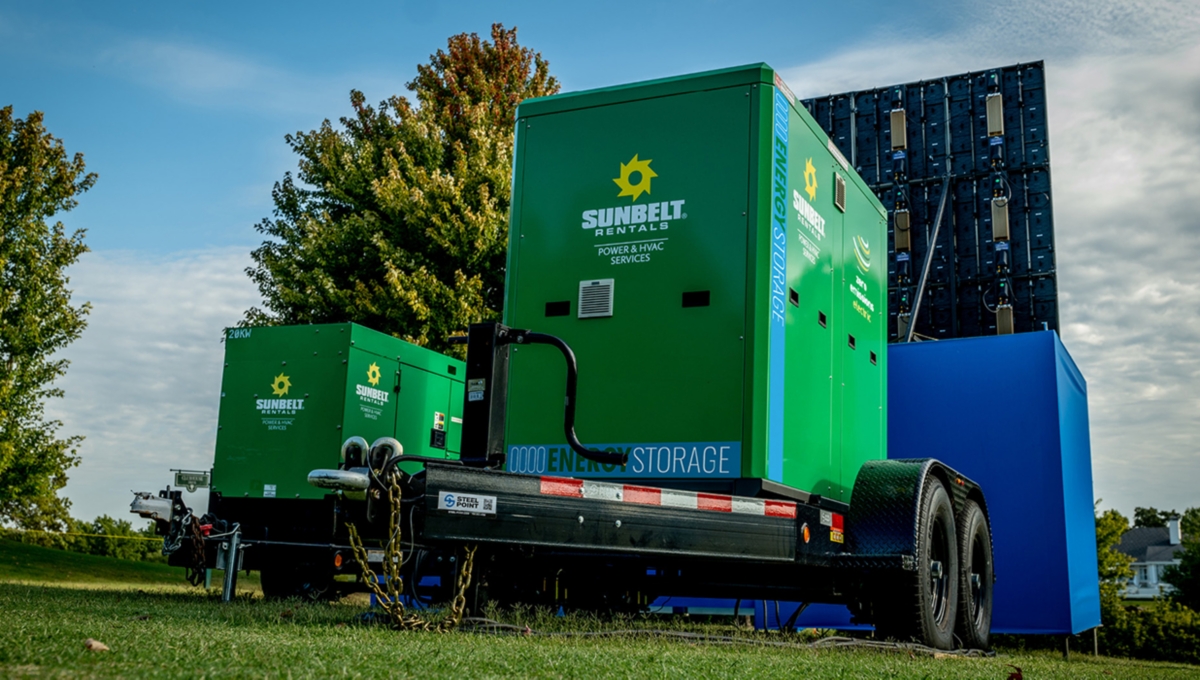
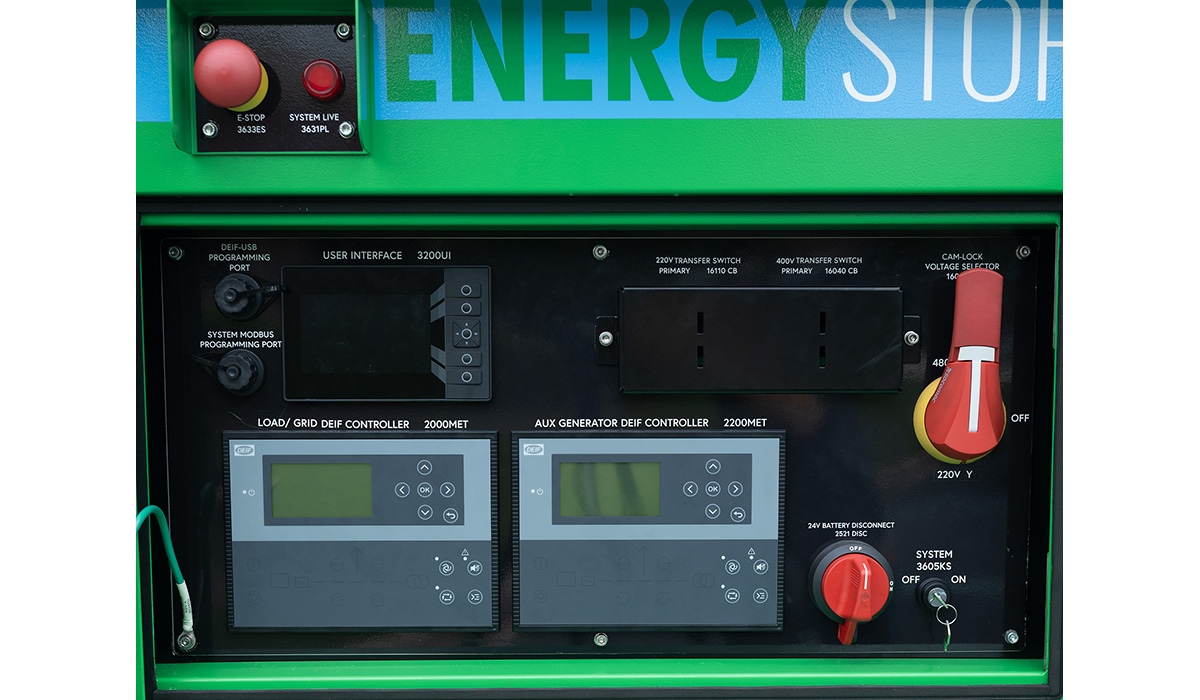
To understand what a BESS system is, it helps to know the core BESS components that work together.
Battery Module
This is the heart of the system, consisting of multiple battery cells packaged together to store electrical energy. The total capacity of these modules determines how much power the system can hold.
Power Conversion System (PCS)
The PCS is an advanced inverter that converts incoming AC power from a generator or the grid into DC power to charge the battery. When power is required, it reverses the process, converting the stored DC energy back into usable AC power for the site.
Battery Management System (BMS)
The BMS acts as the safety and control center, constantly monitoring the health and status of each battery cell. It manages charging and discharging to optimize performance and protects the system from potential issues, ensuring a long and reliable service life.
Transformer
Larger BESS installations often include a transformer to adjust the voltage of the power output, ensuring it perfectly matches the specific requirements of the connected equipment or facility grid.
How BESS Meets Today’s Power Challenges
Construction sites and facilities increasingly prioritize operational resilience and efficiency over simple power delivery. Project stakeholders now demand systems that guarantee energy reliability and system redundancy while aggressively controlling operating expenses.
Successfully balancing these mandates requires strategies that reduce fuel consumption, minimize disruptive noise levels, lower the frequency of service calls, and ensure safer work environments — rigorous objectives that often strain the capabilities of conventional power setups.
At construction sites, especially in early phases, traditional power sources might not be readily available. Workers need convenient electric equipment charging stations at all times. Facility managers already face challenges when balancing regular operations with increasing charging demands. That's where BESS technology makes a real difference.
Benefits of Battery Energy Storage Systems (BESS)
The benefits of Battery Energy Storage Systems are tangible for both construction sites and facilities. We're seeing managers use BESS in innovative ways. For example, BESS units can power jobsite trailers throughout the day, with generators only running when recharging is needed. This smart energy management reduces fuel consumption, minimizes operational emissions, and optimizes generator runtime while maintaining consistent power for essential site operations.
EMaaS™: The Future of Power
Energy Management as a Service (EMaaS™) takes power optimization beyond just equipment. At Sunbelt Rentals, we use advanced telematics and real-time monitoring to ensure your power system operates at peak efficiency while minimizing waste. By taking an entire power ecosystem into consideration, we can carefully balance various power sources and power consumers to create an optimized solution.
- Utility grid connections
- Traditional generators
- Solar panel arrays
- Electric vehicle and heavy equipment charging stations
- Project site power requirements, like lighting and jobsite trailers
- Electric tools and equipment
- Entertainment and events
Our EMaaS approach begins with understanding your specific load requirements throughout different project phases. We analyze load patterns, identify peak usage periods, and design systems that automatically adjust to changing demands.
By understanding both your power sources and consumption needs, we create intelligent systems that maximize efficiency while minimizing waste. Each power configuration is customized to your requirements, so you have the right amount of power when and where you need it.
For construction sites, this might mean adapting power delivery as projects move through different phases. For facilities, it could involve managing regular operational loads alongside periodic supplementary project demands.
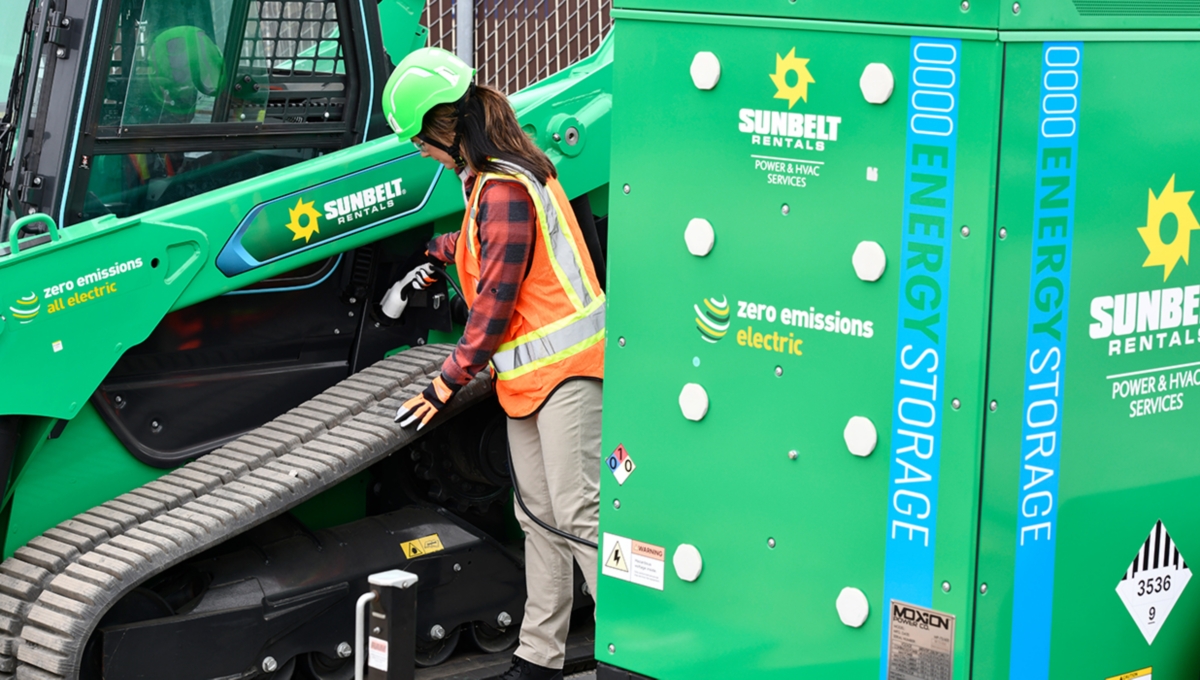
Advanced applications of this technology include supporting high-demand EV charging stations, where battery units act as a buffer to prevent grid strain during peak usage. For the entertainment and events sector, BESS solutions deliver silent, emission-free power, essential for noise-sensitive film sets and live performances.
In remote locations, these systems provide reliable, autonomous energy for critical infrastructure — such as electric pumps, booster stations, telecommunications towers, and security surveillance units — eliminating the logistical challenge of constant refueling.
Real-World BESS Success: The Numbers Tell the Story
Sunbelt Rentals partnered with a national construction company to test EMaaS™ while building a hyperscale data center. We implemented a hybrid system combining 15 generators with BESS units operating in parallel. The BESS served as the primary power source, with generators engaging only when loads exceeded battery capacity or during recharging cycles.
Over 6 months, fuel consumption dropped by 82%, saving 34,026 gallons, and maintenance needs decreased dramatically, eliminating 130 preventive services. The project saw $43,521 in maintenance cost savings while significantly reducing site emissions and noise.
BESS Rentals: A Sustainable Solution
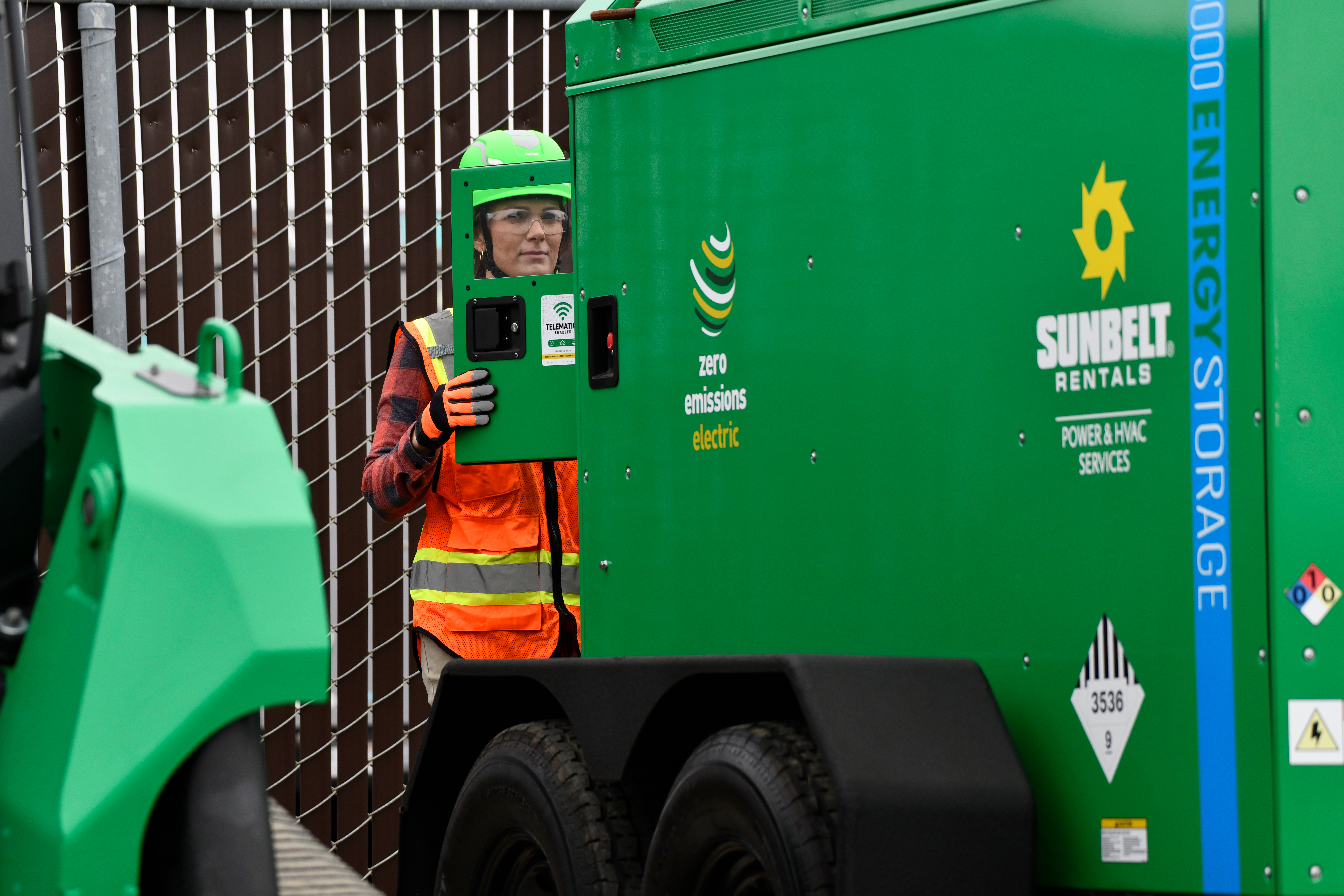
Renting power equipment often makes more sense than buying. Through rental, you can access the latest BESS technology and efficient generators without major capital investment. This approach lets you scale your power solution as needed while avoiding maintenance, upgrades, and storage concerns. The rental model supports sustainability in other ways, too. Equipment sharing extends product lifecycles, and professional maintenance keeps units operating at peak efficiency. You get the right equipment when you need it, avoiding the waste of underutilized assets.


