
Use the Sunbelt Rentals App
Find, rent, and return equipment, right at your fingertips


What Makes Hospital Air Scrubbers So Important?
Hospitals, urgent care centers and medical offices face daily challenges from airborne contaminants. These include infectious aerosols, bacteria, mold spores, and fine dust from construction and volatile organic compounds from cleaning agents. Keep reading to learn about what medical-grade air scrubbers do, their benefits in a medical setting, and how they’re strategically deployed to protect your most vulnerable occupants. Click any of the links below to learn more:
What Are Commercial Air Scrubbers and How Do They Work?
Many facility managers ask, what does an industrial air scrubber do? At its core, a commercial air scrubber is a powerful, portable air filtration system. It's designed to draw in large volumes of contaminated air from a specific area, scrub it, and then exhaust clean air back into the room.
The filtration process is typically multi-stage. Air is first pulled through pre-filters that capture large particles like dust and hair, which protects the lifespan of the main filter.
Next, the air passes through a HEPA filter, the core of any medical-grade air scrubber. HEPA filters are certified by industry standards to capture 99.97% of airborne particles down to 0.3 microns, the size that includes most bacteria, mold spores, and virus-carrying droplet nuclei. Many units in an industrial air scrubber system also include an activated carbon filter to absorb and neutralize odors or VOCs, which is what creates a complete air scrubber purification system.
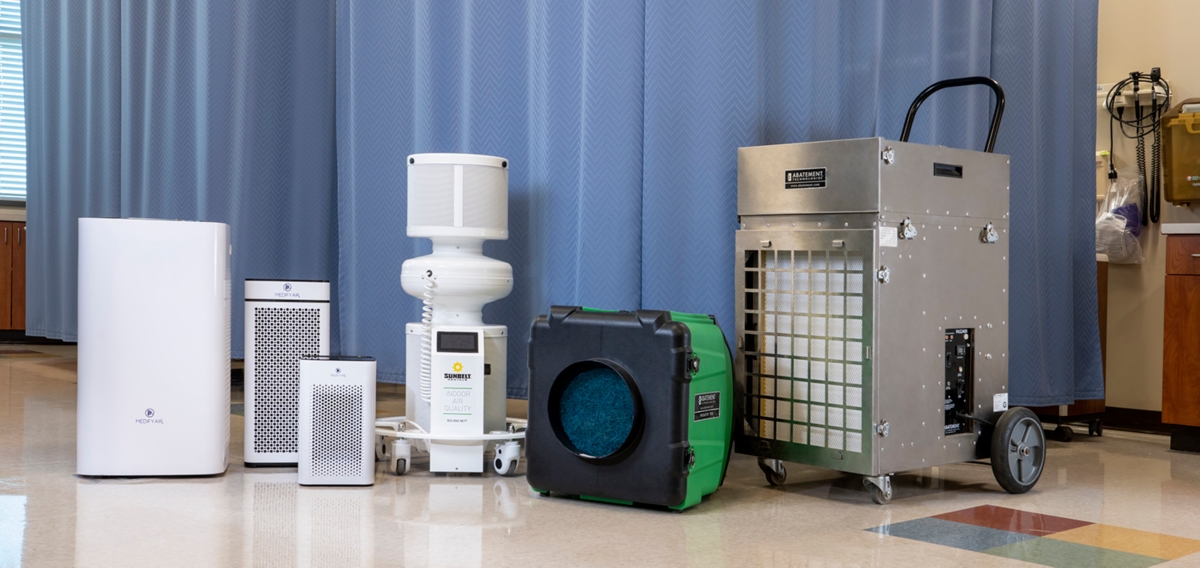
Sunbelt Rentals offers a range of industrial air scrubbers designed for these demanding environments.
Air Scrubbers vs. Air Purifiers vs. Negative Air Machines
These terms are often used interchangeably, but they serve distinct functions. An air purifier is generally a lighter-duty, often residential, unit and lacks the high-volume capacity and durable construction of a professional air scrubber. A true air scrubber hospital unit is a heavy-duty, portable machine designed to rapidly and continuously filter the air within a defined space.
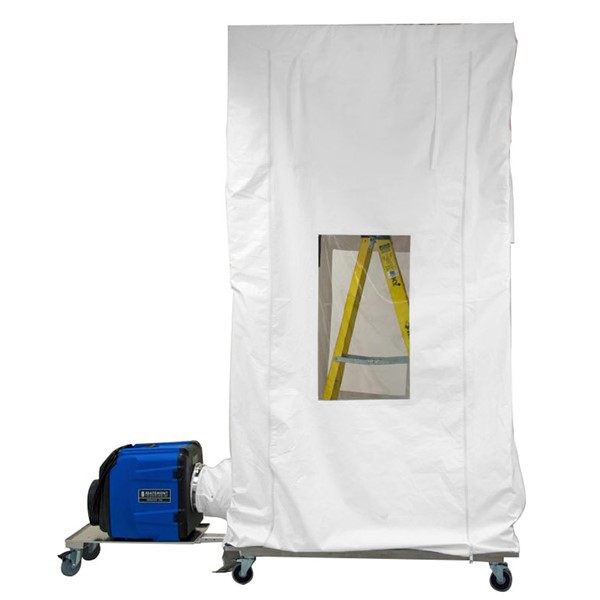
A negative air machine is a different tool for containment. While it also uses a HEPA filter, its primary job is to create a negative-pressure environment by filtering air and then exhausting it outside the containment zone via ducting. This ensures contaminated air from a renovation or isolation room cannot escape.
Additionally, the same containment principle is used to seal off entire hospital areas or wings, where negative air machines work in conjunction with air scrubbers to effectively isolate contaminants during large-scale disinfection.
Improve Air Quality
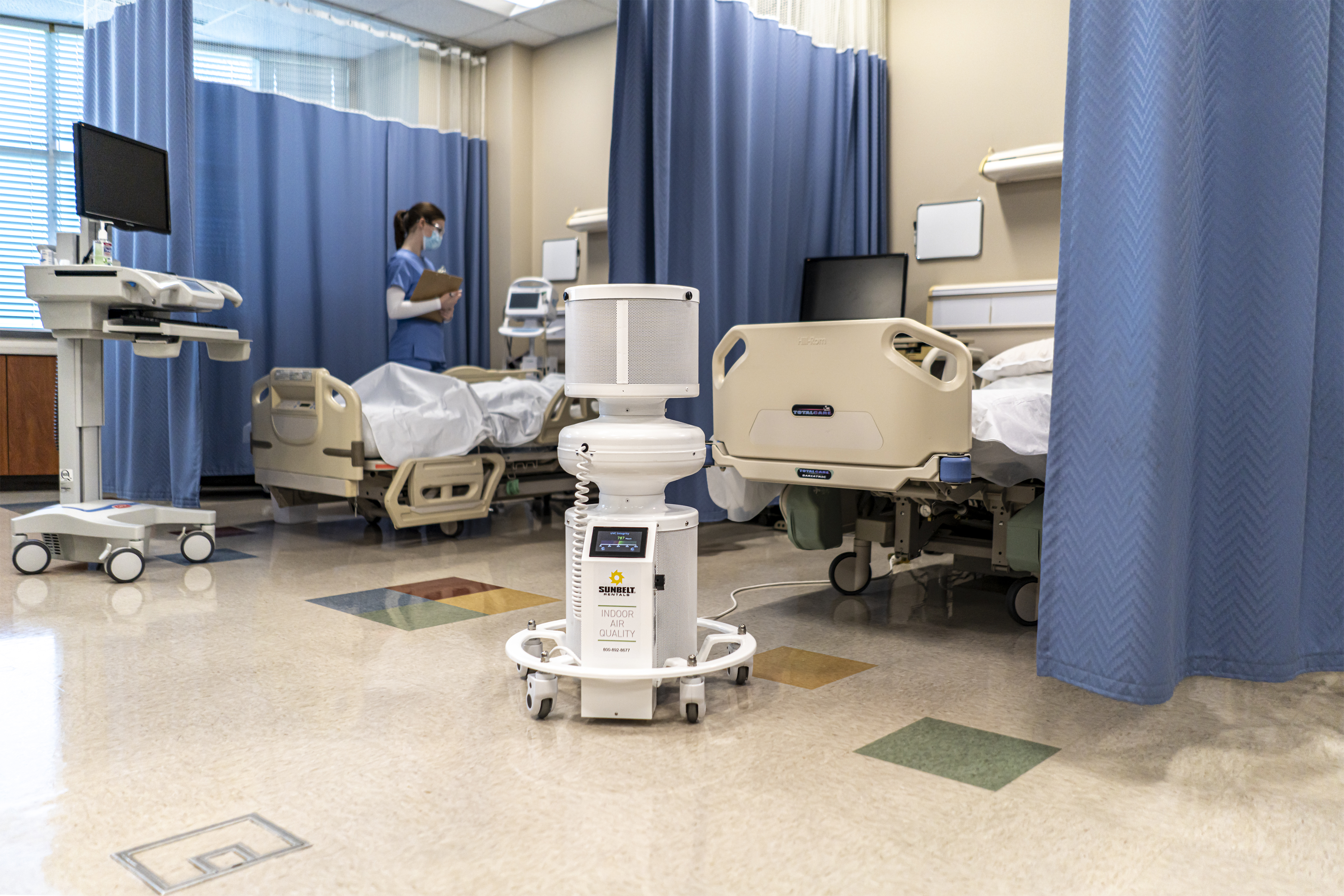
The primary benefit is the immediate and measurable improvement of indoor air quality. In rooms for immunocompromised patients or those with respiratory conditions, constantly scrubbing the air of allergens, dust, and pathogens is critical. A comprehensive strategy to improve air quality is a cornerstone of modern patient care.
Reduce the Spread of Illness
Airborne pathogens are a major vector for healthcare-associated infections. A hospital air scrubber captures these dangerous microbes from the air, helping to break the chain of infection. They’re often used in tandem with negative air machines.
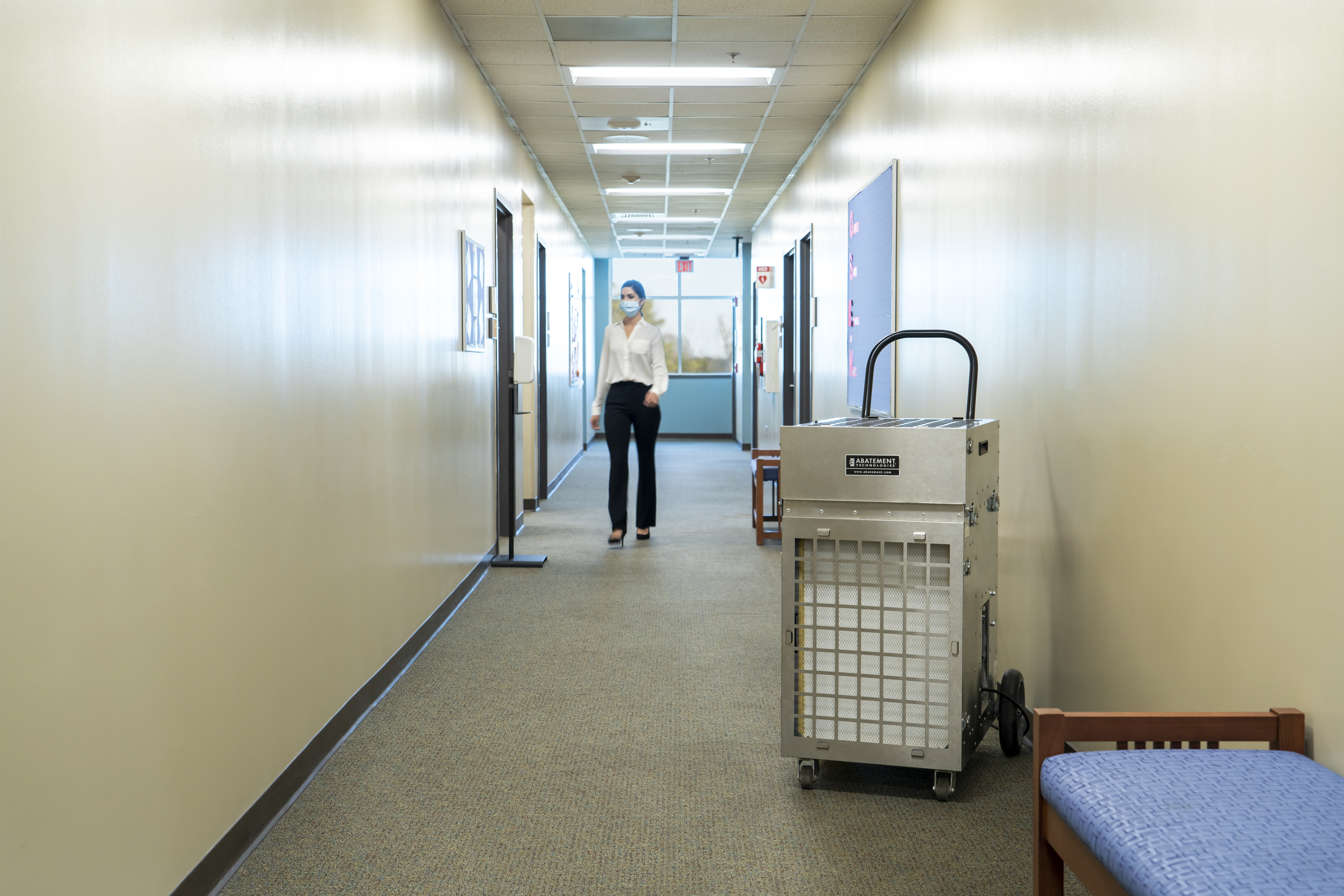
For example, a negative air machine will be used for containment air filtration hospital protocols in a patient's room, while HEPA air scrubbers in healthcare common areas—like nurses' stations or hallways—can capture any contaminants that escape. Taking a layered approach to improving air quality helps mitigate the spread of disease.
Improve Patient Comfort
A stuffy environment with lingering chemical or medical odors can negatively impact a patient's perception of care and their ability to rest. An air scrubber medical office unit with a carbon filter actively removes these odors, contributing to a more comfortable and professional healing space.
Control Odor
Healthcare facilities and clinics must manage a wide range of strong odors from sanitation chemicals to bio-waste. Air scrubbers with activated carbon don't just mask these odors—they absorb and neutralize the VOCs that cause them, resulting in genuinely cleaner air.
Reduce Dust and Particles During Renovations
Any construction, renovation, or even minor maintenance in an active hospital is a high-risk event. Healthcare construction air quality must be strictly managed to prevent the release of dust, which can contain hazardous silica and, more dangerously, dormant pathogens like Aspergillus mold from above ceilings.
Here ICRA guidelines are mandatory. The latest ICRA 2.0 standards from ASHE place an even greater emphasis on continuous air quality monitoring and stringent containment protocols (Classes I-V) based on the project type and patient risk group.
Using an air scrubber for hospital construction, in conjunction with negative air machines and physical barriers, is a non-negotiable part of meeting these standards.
Sunbelt Rentals experts are well-versed in ICRA 2.0 protocols and can help guide facility managers to the right solution to maintain compliance.
Where to Use a Commercial Medical-Grade Air Scrubber
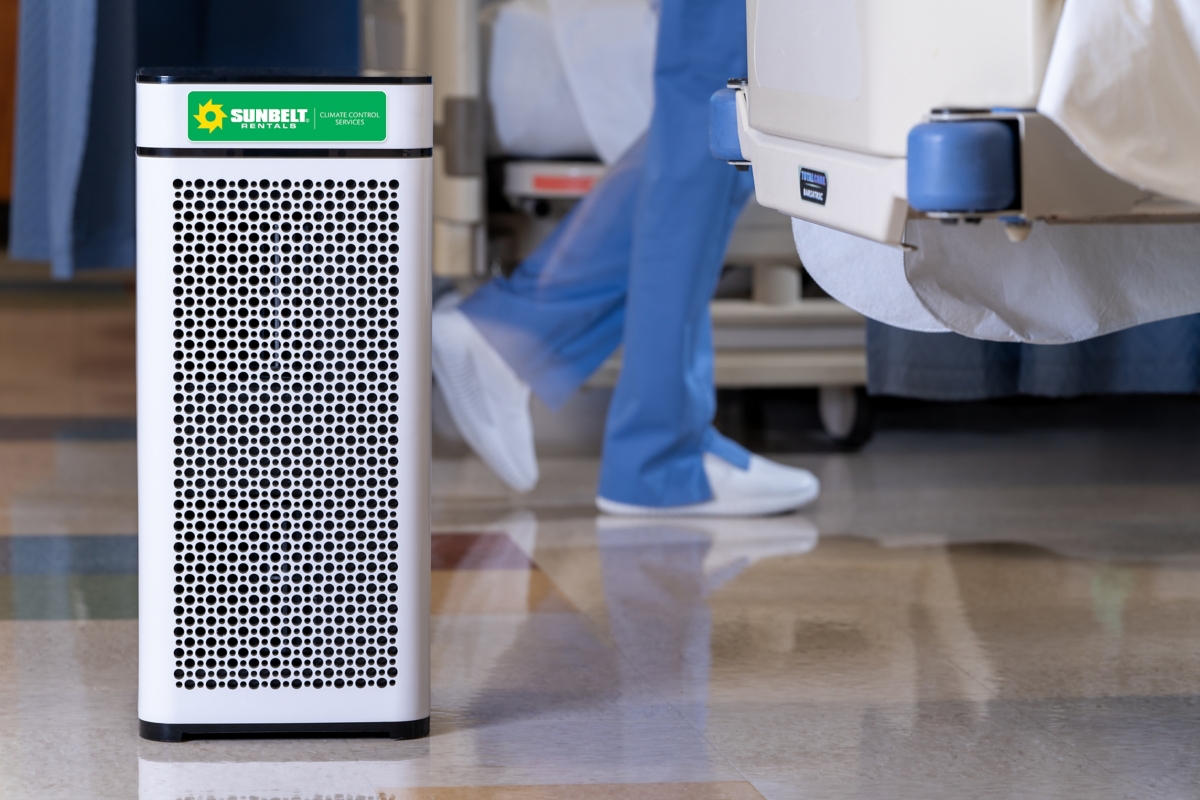
The portability of a medical air scrubber makes it a flexible solution that can be deployed for planned upgrades or as an emergency response.
Patient Waiting Areas
These high-traffic, enclosed spaces are a primary cross-contamination point. Continuously scrubbing the air with an air scrubber for hospital waiting rooms protects patients and front-desk staff.
Doctors’ Offices
In an exam room or a doctor's office, a portable unit can be used to rapidly clean the air between patients, reducing the risk of transmission from one appointment to the next.
Emergency Rooms
With high patient turnover and unpredictable airborne threats, ERs benefit from supplemental, high-volume air filtration to manage dynamic risks and protect both staff and other patients from infectious aerosols.
Operating Rooms
While ORs have robust, built-in HVAC, portable HEPA units are often used as an additional safeguard during high-risk procedures or for terminal cleaning of the air after an infected case.

You can instantly scale your inventory up or down. Whether you need two units for a small-scale repair or twenty for a major wing renovation, you only pay for what you need.

When a pipe bursts (creating mold risk) or an infectious outbreak occurs, you need equipment immediately. A HEPA air scrubber rental partner provides immediate access to a fleet of ready-to-deploy units.

Renting eliminates the burden of maintenance, filter logging, and certification. This addresses a common question: Is an air scrubber FDA-approved? While the equipment itself isn’t approved by the FDA, the HEPA filters they use are certified to meet a strict performance standard (capturing 99.97% of 0.3-micron particles). Renting ensures your units are always compliant and effective.

Renting frees up capital that would otherwise be tied to equipment, allowing you to allocate those funds to other critical needs. It provides flexible equipment rental solutions for healthcare facilities that adapt to your changing census and project load.
Explore Commercial & Industrial Air Scrubber Rentals from Sunbelt Rentals
Your patients and staff deserve the highest standard of air quality. Don't leave it to chance. From planned ICRA-compliant renovations to emergency air quality management, Sunbelt Rentals is your 24/7 partner.
We have the expertise to assess your needs. For instance, how long should you leave an air scrubber on? The answer depends on the goal. For an air scrubber for hospital construction containment (ICRA Class III-V), units must run 24/7. For general air quality, the runtime is calculated based on the room's size and the desired air changes per hour.
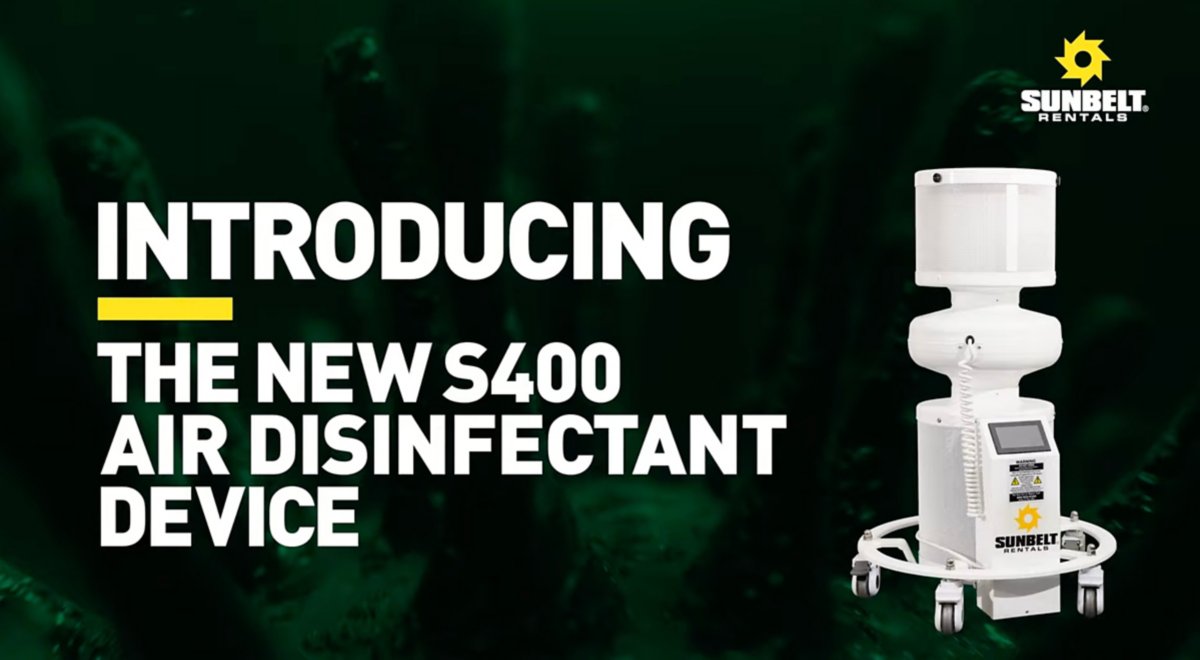
Our experts can help you determine the right equipment and plan—from 500 CFM units for small offices to 2,000 CFM units for large areas, including specialized solutions like the S-400. We deliver the right solution to ensure a safer, cleaner environment for everyone.


