
Use the Sunbelt Rentals App
Find, rent, and return equipment, right at your fingertips

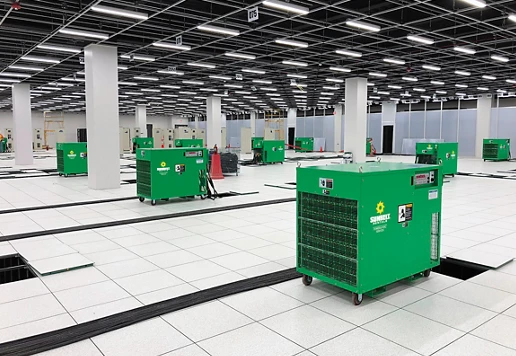
Load Bank Applications for Commissioning
A load bank for commissioning acts as a vital tool for managing risk. Keep reading to learn how these units function, why they support facility uptime, and how our rental solutions keep your project on schedule.
Most data center builds are planned over years, but the window to prove they actually work is incredibly small. Primary construction tasks—structural steel, specialized flooring, and electrical rough-in—often swallow your entire project timeline.
Real heat and real power draw are the only way to find out if your breakers trip or your cooling units struggle. Performing a final load test would include integrated testing of the entire power and cooling systems, in addition to a physical stress test. This proves a total system operations aspect vs. individual component testing, effectively and efficiently protecting uptime and your reputation.
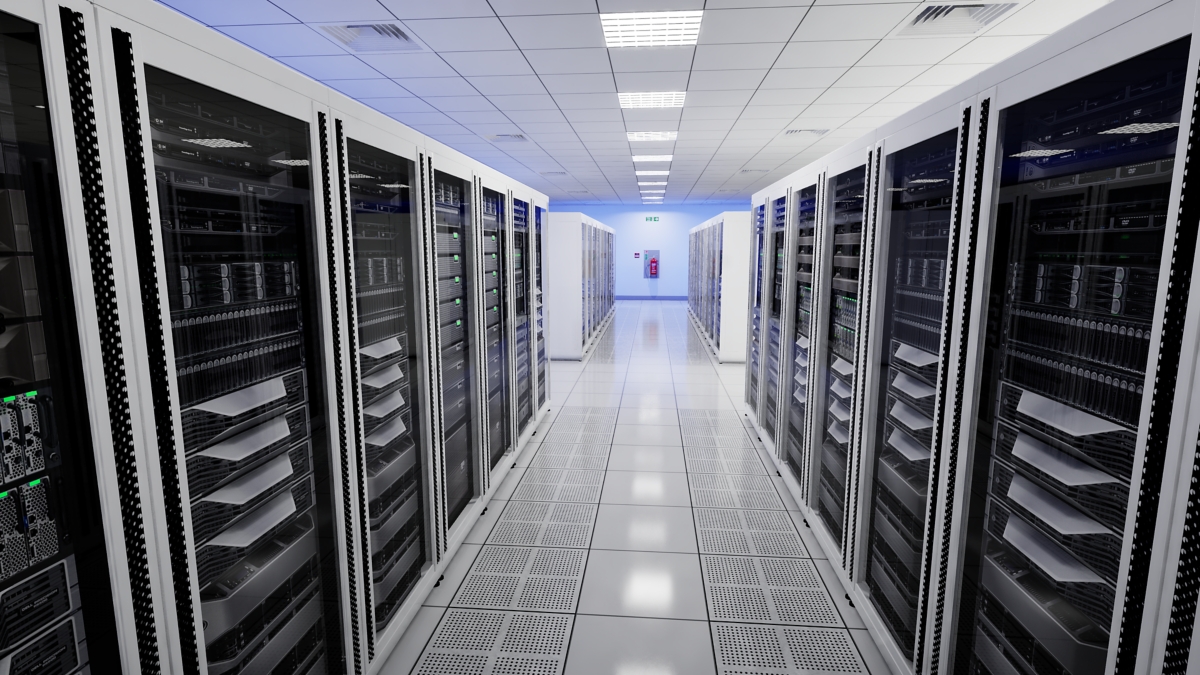
What Is a Load Bank?
Load bank rentals draw power from on-site utility power or generators and convert it into a measurable and controllable load. This creates the conditions needed to confirm that power distribution paths, generators, UPS systems, and cooling equipment will perform as designed before live IT hardware is installed.
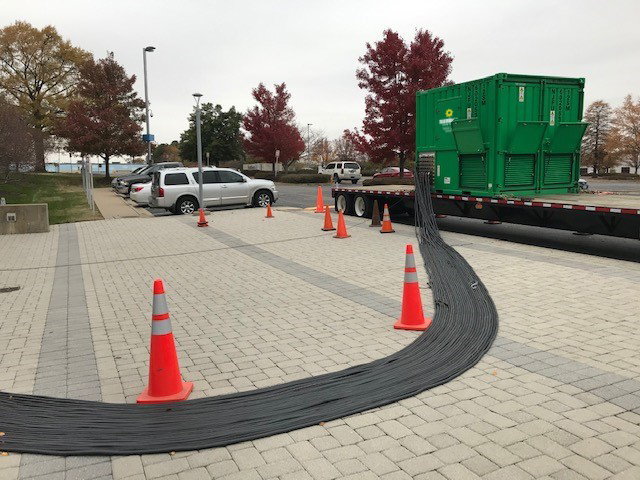
Sunbelt Rentals provides specialized units for every application:
- Resistive units provide pure kilowatt demand for thermal and generator testing.
- Reactive units test the power factor to mimic real-world IT equipment behavior.
- DC load banks allow you to verify battery strings and rectifiers separately.
- High-voltage units let you test primary transformers and utility entry points.
Detailed testing ensures that every breaker, cable, and cooling loop functions as designed. Watch this overview to see how these units are deployed on-site.
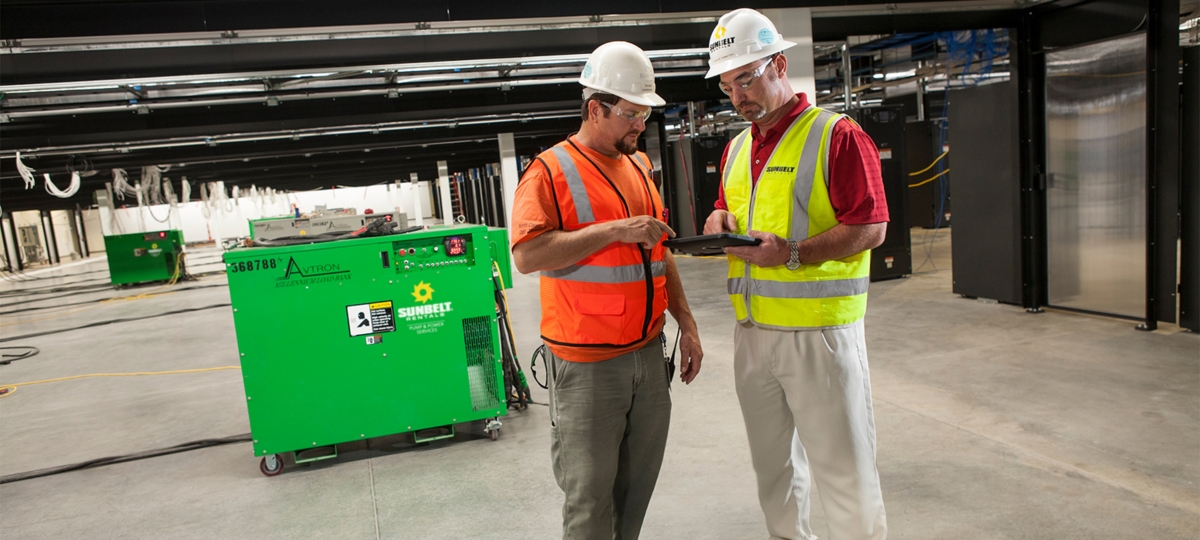
How Are Load Banks Used for Data Center Commissioning?
Data center commissioning involves a layered approach to verify every mission-critical system. A load bank for commissioning allows you to perform Level 4 and Level 5 testing with total accuracy.
Simulate Full Electrical Demand
Your power infrastructure must prove it can handle the maximum design load of the facility. Load bank testing pulls the full kilowatt capacity through your breakers and cables. Load testing allows the engineer and operator to see the system perform under the most critical design conditions, not just those present in the facility when the test is run.
Identify Thermal Hotspots
Electrical resistance creates heat at every connection point in the system. Using a load bank for data center environments allows your team to scan every lug, terminal, and busway joint while the system is under stress. Finding a loose connection now makes sure you avoid a damaged runaway event later.
Verify UPS Battery Endurance
A UPS must bridge the gap between a utility loss and the backup generator starting up. Load banks allow you to discharge battery strings at their rated capacity in a controlled setting. Validation makes sure the batteries hold their charge for the required duration, and the transition is seamless.
Confirm Generator Step-Loading
Generators have to accept large blocks of power immediately during an emergency outage. Resistive and reactive testing on the generator system is commonly performed to prove engine, generator and voltage regulator performance.
Validate Power Distribution Unit (PDU) Balancing
Operators have to balance the electrical load across multiple phases to prevent equipment failure. Load banks allow you to apply specific and controllable loads to individual phases of your PDUs. Testing makes sure local breakers and monitoring systems respond correctly to unbalanced conditions.
Stress Test Cooling Infrastructure
Server racks generate immense heat that your HVAC system must remove. Portable load banks act as heat generators to fill the data hall with thermal energy. Proper verification makes sure your CRAC units and chilled water loops maintain the target temperature when the room is under full stress.
Calibrate Monitoring Sensors
Remote monitoring systems rely on accurate data from thousands of sensors across the floor. Using a known, controlled load allows your facility managers to calibrate current transducers and temperature sensors. Correct calibration makes sure your building management system provides reliable data for daily operations.
Prevent Generator Wet Stacking
Backup generators that run at low loads for too long suffer from unburnt fuel buildup in the exhaust. Applying a resistive load through a load bank rental keeps the engine at its optimal operating temperature. Proper loading cleans the system and makes sure the generator is ready for a real power loss.
Document Tier Compliance
Tier III and Tier IV certifications require physical proof of system redundancy and performance. Load banks provide the measurable data and hard reports needed for official commissioning documents. Documentation proves to investors and tenants that the facility meets the highest standards for reliability and the specification requirements.
Minimize Post-Handover Failures
Failures during the first year of operation often stem from small installation errors that only show up under load. Aggressive testing before the handover forces these infant mortality failures to occur while the construction team is still on-site. This is accomplished by performing total system integrated testing.


