
Use the Sunbelt Rentals App
Find, rent, and return equipment, right at your fingertips

How to Choose a Power Generator
Sunbelt Rentals’ comprehensive guide walks you through how to choose power generator options for your job, explains what size generator for construction site phases is appropriate, details the main types of industrial generators, and clarifies what to look for in commercial generator performance.
By the end, you’ll be equipped with the knowledge needed to select industrial and commercial generator models with confidence and build a power plan that’s as resilient as it is efficient. Click any of the links below to learn more:
Why It’s Important to Pick the Right Generator
Power plans succeed when the generator, distribution, and fuel strategy match the work. Undersizing the unit invites voltage sags and nuisance trips, leading to lost time. Oversizing the unit burns unnecessary fuel while struggling with noise and placement; this can also lead to wet stacking, which can damage the engine and lead to costly repairs.
Practical guardrails require teams to match phase and voltage to the application, set realistic headroom for motor starts, align runtime with the site's refueling schedule, and ensure all distribution is properly rated.
For complex facilities, talking through commercial power generators with a specialist helps turn a rough load list into a resilient plan. That plan considers sensitive electronics and step-by-step construction sequences, and includes parallel options for redundancy so your site stays productive under pressure.
Types of Industrial Generators
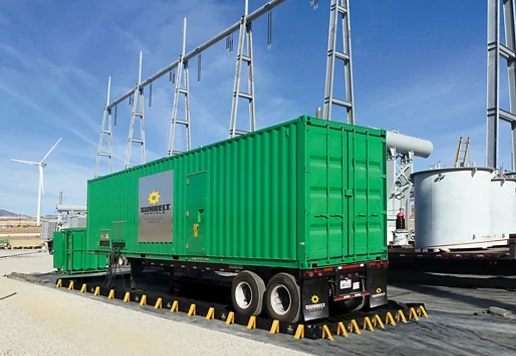
Diesel Container Generators
Containerized industrial power generators deliver stable, low-THD power for large campuses, process loads, and long-duration projects. These units come with advanced sound attenuation, sophisticated paralleling capabilities, and integrated telematics to support continuous operation.
Teams exploring how to select industrial generators often land here for optimized energy solutions when the job runs around the clock or demands high kVA with tight power quality.

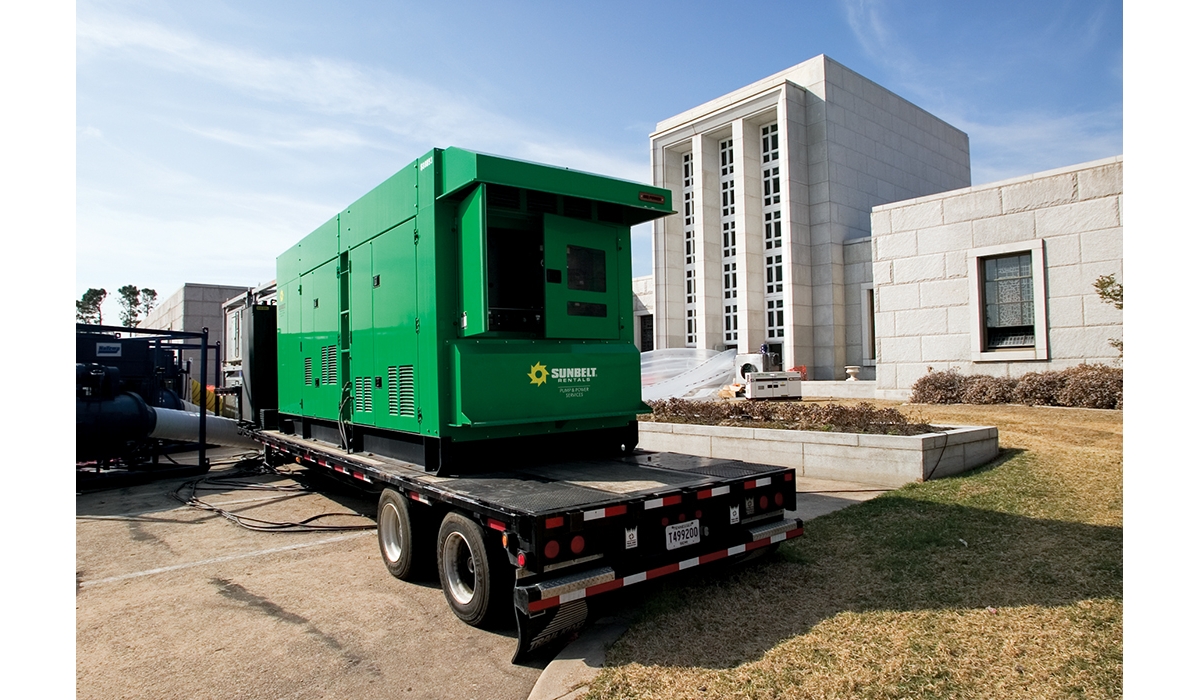
Diesel Towable Generators
Towables are the backbone for worksite generators. These industrial diesel generators are critical for dynamic work like construction sequencing and utility outages; they also provide robust support for temporary HVAC systems. Their design balances easy placement with the torque curves that tough loads require.

Gas Generators
Portable industrial generators serve tools and lighting; they are ideal for short-duration tasks where quick placement matters. They round out a total power plan without replacing larger commercial diesel generators. For specifications and availability, see our industrial gas generators to determine where gas makes sense alongside diesel on professional job sites.

Key Considerations for Choosing a Commercial Generator
Selecting a unit isn’t only a kW question. The right choice blends application, power quality, fuel, and mobility into one field-ready package. When it comes to an industrial generator, how to choose the right one requires a full look at the project.
Consider Your Application
Every scenario has a shape. A new construction site might need to load pumps and lifts on top of temporary HVAC, while planned maintenance leans on a steady base load with spikes at startup. Film and live events prioritize quiet, clean power. Map the peak concurrent loads and identify the circuits that must never drop.
Voltage & Power Needs
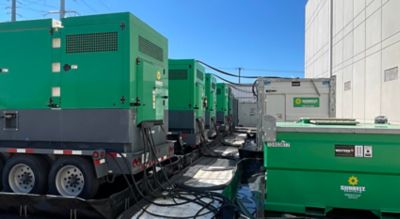
Phase and voltage must be confirmed early. Many sites need simultaneous single- and three-phase outputs. Motors and compressors draw hard on start — often multiples of running watts.
Crews asking what size generator for construction site phases should calculate peak concurrency, then add headroom so cranes, dewatering, and air handlers start cleanly without tripping protection.
Fuel Type
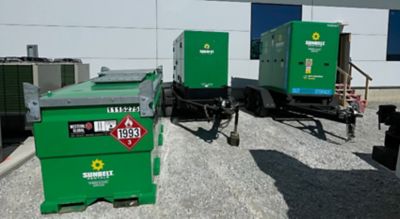
Diesel dominates heavy-duty cycles with predictable runtime alongside broad serviceability. Gas supports smaller, mobile needs.
When emissions or community noise limits are tight, hybridize with Battery Energy Storage Systems (BESS) so the engine runs only when charging or covering peaks. That approach cuts fuel burn, lowers noise, and protects schedules.
Industrial Generator Sizing
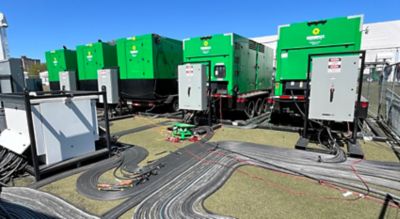
Accurate industrial generator sizing accounts for running kW, starting kVA, power factor, altitude, and ambient heat. Small industrial generators fit targeted circuits and short windows. Large industrial generators support campuses and multi-shift operations.
Choosing a commercial generator goes smoother when you model real loads instead of estimating.
Portability
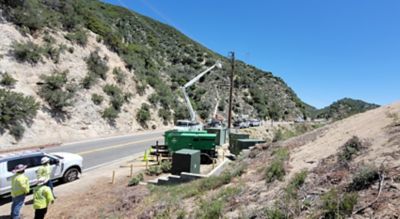
Sites evolve. Portable industrial generators minimize setup friction when laydown space changes week to week. Container units excel when power must sit, run, and be monitored without moving. Think about access roads and ground-bearing pressure before the unit arrives.
Environmental Factors
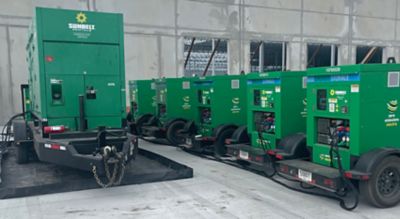
The final configuration is shaped by key environmental factors, including noise limits and emissions regulations, along with spill control plans.
Pairing a generator with BESS creates a low-emission hybrid that carries light or variable loads silently, then recharges during efficient windows. Sunbelt Rentals’ Energy Management as a Service (EMaaS™) optimizes sizing and fuel strategy across the project for lower operating cost and reduced impact.
Always add containment berms to meet spill prevention plans without slowing deployment.
Noise Levels
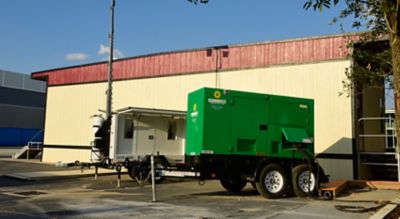
Generator noise is a significant factor, especially for work near residential areas or hospitals. Modern sound-attenuated enclosures are rated in dBA at a specific distance. Verify your chosen unit complies with local noise ordinances to avoid shutdowns.
Safety Features
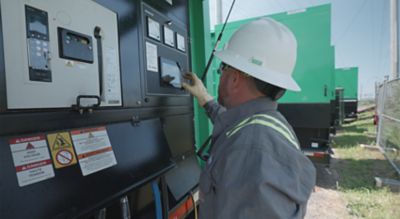
When evaluating what to look for in commercial generator features, prioritize protection. Look for strong grounding practices, GFCI (where applicable), e-stop access, and telematics. Prioritize protection and visibility, not just peak kW on a spec sheet.
Match Generator Categories to Real Loads
Instead of navigating overwhelming lists of generators in industrial catalogs, a better approach is to match the primary generator categories to your real-world loads. Industrial diesel generators in containers are built for plant-level demands and continuous duty.
Towables are the solution for dynamic construction and outage work requiring flexible voltage. Gas portables support specific, short-duration tasks without tying up larger assets. Blending these categories based on the job's requirements delivers adaptable coverage for the entire project lifecycle.
Budget
Renting converts a capital expenditure into a predictable operating expense. With EMaaS™ optimization, capacity and fuel are right-sized to real demand, cutting waste while maintaining uptime and safety.
Generator Quality & Durability
You’ll always have access to high-quality, well-maintained equipment from leading OEMs. Tight service intervals and expert support maintain generator quality and durability across every job phase.
Brand Name Options
A diverse rental fleet gives you access to a wide range of top-tier brands and the latest technology. This allows you to select the ideal model with the specific features your project demands rather than being locked into a single-owned asset.
Reduced Maintenance
Sunbelt Rentals technicians provide project management services such as equipment maintenance, refueling coordination, scheduled checks, and performance monitoring. Your team focuses on production while we manage performance from delivery through pickup.
Why Choose Sunbelt Rentals for Your Industrial Generator Needs?
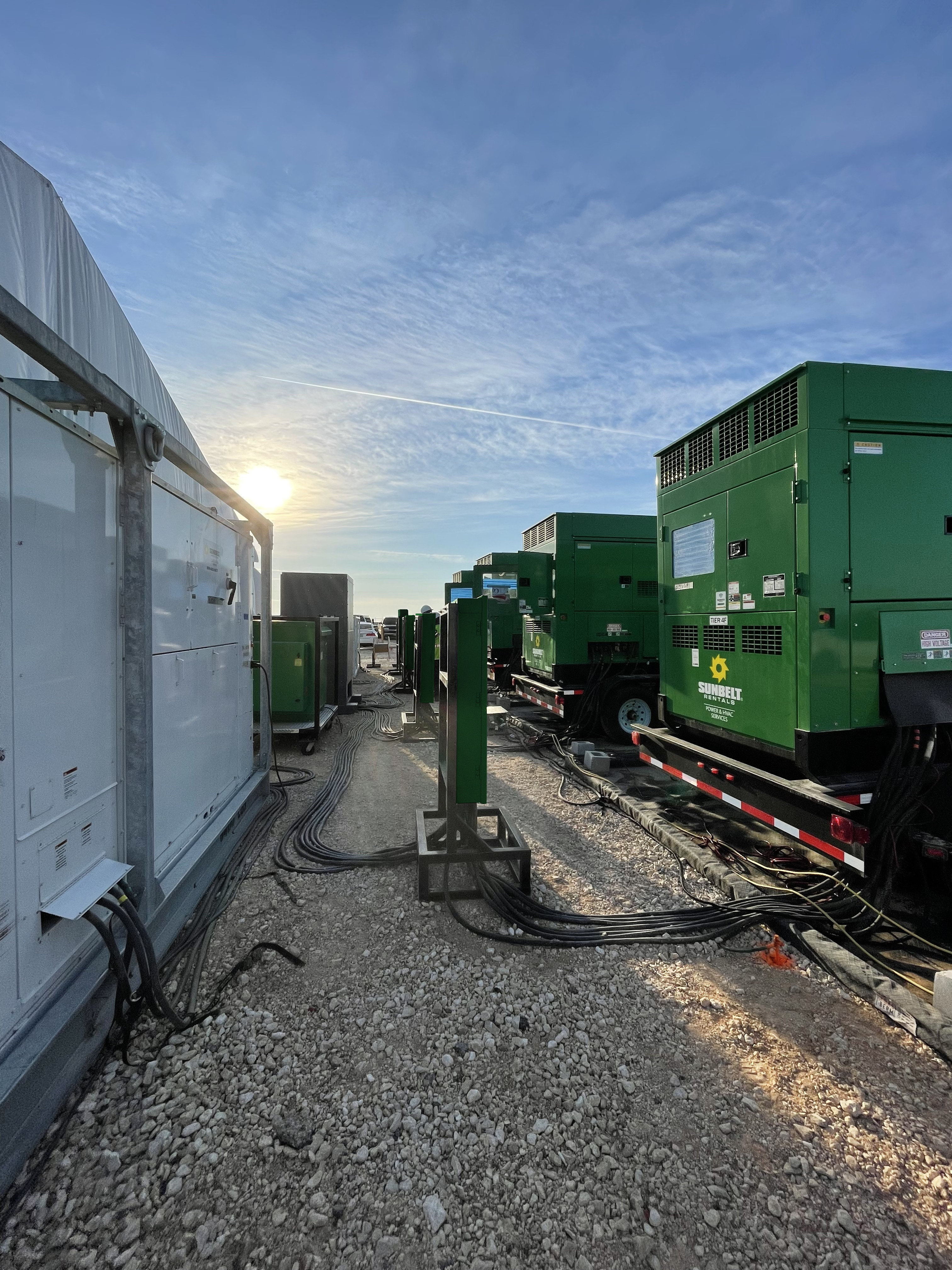
Teams under pressure need a partner who’s fluent in the language of jobsites. Sunbelt Rentals brings depth across industrial power generators, industrial diesel generators, towables, containers, fuel tanks, plus hybrid systems utilizing BESS — all delivered and monitored. Our commitment to rapid response keeps work moving when conditions change.

