Use the Sunbelt Rentals App
Find, rent, and return equipment, right at your fingertips


Differences Between Inductive, Resistive and Capacitive Load Banks
While resistive load banks are commonly used to verify engine capacity and burn off wet stacking, they don’t simulate how your electrical system will behave when real-world loads come online. Inductive and capacitive load banks introduce reactive elements that affect phase angle, voltage stability and apparent power, revealing performance limitations that unity-only testing cannot detect.
In this article, we break down the core differences between inductive, resistive and capacitive load banks — what they simulate, when they’re used and how they interact with your generator or UPS. Whether you’re comparing an inductive vs. resistive load or understanding how an inductive vs. capacitive system affects voltage regulation, we’ll show how Sunbelt Rentals supports real-world testing strategies with the right mix of equipment and expertise. Click any link below to learn more:
Key Takeaways
- Resistive load banks test engine capacity but miss reactive power effects that stress voltage regulation and excitation systems in real facilities.
- Inductive load banks simulate motor and transformer behavior, revealing performance issues under lagging power factor conditions that resistive testing cannot detect.
- Capacitive load banks test system stability under leading power factor conditions common in UPS systems, power factor correction banks, and modern electronic loads.
- Hybrid load banks provide the most comprehensive testing by combining resistive, inductive, and capacitive elements to match your facility's actual electrical profile.
Understanding Load Behavior in AC Power Systems
In an ideal AC power system, current and voltage rise and fall together. This is known as the unity power factor. But very few real-world loads behave that way. When you energize a transformer or run a motor, current begins to lag behind voltage.
When a UPS inverter returns stored energy or a capacitor bank corrects the power factor, the current may lead. These phase shifts introduce reactive power — measured in kVAR — that circulates through the generator and alternator without doing any real work.
This behavior affects how the generator or UPS responds to the load. Under lagging conditions, excitation current increases. Under leading conditions, the AVR may experience over-voltage errors or hunting. These effects stress different components than resistive loads and require a different testing approach. Without reactive testing, system-level issues — such as voltage instability, excitation collapse, or harmonics — can remain hidden until failure occurs during a real event.
Sunbelt Rentals provides load bank equipment that accurately simulates both real and reactive demand, allowing you to verify generator and UPS performance under true field conditions. Understanding the difference between resistive and inductive load bank performance is the first step toward closing the testing gap.
Inductive, Capacitive and Resistive Load Defined
What Are Inductive Loads?
Understanding how an inductive load and resistive load interact with your generator is essential for full validation. Inductive loads delay the rise of current in response to applied voltage due to energy stored in magnetic fields.
If you’re wondering, ‘what is inductive load behavior’, it’s the kind found in motors, ballasts, contactor coils and power transformers that all draw lagging current. This lag is not a minor artifact—it represents a fundamental shift in how the generator behaves.
When faced with a lagging power factor, a generator must produce more excitation current to maintain voltage, especially during transients like motor starts or transformer energization. If the AVR or excitation circuit is undersized, voltage can sag, causing voltage-sensitive equipment to drop out. Alternator heating also increases, reducing lifespan if not properly accounted for.
An inductive load bank uses reactors to simulate this condition. These units do not convert power to heat; instead, they draw kVAR by maintaining the magnetic field, testing the alternator’s reactive capacity and the AVR’s voltage regulation performance under load angles found in real systems.

Types of Inductive Loads
Inductive behavior is found in many industrial and commercial systems and should always be part of a test plan targeting multiple types of inductive loads.
Centrifugal fans, chilled water pumps, and HVAC compressors rely on motor-driven loads that can draw five to eight times their full-load current on startup.
Power transformers, particularly those in building substations or switchyards, pull significant magnetizing current at energization and contribute to lagging PF under partial load.
Elevator systems, escalators, and conveyors often use VFDs, which are inductive at input and introduce switching harmonics as well.
Magnetic contactors and relays across industrial MCCs accumulate enough inductance to shift overall facility power factor.
Electric arc welders and industrial heating systems also behave inductively at various points in their operation.
These are just a few inductive load examples regularly encountered in commissioning projects across multiple industries.
What Are Capacitive Loads?
A capacitive load pushes current ahead of voltage. While less common than inductive loads, capacitive effects are no less important to account for, especially in lightly loaded systems, high-efficiency infrastructure, or modern facilities with extensive electronics. For anyone asking, ‘What is a capacitive load?’, it’s one that stores energy in an electric field, often returning kVARs to the source.
When a generator is exposed to leading power factor, it must suppress over-voltage conditions, often operating in a lower excitation mode. If excitation control cannot manage the leading VARs, the AVR may drift, trip, or oscillate. This is especially relevant in facilities with lightly loaded UPS systems, overcorrected PFC banks, or long shielded cable runs that introduce distributed capacitance.
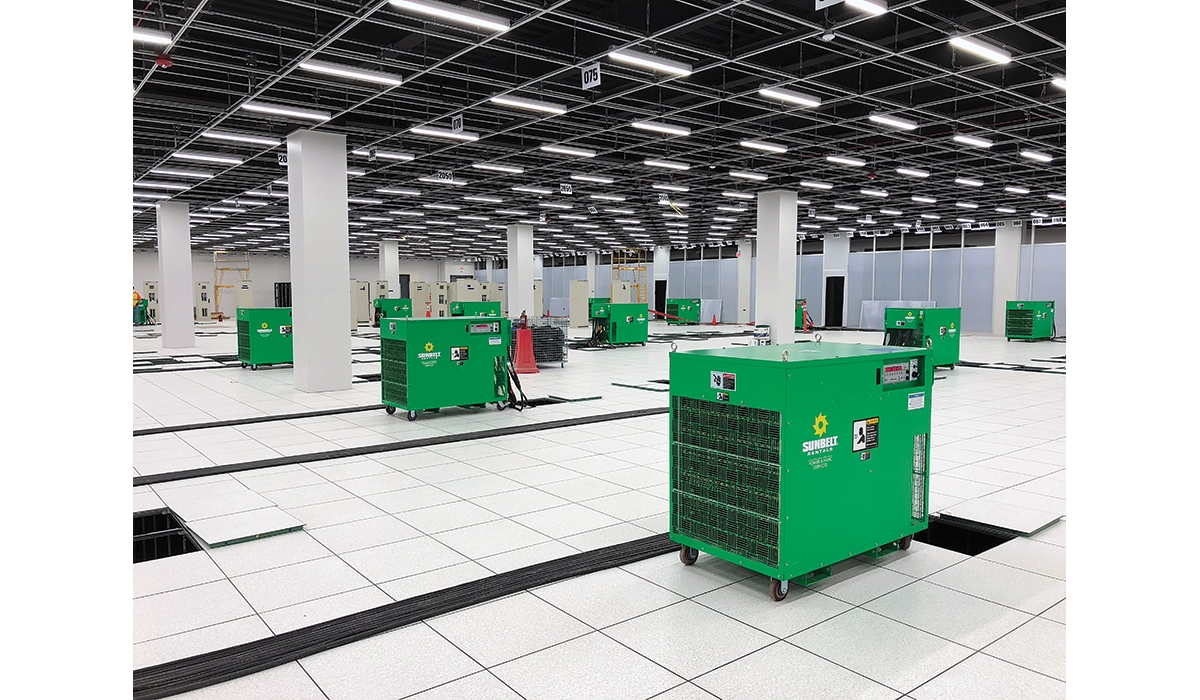
Capacitive load banks simulate this by introducing discrete capacitor banks to feed reactive power back into the source. Testing with a capacitive bank verifies AVR control stability and alternator performance under leading PF — conditions that resistive tests never expose.
Types of Capacitive Loads
Operators should be aware of the most common types of capacitive loads found across industrial and commercial environments.
UPS inverters and rectifiers commonly introduce leading power factor at partial load, particularly in Tier III and IV data centers with redundant strings.
Power factor correction banks, when left online during light loading, can create excess capacitance that causes instability.
Modern LED lighting drivers and electronic ballast circuits use front-end capacitors that return reactive current to the source.
Long distribution feeders, especially underground shielded runs, behave like capacitive elements depending on cable geometry and loading.
Variable frequency drives, depending on load and internal design, may present a leading PF under regenerative braking conditions or light operation.
What Are Resistive (Hybrid) Loads?
A resistive load draws real power (kW) and converts it to heat. Voltage and current are in phase, and there is no reactive component. Resistive load banks are commonly used to exercise engine capacity, burn off carbon buildup in diesel engines (wet stacking), and confirm base mechanical performance.
While necessary, resistive-only testing fails to simulate any of the reactive or dynamic behaviors that define real power systems. That’s why hybrid load banks — designed to simulate inductive, capacitive and resistive load characteristics — are now widely used in field environments.
Hybrid load banks allow operators to apply complex load profiles, adjusting real and reactive components independently. This lets engineers simulate precise power factors — 0.8 lagging for generator nameplate validation, 0.95 leading for UPS testing, or anything in between.
Types of Resistive Loads
Common types of load banks for resistive testing include:
Grid-style resistive banks that dissipate hundreds of kW in portable enclosures with step switches to manage load increments
Trailer-mounted high-capacity resistive units for generator commissioning, fuel system verification, and load transfer validation
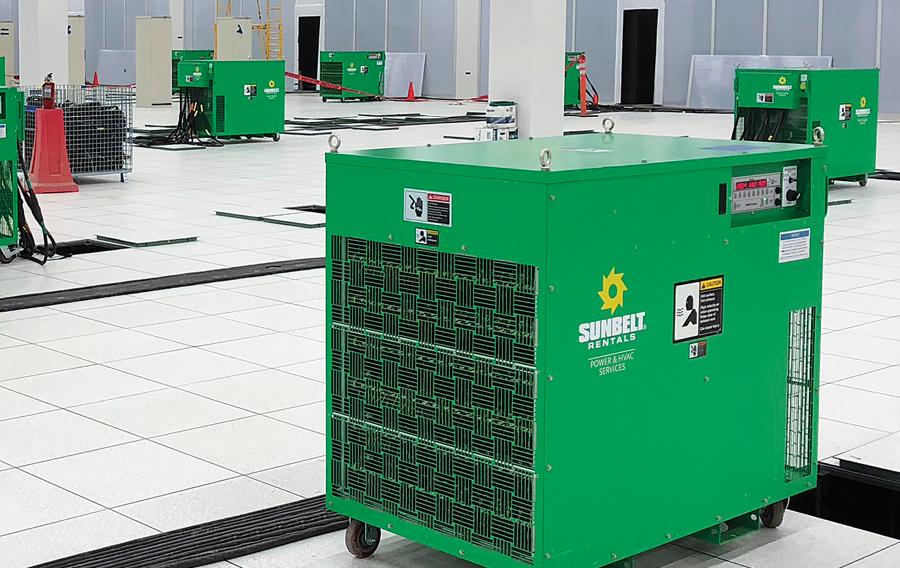
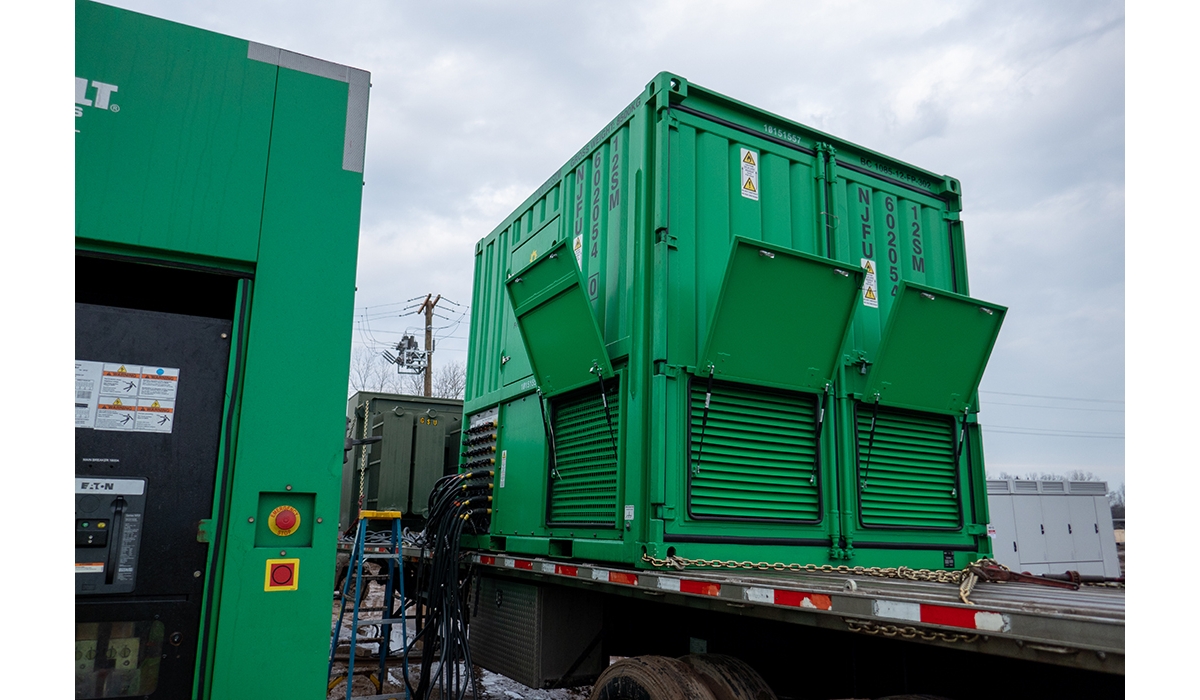
Skid-mounted or containerized banks that integrate resistive, inductive, and capacitive options for full electrical simulation
Mobile hybrid banks that provide independent control of resistive and reactive stages, enabling dynamic power factor testing
For those searching what a resistive load bank is, these units offer an essential foundation for commissioning and maintenance — but they’re only one part of a complete test profile.

Comparing Resistive Load vs. Inductive Load vs. Capacitive Load
Inductive vs. Resistive Loads
When comparing an inductive vs. resistive load, the key difference lies in reactive demand. A resistive test confirms mechanical output, fuel delivery, and radiator performance — but ignores excitation system behavior. Inductive tests, on the other hand, draw reactive power and simulate real facility conditions under load.
The difference between resistive and inductive load simulation is critical. Most generator nameplates are rated at 0.8 power factor, meaning they’re designed to support a mix of kW and kVAR, not just real power. Without an inductive element in the test, kVA performance is never proven.
Inductive vs. Capacitive Loads
Comparing inductive vs. capacitive systems is essential for control tuning. Inductive loads demand more excitation current; capacitive loads feed current back into the system. One reduces voltage; the other can increase it. If your site contains inductive or capacitive demand sources, both conditions must be tested to confirm AVR stability.
Heavy-Duty Cleaning Tasks
Construction dust, water damage, and post-event messes present challenges that exceed the capabilities of light-duty tools. For jobs like these, extractor-level power is essential. Renting commercial equipment gives you the muscle you need without the overhead of ownership.
Capacitive vs. Resistive Loads
Capacitive loads test system behavior under returned VARs—something a resistive load vs. capacitive load comparison makes clear. While resistive loads heat engines and validate combustion, capacitive loads challenge control systems and test voltage regulation.
How to Determine Which Type of Load Bank You Need
If your facility includes inductive or resistive load types — motors, transformers, heating coils, VFDs — you’ll need to reflect that mix during testing. If capacitive behavior exists — UPS systems, cable networks, or PFC banks — you’ll need to test for returned kVARs. The inductive load vs. capacitive load testing debate isn’t an either/or. It’s both.
Sunbelt Rentals supports full-site testing strategies with:
- Standalone resistive, inductive, and capacitive load banks
- Hybrid units with variable PF control from 0.6 lagging to 0.95 leading
- Cable packages and switchgear for low and medium voltage systems
- Field engineers who support test plan development, onsite setup, and real-time monitoring
Understanding the difference between resistive and inductive loads, and when to apply one or both, is essential to replicating field demand and verifying total system capacity.