
Use the Sunbelt Rentals App
Find, rent, and return equipment, right at your fingertips

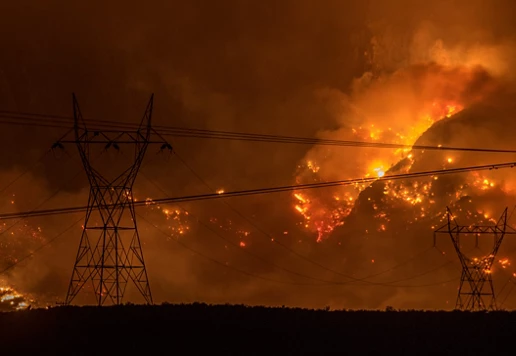
Wildfires and Air Quality
When smoke plumes travel thousands of miles, relying on standard building filtration can easily fail to protect your occupants. Because standard HVAC systems are designed for general climate control rather than crisis management, they lack the capacity to arrest the high volume of microscopic particles found in wildfire smoke. If you implement supplemental indoor air quality solutions through rental equipment, you can scale your response instantly.
In this guide, we’ll explore how smoke infiltrates commercial spaces and the operational risks of rolling blackouts, as well as how specific rental equipment mitigates these threats. Click any of the links below to learn more:
How Does Wildfire Smoke Affect Indoor Air Quality?
Wildfire smoke may seem like just an unpleasant odor, but it’s a complex mixture of gases and fine particles that gets produced when vegetation and building materials burn. The biggest threat to wildfire air quality for businesses is fine particulate matter such as PM2.5.
Because these microscopic particles are roughly 30 times smaller than a human hair, they bypass the body's natural defenses to travel deep into the lungs.
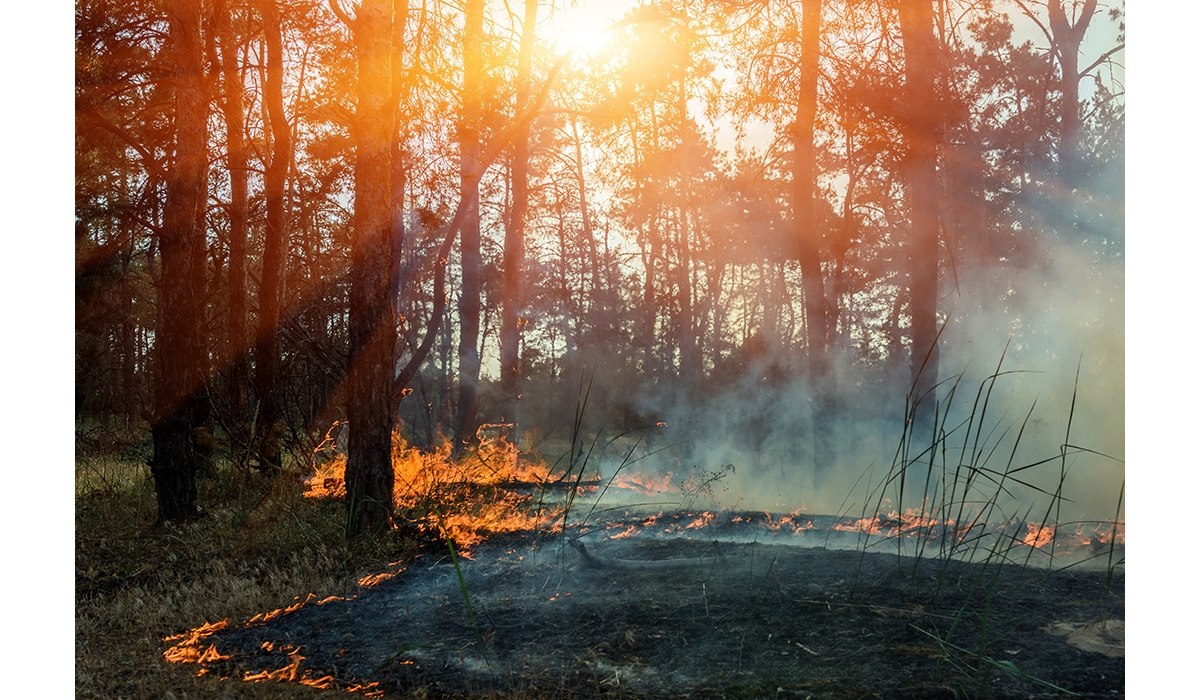
For wildfire air quality facility management, this presents a dual threat that includes immediate health risks to occupants and long-term contamination of sensitive environments.
Commercial structures breathe and allow smoke to enter through four primary avenues:
- Natural ventilation and leakage: Even when windows are closed, smoke infiltrates through open loading docks or cracks in the building envelope.
- Mechanical ventilation intakes: Because standard HVAC system intakes are designed to bring in fresh outdoor air, they essentially pump contaminated air directly into your workspace if they lack high-grade filtration.
- The stack effect: As warm air rises and escapes through the roof, it creates negative pressure on lower floors that sucks unfiltered outdoor air in through ground-level gaps.
- Secondary transfer: Particulates cling to clothing and equipment brought inside by employees, which introduces contaminants deep into the facility.
Once inside, these particles don't just settle; they circulate continuously. Unless there’s active intervention, indoor air quality during wildfires can rapidly degrade to levels that violate OSHA standards.
What’s more, because the volatile organic compounds (VOCs) in smoke can adhere to furniture and walls, they cause lingering odors long after the fire is out. Once this happens, businesses face a difficult choice between suspending operations or risking health liabilities.
How to Improve Indoor Air Quality for Your Jobsite or Business During Wildfires
Want to improve indoor air quality during wildfire season for businesses? You need a multi-layered approach. While you can't control the smoke density outside, you can control how your building responds to it. To create a clean air sanctuary within your facility, deploy source control and supplemental cleaning via air quality management solutions.
Facility indoor air quality wildfire season strategies should be part of your broader business continuity plan. Because waiting until you smell smoke is often too late, here are the steps you can take to improve facility air quality wildfire smoke impacts.

If you conduct a pre-season audit, you can identify and seal leaks in windows and doors to establish the first line of defense against contaminants.
When severe smoke events occur, you may need to adjust your HVAC dampers to recirculate indoor air rather than drawing in polluted outdoor air.
If you introduce filtered clean air into a space at a higher rate than air escapes, you create positive pressure that pushes air out through cracks to prevent smoke entry.
As you use sensors to track PM2.5 levels in real time, data drives your decisions on when to ramp up filtration efforts.
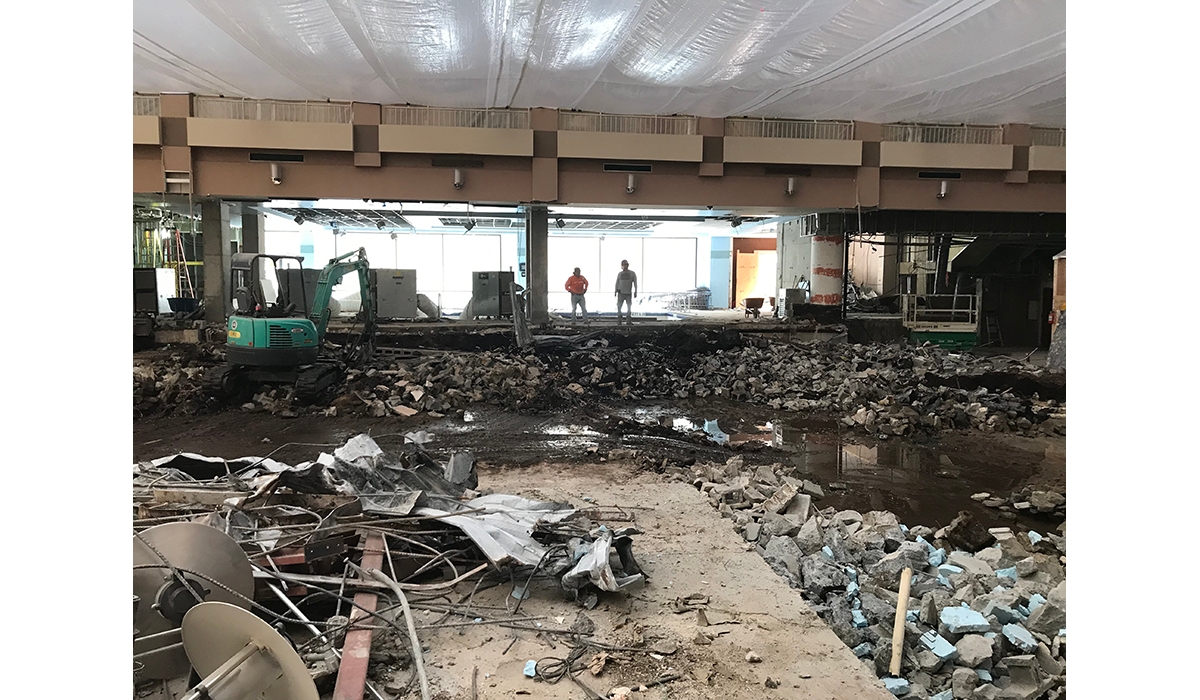
If you operate active construction sites, consider setting up temporary containment vestibules at main entry points to prevent large volumes of smoke from entering when doors open.
How to Determine Which Commercial Air Quality Management Solution You Need
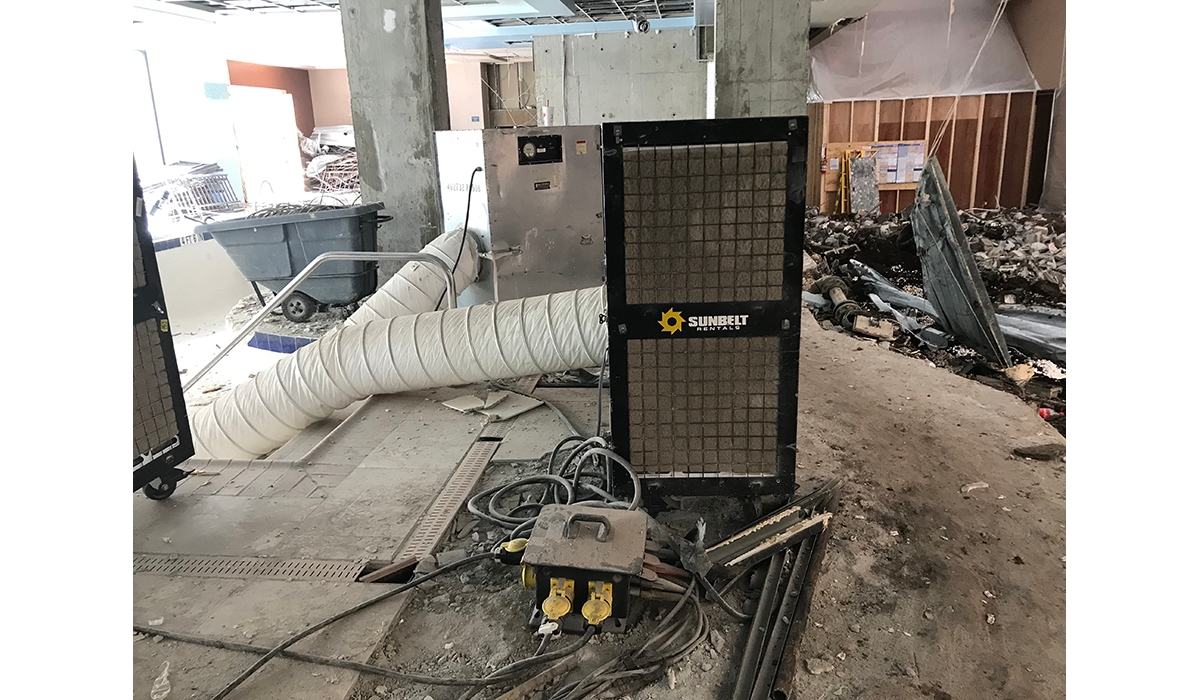
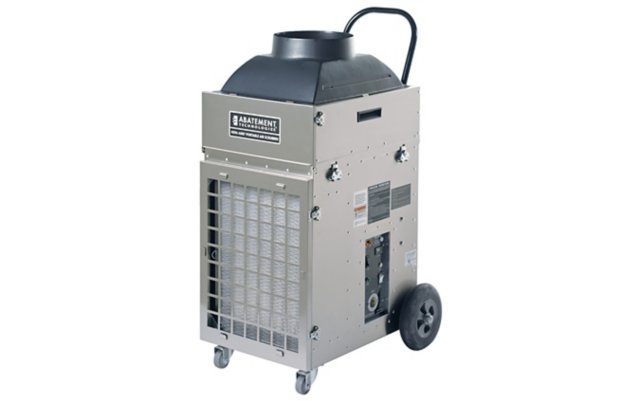
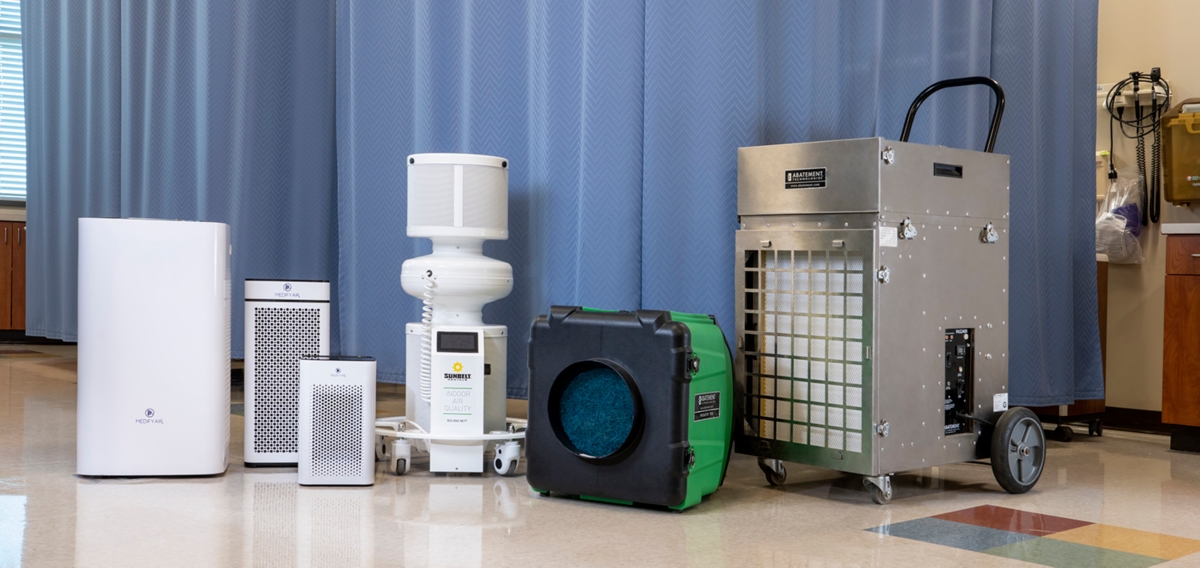
When selecting the right equipment, consider the contaminants and the size of the space. Commercial air scrubber rentals are the workhorses of wildfire air quality job sites, but a comprehensive solution often involves a mix of technologies.
As the frontline defense for particulate removal, air scrubbers draw air through a series of filters that typically end with a HEPA filter. Because this filter captures 99.97% of particles as small as 0.3 microns, it’s highly effective against smoke.
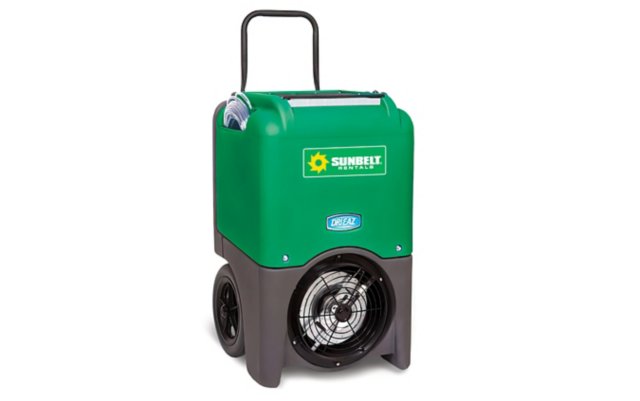
Often associated with water damage, dehumidifiers play a critical role in fire recovery. If water is used to suppress a nearby structure fire or if the HVAC system is throttled, humidity can spike.
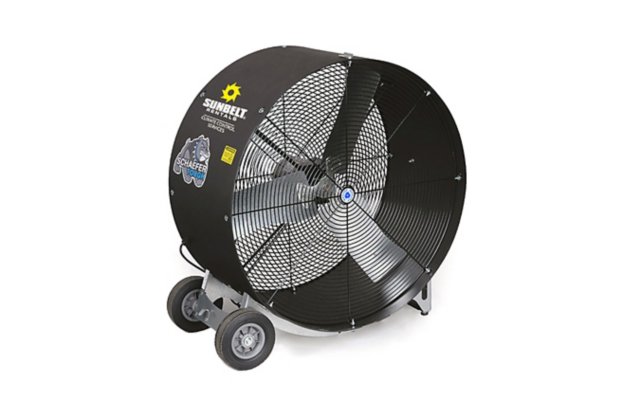
Since air movement is critical for effective filtration, fans and blowers ensure that stagnant air pockets are pushed toward your air scrubbers.
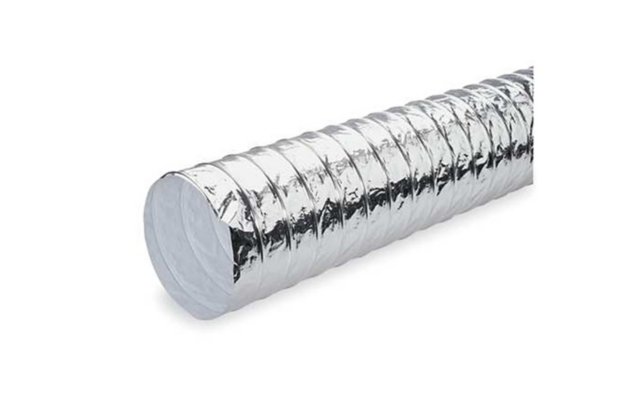
To create positive or negative pressure, you need to control where the air goes. Air duct equipment and accessories allow you to vent scrubbed air outside or channel clean air into specific zones.
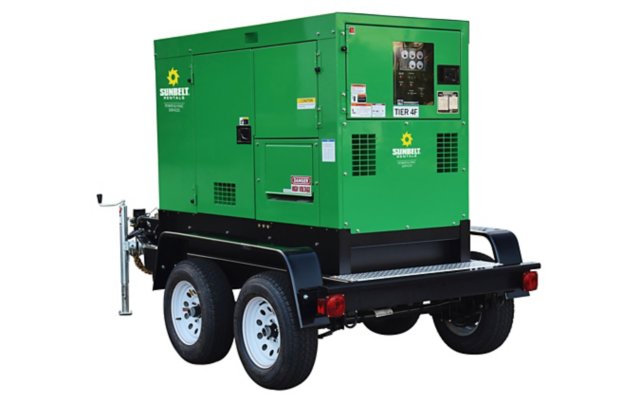
Because it is impossible to discuss wildfire response without addressing power, you must consider grid reliability. When there’s a threat of wildfire spread, many utility companies are forced to execute public safety power shutoffs (PSPS). Temporary power solutions provide critical utilities during these times.
See the full range of air quality management solutions available.
Advantages of Renting Commercial Indoor Air Quality Equipment
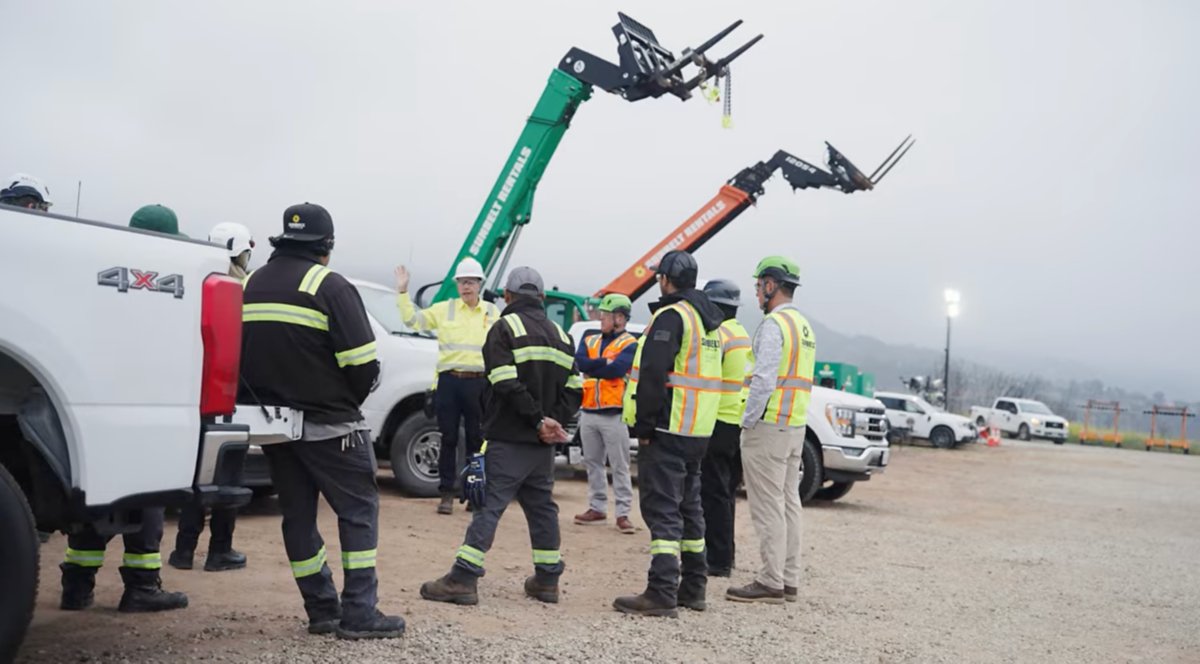
When facing the unpredictability of wildfire season indoor air quality for jobsites, renting equipment often makes more strategic sense than buying. Because wildfires are acute events, storing and maintaining a fleet of scrubbers for the entire year is a drain on capital.
If you’re considering your options, here is why you should rent for indoor air quality emergency response:
Scalability
As the severity of the event changes, rental allows you to scale your response instantly. Whether it’s a localized building fire or a massive regional wildfire, you access exactly what you need.
Technology Access
Because IAQ technology evolves, renting ensures you have access to the latest commercial indoor air quality solutions without the risk of obsolescence.
Maintenance Savings
Since filters need changing and motors need servicing, ownership costs add up. When you rent, the equipment arrives cleaned and calibrated as well as compliant, so you can focus on operations.
Capital Conservation
If you treat IAQ response as an operating expense (OpEx), you preserve your budget for core business investments while ensuring safety standards.
Expert Consultation
When you rent, you aren't just getting equipment; you're getting expertise. Because sizing an air scrubber requires complex calculations, Sunbelt Rentals experts help you engineer the right solution.
Immediate Availability
When a crisis hits, purchasing supply chains often seize up. Because a large rental partner has a vast fleet ready to mobilize, you avoid losing days waiting for a shipment.
Learn More About Sunbelt Rentals’ Disaster Recovery Solutions
Commercial indoor air quality wildfire season planning requires foresight; it ultimately centers on resilience. If you want to keep your people safe, you need a partner ready to deliver the right equipment immediately. Because indoor air quality solutions and disaster response strategies are most effective when established before a crisis, waiting for the emergency to strike can lead to catastrophic delays.
When you integrate Sunbelt Rentals into your contingency planning now, you secure priority access to equipment even when regional inventory is tightest. Need immediate consultation or rapid deployment? Our team is here to help you weather the storm from the first spark to final demobilization.
Contact us today to discuss your wildfire contingency plan or access our disaster recovery guide to ensure your facility is prepared for whatever the season brings.


